Introduction
In 2026, Western Wall Art has evolved far beyond simple decoration. It is now a major interior design movement across Europe, influencing how people shape their living zones, emotions, and lifestyle identity.
Modern European interiors are shifting away from cold, overly sterile, and ultra-minimalist environments. Instead,owners and designers are embracing interiors that feel:
- Warm and inviting
- Emotionally expressive
- Natural and grounded
- Soft and relaxing
- Connected to organic materials and landscapes
This transformation has created the perfect environment for Western Wall Art to flourish.
Today, this design style blends:
- Desert-moved landscapes
- Earth-toned color systems
- Natural feelings and materials
- Minimalist European aesthetics
- Soft simple and bohemian influences
From urban flats in Berlin and Paris to coastal villas in Spain and Italy, Western Wall Art is becoming a defining optical language of modern interiors.
Unlike traditional cowboy-themed artwork, the 2026 version is sophisticated, minimal, and emotionally intelligent. It is not just optical decoration—it is storytelling through zone.
In simple terms, Western Wall Art transforms empty walls into meaningful emotional experiences.
What is Western Wall Art?
Western Wall Art refers to decorative wall designs moved by the landscapes, feelings, and cultural imagery of the American West—particularly deserts, mountains, and simple natural environments.
However, in modern European design culture, its meaning has significantly evolved.
Old Definition
Historically, included:
- Cowboy imagery
- Horses and ranch scenes
- Western saloons
- Heavy rustic wooden frames
- Dark, vintage jewels
This version was visually strong but often limited in modern adaptability.
Modern Definition
Today, has transformed into a more refined artistic direction:
- Abstract desert interpretations
- Soft sandy gradients
- Minimal mountain silhouettes
- Earth-tone compositions
- Scandinavian-West fusion aesthetics
This evolution reflects a broader shift in design philosophy: interiors are no longer just visual—they are emotional environments.
Evolution of Western Wall Art in Europe
Western Wall Art in Europe has passed through three major phases:
Traditional Phase
- Strong cowboy visuals
- Dark simple frames
- Heavy wood feelings
- Narrative storytelling art
. Transition Phase
- Desert-moved scenery
- Softened color palettes
- Natural landscapes
- Reduced optical intensity
Modern 2026 Phase
- Minimal abstract compositions
- Neutral and earthy jewels
- Luxury simplicity
- Emotional design focus
This evolution reflects Europe’s growing preference for calm, nature-moved interiors.
Trends 2026
Interior design in 2026 is driven by two major philosophies:
- Quiet luxury
- Emotional minimalism
Perfectly aligns with both.
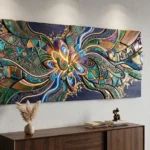
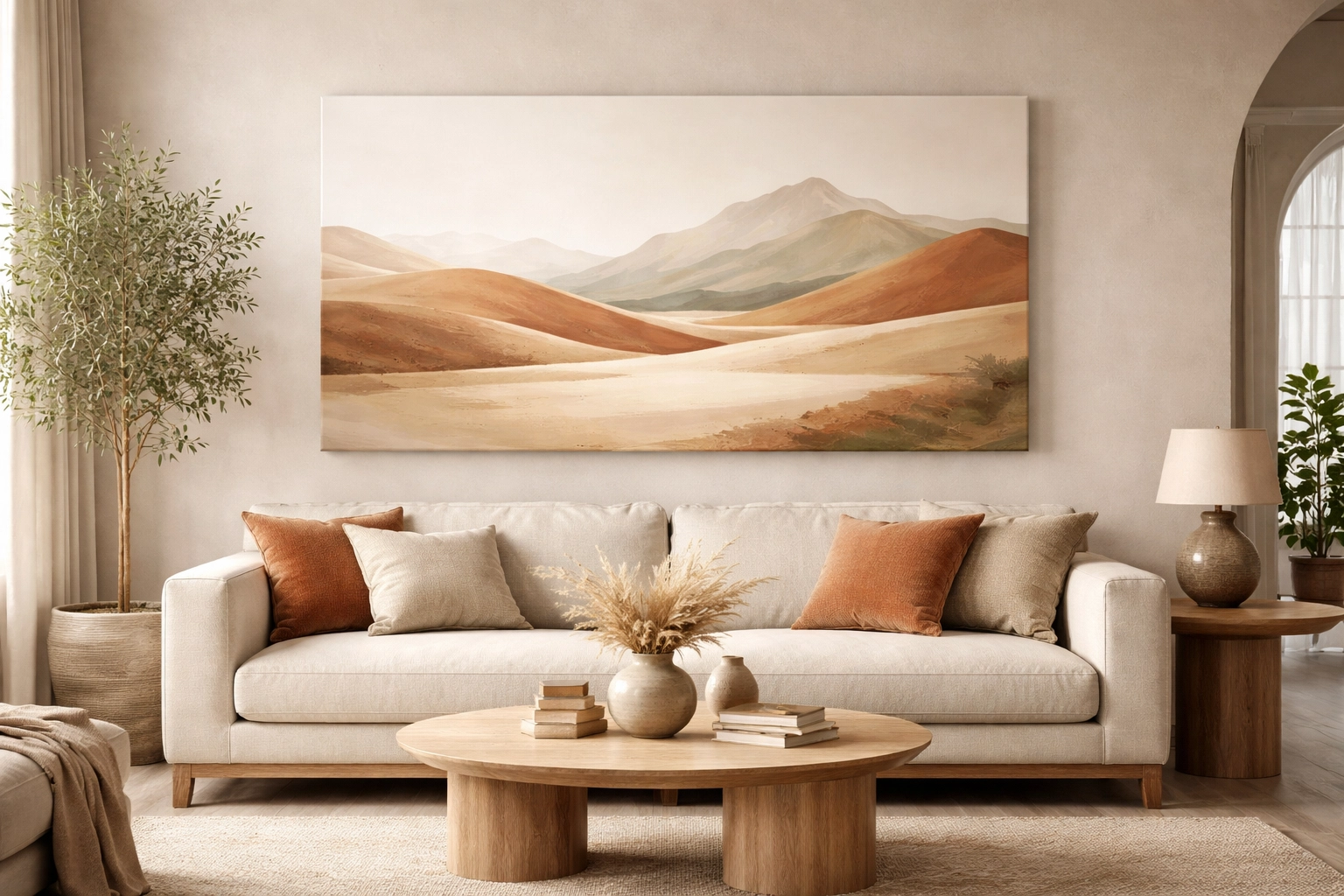
Oversize Statement Art
One of the strongest trends is the shift from gallery walls to oversize single artworks.
Instead of multiple small frames, owners now prefer:
One large canvas as the focal point
This creates:
- Strong optical impact
- Cleaner wall structure
- Luxury hotel-like aesthetics
Best suited for:
- Living rooms
- Penthouse flats
- Modern villas
Textured Wall Art Revolution
Flat prints are being replaced by tactile art experiences.
Popular textures include:
- Sand-based layering
- Clay and plaster finishes
- 3D surface reliefs
- Mixed media canvas art
This creates depth, realism, and physical presence.
Earthy Color Expansion
The 2026 palette is rooted in nature:
- Beige sand jewels
- Terracotta passion
- Clay browns
- Olive greens
- Soft charcoal black
These colors create emotional stability and optical comfort.
Minimal Western Fusion
The traditional “Heavy Western” look is disappearing.
Instead, designers prefer:
- Abstract desert interpretations
- Soft horizon gradients
- Minimal line landscapes
- Faded sunlight compositions
This creates a peaceful, modern aesthetic.
Nature & Biophilic Integration
Western Wall Art is now merging with biophilic design principles:
- Indoor plants
- Wooden furniture
- Natural sunlight
- Stone and linen feelings
This combination improves mental wellbeing and spatial peace.
Types of Western Wall Art Styles
Understanding style categories helps in selecting the right artwork.
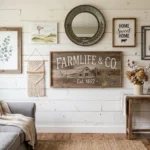
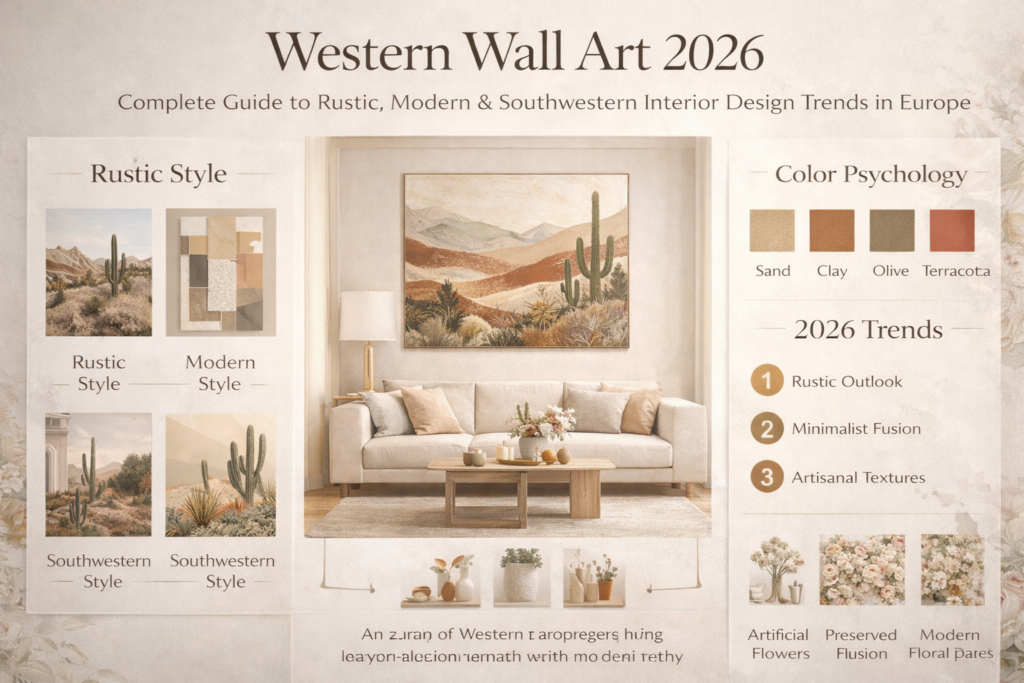
Rustic
This is the traditional emotional style.
Features:
- Wooden frames
- Vintage desert imagery
- Warm jewels
- Handcrafted appearance
Best for:
- Farmhouses
- Country homes
- Cozy interiors
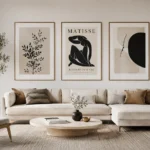
Modern
The most popular 2026 version.
Features:
- Clean abstraction
- Soft desert landscapes
- Neutral palettes
- Minimal structure
Best for:
- Urban flats
- Scandinavian interiors
- Luxury homes
Southwestern Wall Art
A bold cultural variation.
Features:
- Geometrical tribal patterns
- Sun-inspired symbols
- Terracotta dominance
- Strong cultural identity
Best for:
- Creative studios
- Boho interiors
Farmhouse Western Fusion
A hybrid between simple and modern.
Features:
- Soft wood feelings
- Warm neutral jewels
- Cozy aesthetic balance
Best for:
- Bedrooms
- Family living zones
Color Psychology
Color is the emotional foundation of Western Wall Art.
Core 2026 Palette
| Color | Psychological Effect |
| Sand Beige | Calmness & openness |
| Terracotta | Emotional warmth |
| Clay Brown | Stability & grounding |
| Olive Green | Balance & freshness |
| Warm Black | Bottom & elegance |
Why These Colors Work
These tones:
- Reduce mental stress
- Increase comfort perception
- Improve spatial peace
- Enhance relaxation response
This is why European designers prefer them for modern homes.
How to Style Western Wall Art Like a Professional Designer
Styling is more important than selection.
Living Room Styling
- Use one large centerpiece artwork
- Place above sofa
- Maintain clean wall zone
- Shun optical clutter
Goal: Strong focal point impact
Bedroom Styling
- Use soft desert jewels
- Select calming compositions
- Place above headboard
Goal: Emotional relaxation
Hallway Styling
- Use multiple small frames
- Maintain equal spacing
- Keep consistent frame color
Goal: Optical flow continuity
Office Styling
- Use abstract western art
- Stick to neutral jewels
- Shun optical distractions
Goal: Focus and productivity
Buying Guide
Selecting artwork should be strategic.
Wall Size Rule
- Large wall → oversize art
- Medium wall → medium canvas
- Small wall → minimal frames
Lighting Consideration
- Warm light enhances earthy jewels
- Natural light enhances feeling clarity
Material Selection
- Canvas → modern flexibility
- Wood → simple authenticity
- Metal → luxury modern feel
Placement Formula
Ideal height placement:
Eye level: 145–155 cm from floor
Comparison Table of Western Wall Art Styles
| Style | Mood | Best Room | Emotion |
| Rustic Western | Warm | Living room | Cozy |
| Modern Western | Clean | Apartment | Calm |
| Southwestern | Bold | Studio | Creative |
| Farmhouse Fusion | Soft | Bedroom | Relaxed |
Western Wall Art Ideas for Every Room
Living Room Ideas
- Oversize desert canvas
- Beige abstract compositions
- Soft gradient landscapes
Bedroom Ideas
- Sunset-moved artwork
- Neutral jewel paintings
- Calm horizon opticals
Office Ideas
- Minimal desert abstraction
- Clean geometrical art
- Soft neutral opticals
Hallway Ideas
- Linear gallery frames
- Small coordinated prints
- Consistent spacing design
Common Mistakes to Avoid
Avoid these design errors:
- Overcrowded wall arrangements
- Overly bright cowboy imagery
- Mixed frame inconsistencies
- Ignoring wall proportions
- Poor lighting alignment
Western Wall Art Design Psychology
Western Wall Art works because it influences emotional perception.
Psychological Effects:
- Earth jewels→ reduce anxiety
- Desert themes → mental calmness
- Minimal maps → cognitive clarity
- Natural feelings→ comfort association
This makes it more than decoration—it becomes emotional architecture.
Future Trends of Western Wall Art
The future is highly innovative.
Expect to see:
- AI-generated desert compositions
- Eco-friendly organic materials
- 3D sculptural wall installations
- Hybrid digital-physical artworks
- Ultra-minimal abstract western forms
Design is becoming more intelligent and personalized.
Pros & Cons
Pros
- Strong emotional appeal
- Works across many interior styles
- Timeless aesthetic value
- Highly customizable
Cons
- Low-quality prints reduce impact
- Overuse may feel optically heavy
- Requires proper styling balance
FAQs
It is wall decor inspired by desert landscapes, rustic elements, and modern western aesthetics.
Yes, it blends perfectly with modern, minimalist, and European interiors.
Beige, terracotta, brown, olive green, and neutral earthy jewels.
Yes, it integrates very well with Scandinavian minimalism.
Oversize minimalist abstract western artwork.
Conclusion
Western Wall Art in 2026 is not just decoration—it is a lifestyle expression.
It represents:
- Emotional design thinking
- Modern storytelling aesthetics
- Natural and earthy peace
- European minimalism evolution
It transforms empty walls into meaningful optical experiences and helps create interiors that feel alive, balanced, and emotionally connected.