Introduction
Black wall decor is no longer viewed as a simple aesthetic choice or decorative experiment. In new European interior design, it has evolved into a structured optical architecture system that defines mood, spatial bottom, emotional tone, and luxury perception.
From minimalist apartments in Scandinavia to artistic lofts in Berlin and refined Parisian interiors, black wall styling is now a core design language used by professional architects and interior stylists.
This comprehensive guide explains everything you need to know about black wall decor—from psychological principles to lighting systems, feelings, styling formulas, and room-by-room applications.
You will learn how to:
- Apply black wall decor like professional European designers
- Understand design psychology and emotional impact
- Build structured styling systems instead of random decoration
- Use lighting, contrast, and feeling strategically
- Avoid common design mistakes
- Create luxury-level interiors with simple rules
Why Black Wall Decor Is a Powerful Modern Design Strategy
In modern interior evolution, especially in 2026 European aesthetics, design is shifting toward:
- Intentional minimalism instead of overcrowded decor
- Emotional spatial balance instead of optical chaos
- Textural richness instead of flat color surfaces
- Functional beauty instead of decorative excess
Black wall decor fits perfectly into this transformation because it acts as an optical anchoring system inside a zone.
Core Design Principle
Black is not merely a pigment or paint choice. It functions as a spatial stabilizer, meaning it organizes optical attention, defines contrast boundaries, and enhances surrounding design elements.
Why European Interiors Prefer Black Walls
Across European design studios and residential projects, black walls are widely used because they:
- Introduce controlled luxury aesthetics
- Increase architectural bottom perception
- Strengthen optical hierarchy in rooms
- Enhance furniture visibility and contrast
- Support minimalist yet expressive environments
- Create curated, intentional living zones
Fundamental Truth
Without black elements:
Rooms often appear flat, undefined, and optically weak.
With black elements:
Rooms feel structured, premium, and emotionally grounded.
Black Wall Decor Trend Analysis
Black wall decor is not a random trend—it is part of a broader global design shift toward emotional minimalism.
Luxury Minimalism Evolution
Modern homes are transitioning into hotel-moved environments featuring:
- Clean architectural lines
- Reduced object clutter
- Strong focal point design
- Curated visual balance
Black walls reinforce this luxury restraint.
Warm Minimalism Transition
Pure white minimalism is fading. Instead, designers now combine:
- Beige + black peace
- Wood + matte black contrast
- Soft ambient lighting layers
- Organic material integration
This creates emotional passion within minimal structure.
Small Space Optimization Strategy
In cities like Paris, Amsterdam, and Berlin:
- Living spaces are compact
- Storage is limited
- Optical expansion is essential
Black walls help create depth illusion and spatial layering, making small rooms feel more architecturally structured.
Texture-Centered Interior Design
Modern European interiors prioritize material richness:
- Matte finishes
- Natural stone surfaces
- Wood slat panels
- Fabric wall systems
- 3D geometric feelings
Black enhances all of these materials by increasing contrast visibility.
The Black Wall Decor Design System
Professional interior designers do not decorate randomly. They follow structured systems.
Rule 1: 60–30–10 Visual Balance Framework
This is the foundation of color composition in interiors.
| Element | Percentage | Function |
| Light tones | 60% | Base structure & openness |
| Neutral tones | 30% | Furniture, textiles, grounding |
| Black accents | 10% | Contrast, focus, drama |
Design Insight
Black should enhance space—not dominate it.
Rule 2: Single Focal Point Strategy
Human cognition prefers clear optical hierarchy.
Correct Application:
- One black accent wall
- One statement artwork
- One architectural feature
Incorrect Application:
- Multiple competing black elements
- Random wall decoration clusters
- Visual overload without hierarchy
Always allow one dominant optical anchor.
Rule 3: Texture Is Mandatory for Luxury
Flat black surfaces feel lifeless and heavy.
To achieve premium aesthetics, use:
- Matte black finishes
- Wooden slatted panels
- Stone or marble feelings
- Fabric-covered walls
- 3D architectural panels
Texture adds emotional bottom and tactile richness.
Rule 4: Lighting Defines Everything
Black surfaces depend heavily on illumination.
Use layered lighting:
- Ambient lighting (base glow)
- Accent lighting (focus enhancement)
- Task lighting (functional visibility)
Recommended lighting types:
- Warm LED strips
- Wall washers
- Directional spotlights
- Soft floor lamps
Lighting transforms black from flat to dynamic.
Psychology of Black Wall Decor
Black affects perception more deeply than most colors in interior design.
Emotional Effects
Black creates:
- Authority and control
- Emotional grounding
- Psychological focus
- Perceived luxury enhancement
- Spatial stability
Interior Emotional Impact
- Living rooms feel curated and intentional
- Bedrooms feel private and calming
- Offices feel focused and structured
Psychological Insight
Black reduces visual noise, allowing the mind to rest and concentrate.
This is why luxury hotels and high-end studios frequently use black tones.
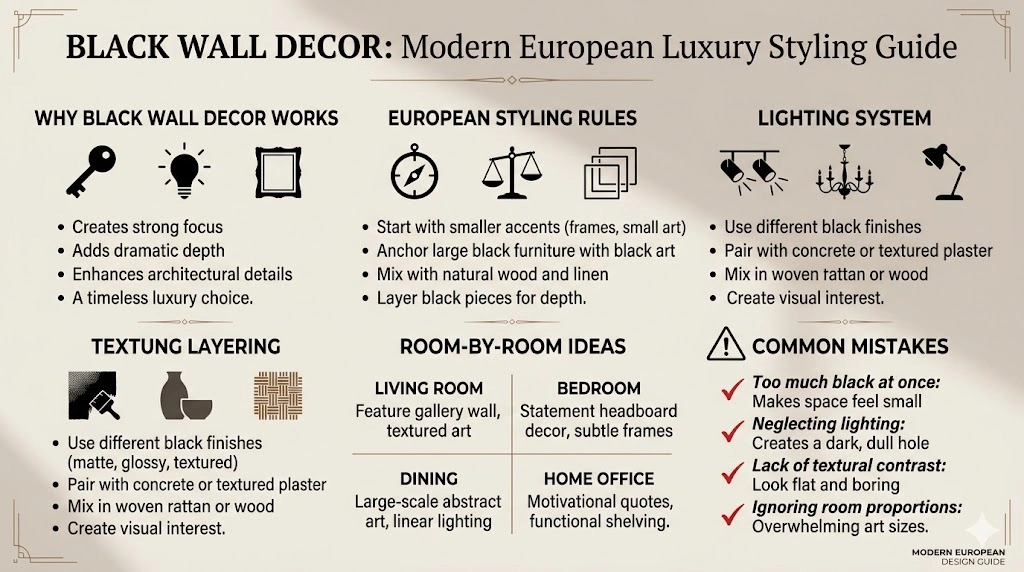
Black Wall Decor Ideas by Room
Living Room Applications
Living rooms are primary zones for black wall expression.
Best applications:
- Large abstract black artwork
- Black TV feature wall with ambient lighting
- Stone-textured black accent wall
- Black + gold framed gallery arrangement
Placement Rule
Position black walls behind:
- Sofa seating area OR
- Entertainment unit
Result
- Strong optical bottom
- Luxury aesthetic perception
- Architectural balance
Bedroom Styling
Bedrooms require softer black integration.
Ideal uses:
- Upholstered black headboard wall
- Matte black paneling behind bed
- Black fabric wall textures
- Black + beige art composition
Result
- Hotel-moved air
- Emotional calmness
- Private luxury feel
Dining Room Styling
Dining spaces benefit from intimate design tones.
Best ideas:
- Black marble accent wall
- Warm pendant lighting systems
- Wood + black combinations
- Minimal framed artwork
Result
- Cozy dining experience
- Elegant European ambiance
Office Styling
Black enhances productivity environments.
Best setups:
- Black shelving systems
- Monochrome typography walls
- Metal geometrical structures
- Clean grid compositions
Result
- Improved concentration
- Reduced distraction
- Professional identity
European Black Wall Decor Styles 2026
Modern Minimal Black Style
- Clean geometry
- Soft symmetry
- Matte surfaces
- Empty zone utilization
Best for compact flats
Luxury European Style
- Gold accents
- Marble surfaces
- Hotel-inspired aesthetics
- Soft layered lighting
Best for living rooms
Natural Warm Black Style
- Wood integration
- Beige neutral blending
- Organic material use
- Soft ambient lighting
Best for family homes
Industrial Black Style
- Raw concrete surfaces
- Metal frameworks
- Exposed structural elements
- Bold architectural identity
Best for lofts and offices
Lighting System for Black Wall Decor
The defining factor of success.
Lighting Layers
- Ambient lighting (foundation)
- Accent lighting (highlight zones)
- Task lighting (functional clarity)
Critical Rule
Never use cold white lighting with black walls.
It destroys passion and emotional balance.
Texture Layering System
Luxury interiors depend on material diversity.
Combine:
- Matte black + wood grain
- Black stone + warm lighting
- Fabric black + neutral beige
- Metal black + soft glow
Result
- Depth perception
- Emotional richness
- Premium optical experience
Common Black Wall Decor Mistakes
Avoid these design errors:
- Excessive black usage without balance
- Poor lighting implementation
- No feeling variation
- Over-decorated wall clutter
- Lack of neutral contrast
These mistakes reduce spatial comfort.
Black Wall Decor Styling Formula
Formula:
Black + Texture + Light + Contrast = Perfect Interior Design
Example:
Black panel wall + beige sofa + warm lighting + wooden flooring
Instant luxury European aesthetic.
Step-by-Step Application Guide
1: Select focal wall
Choose only one dominant surface.
2: Define black intensity
- Full black wall
- Partial accent
- Decorative elements
3: Apply texture
Choose wood, stone, or fabric finishes.
4: Add lighting layers
Use warm indirect lighting systems.
5: Balance with neutrals
Add beige, white, or natural wood jewels.
Black Wall Decor Comparison Table
| Style | Mood | Best Room | Outcome |
| Minimal Black | Calm | Bedroom | Soft luxury |
| Luxury European | Rich | Living room | Premium elegance |
| Industrial Black | Bold | Office | Strong identity |
| Natural Black | Warm | Dining room | Cozy air |
Pros and Cons
Advantages
- Instantly enhances luxury perception
- Strengthens spatial bottom
- Improves optical contrast
- Works in modern interiors
- Creates strong design identity
Disadvantages
- Requires proper lighting design
- Can feel heavy if overused
- Needs color balance strategy
- Poor execution reduces zone perception
Practical Expert Tips
- Use black on only one dominant surface
- Combine matte black with warm tones
- Always use layered lighting systems
- Introduce beige for softness
- Keep decor minimal and intentional
Beginner Formula
If you’re new to black wall decor:
70% neutral + 20% wood + 10% black
Simple, safe, and highly effective.
FAQs
Yes, when balanced with light tones and proper lighting, it adds depth without shrinking space.
White, beige, wood, gold, and soft grey.
Yes, especially with warm lighting and soft feelings.
Using too much black without feeling or lighting balance.
Yes, it is one of the strongest modern interior trends.
Final Summary
Black wall decor is not simply a decorative trend—it is a structured European interior design methodology grounded in psychology, contrast theory, feeling layering, and lighting science.
When applied correctly, it transforms interiors into:
- Luxurious environments
- Emotionally balanced zones
- Architecturally refined rooms
- Timeless modern designs
In 2026 and beyond, black remains one of the most powerful tools in interior design—but only when executed with intelligence, structure, and balance.