European Design System, Curb Appeal Psychology & Modern Styling Blueprint
Exterior wall decor has evolved far beyond simple decoration or superficial styling. In contemporary European architecture, it functions as an essential identity layer of a building—almost like a visual signature that communicates taste, lifestyle, and value.
Modern homeowners no longer evaluate a property solely based on its square footage, price bracket, or interior luxury. Instead, perception is increasingly shaped by external aesthetics. The first impression is formed within seconds, and that impression is built from subtle yet powerful visual signals such as:
- Structural harmony
- Material authenticity
- Lighting composition
- Color balance
- Emotional atmosphere
In simple terms, the exterior wall is no longer just a surface—it is the facial expression of the home.
Across Europe in 2026 design culture, architectural trends are moving toward:
- Minimal but intentional design language
- Natural, sustainable materials
- Soft, layered lighting systems
- Controlled visual simplicity
- Emotional storytelling through structure
Instead of overcrowding surfaces with excessive decoration, modern European design philosophy emphasizes system-based thinking. Every element must serve both aesthetic and functional purposes.
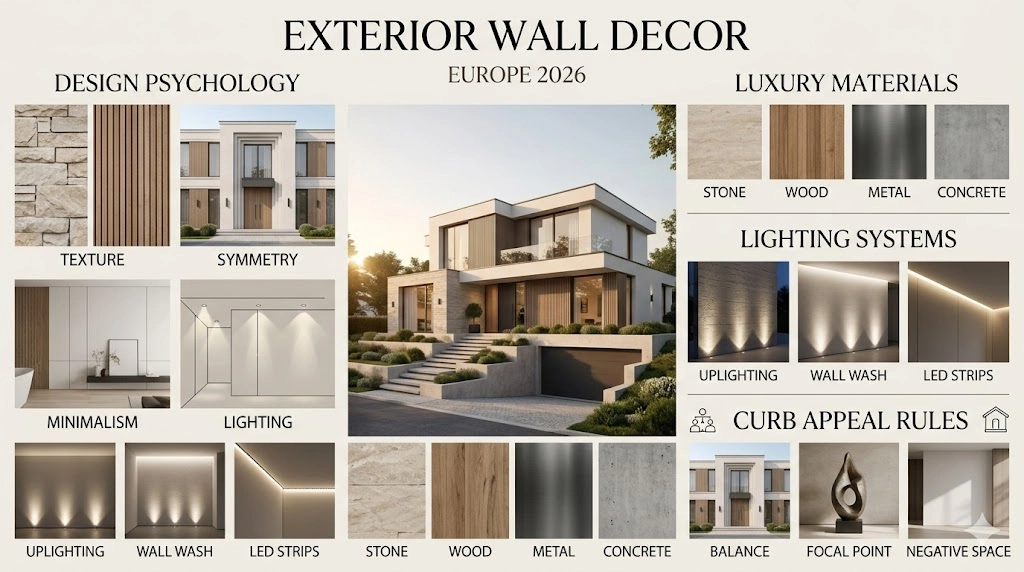
This guide introduces a complete European Exterior Wall Decor System, designed to help you understand how professional architects and high-end designers create visually powerful, emotionally balanced exteriors.
Exterior Wall Decor Design Psychology
Design is not accidental—it is psychological engineering applied visually. Every exterior surface communicates subconscious signals that influence perception.
When a person observes a home, their brain processes multiple visual cues almost instantly. These cues determine whether the structure feels luxurious, safe, modern, or outdated.
Core Psychological Triggers in Exterior Wall Design
1. Texture = Luxury Perception
Textural variation—such as stone grain, layered plaster, or wood fibers—creates visual depth. The human brain associates depth with craftsmanship, and craftsmanship with value. Therefore, textured surfaces automatically elevate perceived luxury.
2. Symmetry = Stability & Trust
Symmetry signals order, reliability, and architectural discipline. Balanced composition makes a building feel structurally secure and emotionally reassuring. Asymmetry can be modern, but must be carefully controlled.
3. Minimalism = Cognitive Clarity
Clean, uncluttered surfaces reduce visual noise. This creates a sense of intelligence, refinement, and modern thinking. Minimalism is not emptiness—it is intentional reduction.
4. Natural Materials = Emotional Comfort
Materials derived from nature—wood, stone, clay—create subconscious comfort responses. They reduce stress perception and increase warmth in visual experience.
5. Dark Accents = Premium Identity
Deep tones such as black, graphite, or dark grey introduce contrast and sophistication. These shades are widely used in high-end European architecture to create exclusivity.
Design Insight:
Modern European aesthetics prioritize emotional equilibrium rather than decorative abundance.
European Exterior Wall Decor System
Professional designers do not decorate randomly. They follow structured layering systems that ensure harmony between form and function.
Structural Base Layer
This is the foundation layer that defines the building’s core personality:
- Brick structures
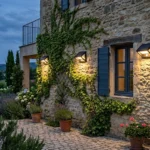
- Natural stone facades
- Smooth plaster finishes
- Timber cladding systems
This layer determines the architectural DNA of the home.
Functional Integration Layer
This layer merges practicality with visual coherence:
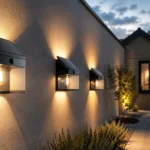
- Outdoor lighting fixtures
- House numbering systems
- Mailboxes and entry features
- Security and access systems
- Planter integration
Functionality becomes part of design expression.
Emotional Aesthetic Layer
This is the final visual storytelling layer:
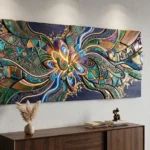
- Metal sculptures
- Minimal wall art installations
- Vertical greenery systems
- Geometric panels
- Artistic signage
Rule: restraint creates sophistication.
Materials in Exterior Wall Decor
Material selection defines both durability and visual authority. Each material communicates a different architectural message.
Exterior Wall Material Comparison Table
| Material | Visual Identity | Durability | Maintenance | Ideal Use |
| Natural Stone | Luxury, timelessness | Very high | Low | Villas, estates |
| Wood Panels | Organic warmth | Medium | Medium | Scandinavian homes |
| Metal Panels | Industrial modernism | High | Low | Urban architecture |
| Concrete | Raw minimalism | Very high | Very low | Contemporary homes |
| Brick | Classic European heritage | High | Low | Traditional houses |
Material Deep Interpretation
Natural Stone
Stone represents permanence and heritage. It is widely associated with historic European architecture and conveys elite craftsmanship.
Wood
Wood introduces emotional warmth and natural softness. However, it requires protective treatment in humid or variable climates.
Metal
Metal surfaces reflect urban modernity. They are frequently used in metropolitan areas such as Berlin or Amsterdam.
Concrete
Concrete symbolizes raw structural honesty. It is minimal, powerful, and architecturally honest.
Exterior Wall Decor Styles Across Europe
Europe is not architecturally uniform. Each region carries a distinct design identity shaped by climate, culture, and history.
French Rustic Style
- Stone-based walls
- Warm earthy tones
- Iron lantern lighting
- Vintage architectural charm
German Minimalism
- Strict geometric structure
- Neutral palettes
- Functional lighting systems
- Precision-driven design
Scandinavian Style
- Light wood integration
- White and grey dominance
- Nature-connected design language
Italian Luxury Style
- Rich textures
- Warm color palette
- Artistic architectural detailing
Mediterranean Style
- Bright sun-reflective surfaces
- Terracotta elements
- Decorative ceramic accents
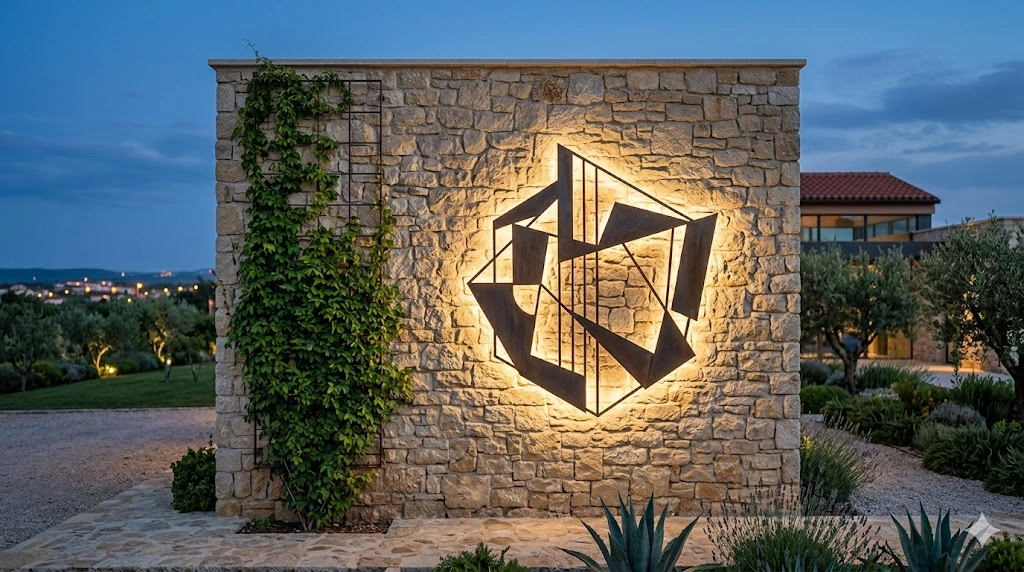
Exterior Wall Lighting: The Transformation Element
Lighting is the most influential transformation factor in exterior design. It determines how materials are perceived after sunset.
Lighting Categories
Wall Wash Lighting
Creates smooth illumination across entire surfaces.
Uplighting
Emphasizes vertical textures like stone or brick.
Lantern Lighting
Produces warm, traditional European ambiance.
LED Strip Systems
Used in Contemporary architecture for floating visual effects.
Lighting Psychology
Without lighting:
- Flat visual appearance
- No dimensional depth
With lighting:
- Enhanced texture perception
- Elevated luxury impression
- Strong nighttime identity
Placement Rules
1: Architectural Alignment
All decorative elements must align with structural geometry such as windows and doors.
2: Negative Space Control
Leave 40–60% of surfaces visually open to maintain clarity.
3: Single Focal Emphasis
Each exterior wall should have one dominant visual anchor.
4: Proportional Scaling
- Small walls → minimal design
- Large walls → layered composition
European Curb Appeal System
Curb appeal represents the emotional impact of a home from a distance.
Core Elements
- Material continuity
- Lighting harmony
- Entry symmetry
- Green integration
- Color coordination
Key Principle:
A well-designed home communicates its value silently before interaction occurs.
Step-by-Step Exterior Wall Decor Process
1: Architectural Study
Understand the building’s design language.
2: Material Selection
Choose primary structural materials.
3: Style Definition
Select design direction: modern, rustic, or luxury.
4: Functional Integration
Add lighting, numbering, and utility elements.
5: Emotional Layering
Introduce artistic or natural features.
6: Lighting Installation
Enhance textures and focal points.
7: Final Evaluation
Ensure balance, proportion, and simplicity.
Common Mistakes in Exterior Wall Decor
Avoid these frequent design errors:
- Overcrowding surfaces
- Mixing incompatible materials
- Ignoring lighting strategy
- Breaking symmetry unintentionally
- Improper scaling
- Using indoor décor outdoors
These mistakes significantly reduce architectural value.
Pros & Cons of Exterior Wall Decor Systems
Advantages
- Increases property valuation
- Enhances curb appeal
- Builds strong identity
- Long-term aesthetic investment
- Emotional visual impact
Disadvantages
- Requires planning expertise
- Maintenance for natural materials
- Lighting installation costs
- Design knowledge required
Style Comparison Overview
| Style | Impact Level | Maintenance | Region |
| Modern Minimalist | High | Low | Germany, Netherlands |
| Rustic Farmhouse | Very high | Medium | France, Italy |
| Scandinavian | Medium-high | Low | Nordic regions |
| Industrial | High | Medium | Urban Europe |
| Mediterranean | High | Medium | Southern Europe |
FAQs
Exterior wall decor is the combination of architectural materials, lighting systems, and design elements used to enhance and visually refine outdoor building surfaces.
Natural stone, wood, and metal are widely considered the most effective materials due to their durability and aesthetic adaptability.
Use simplified geometry, neutral color palettes, and integrated lighting systems while avoiding excessive ornamentation.
Yes, lighting plays a crucial role in revealing texture, improving mood, and enhancing nighttime architectural presence.
The European design approach emphasizes simplicity, material authenticity, structural balance, and emotional restraint.
Conclusion
Exterior wall decor in Europe (2026) is no longer just about appearance—it is a complete design system that blends architecture, psychology, materials, and lighting into one unified identity.
The key idea is simple: less decoration, more intention. By focusing on natural materials, balanced proportions, smart lighting, and emotional design, any exterior wall can be transformed into a modern, high-value architectural statement.
When all elements—structure, function, and aesthetics—work together, the home doesn’t just look better; it feels more premium, stable, and timeless.