Introduction
Mexican wall art is far more than simple home decoration. It represents a deep fusion of culture, identity, symbolism, craftsmanship, and emotional storytelling expressed through visual form.
In today’s interior design landscape, especially in 2026, Mexican-inspired wall aesthetics have become a rapidly growing global trend. Designers across Europe are increasingly incorporating these expressive visual elements into homes, apartments, studios, and luxury interiors.
Where modern European interiors often prioritize minimalism, neutral tones, and structured layouts, they sometimes lack emotional warmth and cultural depth. Mexican wall art fills this gap beautifully by introducing:
- Vibrant storytelling
- Rich historical symbolism
- Handmade artistic expression
- Emotional color psychology
- Cultural authenticity
From traditional Talavera ceramic tiles to expressive Otomi embroidery patterns and contemporary minimalist Mexican wall prints, this design language is now widely used in:
- Contemporary living rooms
- Elegant bedrooms
- Stylish kitchen interiors
- Luxury European apartments
- Scandinavian-inspired minimalist homes
In this comprehensive guide, you will explore everything in detail, including:
- Historical evolution of Mexican wall art
- Core artistic styles and their meanings
- Psychological impact of visual design
- Room-by-room styling strategies
- 2026 European interior design trends
- Professional decorator techniques
- Common styling mistakes and how to avoid them
Let’s explore this rich and expressive world step by step.
Cultural Meaning of Mexican Wall Art
Mexican wall art carries centuries of cultural evolution, blending indigenous traditions, colonial influence, and modern artistic innovation. It is not simply visual design—it is cultural language expressed through form, color, and texture.
Indigenous Roots
Before modern Mexico existed, ancient civilizations such as the Aztec and Mayan cultures developed highly symbolic visual systems. These early artistic expressions continue to influence contemporary Mexican wall art.
Key characteristics include:
- Sacred geometric compositions
- Nature-inspired symbolic imagery
- Animal motifs such as eagles, serpents, and jaguars
- Earth-derived natural pigments
- Spiritual balance and cosmic representation
These designs were not decorative alone—they represented belief systems, cosmology, and identity. Today, modern Mexican wall art still carries echoes of these ancestral visual codes.
Spanish Colonial Influence
With the arrival of Spanish settlers, Mexican art experienced a cultural fusion. Indigenous techniques merged with European Baroque aesthetics, creating a unique hybrid style.
This resulted in:
- Religious iconography and painted murals
- Decorative baroque ornamentation
- Handcrafted ceramic tile traditions
- Highly detailed symmetrical compositions
This fusion is one of the reasons Mexican wall art feels both traditional and luxurious at the same time. It combines European elegance with indigenous creativity.
Folk Art Traditions
Folk art is the emotional heart of Mexican visual culture. It is handcrafted, personal, and deeply expressive.
Major folk art forms include:
- Otomi embroidery textiles
- Papel Picado (delicate cut-paper designs)
- Hand-painted clay ceramics
- Traditional woven wall tapestries
Each piece is unique because it is created manually by artisans rather than mass-produced. This gives Mexican wall art its authenticity and emotional value.
Main Mexican Wall Art Styles
Mexican wall art exists in many visual languages, each with its own identity, emotional tone, and design purpose.
Talavera Tile Wall Art
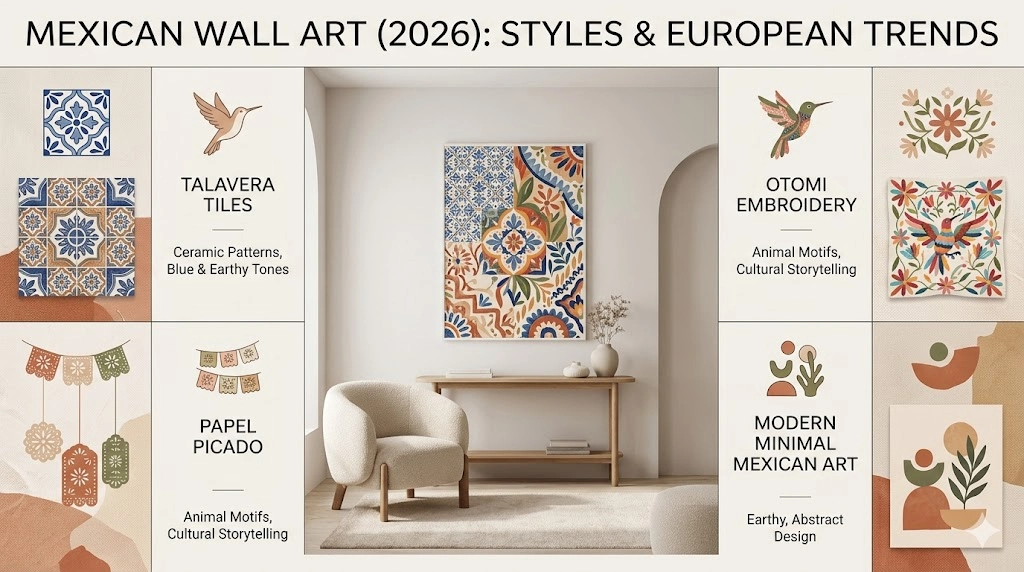
Talavera tiles are one of the most iconic forms of Mexican decorative art. They are widely recognized for their vibrant colors and intricate geometric patterns.
Features:
- Hand-glazed ceramic surface
- Traditional color palette: blue, yellow, terracotta, white
- Repeating symmetrical motifs
- High durability and glossy finish
Best Use:
- Kitchen backsplashes
- Bathroom feature walls
- Entryway focal points
Talavera introduces a luxurious cultural identity into modern interiors while maintaining visual harmony.
Otomi Textile Wall Art
Otomi art is a traditional embroidery style originating from indigenous communities. It tells visual stories through symbolic animal representations.
Features:
- Stylized animal motifs (deer, birds, rabbits)
- Bright and emotionally expressive colors
- Hand-Stitched textile patterns
- Narrative-driven composition
Best Use:
- Bedrooms
- Creative workspaces
- Bohemian-style living rooms
Otomi art adds emotional warmth, softness, and storytelling energy to interiors.
Papel Picado Wall Decor
Papel Picado is a delicate and highly decorative paper-cut art form used in Mexican celebrations and interior design.
Features:
- Intricate cut-out geometric patterns
- Lightweight, airy structure
- Often layered or suspended
- Festive visual identity
Best Use:
- Dining rooms
- Cultural events and seasonal decor
- Accent walls
It introduces movement, rhythm, and lightness into interior spaces.
Frida Kahlo-Inspired Wall Art
Frida Kahlo remains one of the most influential artistic figures in Mexican cultural history. Her visual legacy strongly influences modern wall art.
Features:
- Emotional self-expression
- Floral symbolism and natural elements
- Feminine strength themes
- Bold psychological storytelling
Best Use:
- Living rooms
- Home offices
- Artistic interior spaces
This style is ideal for individuals who value emotional expression and identity-driven design.
Modern Minimal Mexican Wall Art 2026 Trend
This is one of the fastest-growing interior trends in Europe.
Features:
- Soft earthy and desert-inspired tones
- Minimal abstract cultural patterns
- Clean visual composition
- Reduced decorative complexity
Best Use:
- Scandinavian interiors
- Modern apartments
- Luxury minimalist homes
It merges cultural richness with modern simplicity.
Mexican Wall Art by Room
Each room in a home serves a different emotional and functional purpose, and Mexican Wall Art can be adapted accordingly.
Living Room – The Main Focus
The living room is the central expression space of any home.
Best Choices:
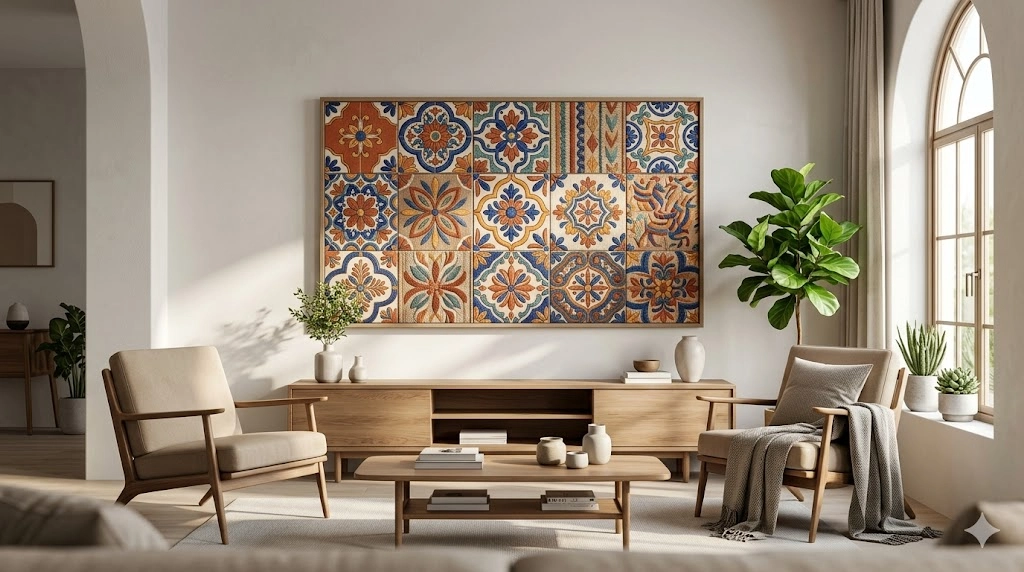
- Large Talavera-inspired wall panels
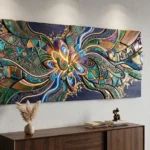
- Bold cultural canvas artwork
- Curated gallery wall compositions
Design Objective:
- Create visual impact
- Communicate cultural storytelling
- Add emotional depth
A single large statement artwork often works better than multiple small pieces.
Bedroom – Calm and Cultural Balance
Bedrooms require emotional calmness and visual relaxation.
Best Choices:
- Soft Otomi embroidery pieces
- Neutral-toned Mexican minimalist art
- Light floral sketches
Design Objective:
- Encourage relaxation
- Support emotional balance
- Maintain visual softness
Avoid overly saturated or aggressive color combinations.
Dining Room – Energy and Connection
Dining areas are social environments where energy and interaction matter.
Best Choices:
- Papel Picado decorative frames
- Mosaic-inspired wall designs
- Festive cultural compositions
Design Objective:
- Encourage social warmth
- Enhance celebration mood
- Build emotional connection
Entryway – First Impression Matters
Entryways define the first emotional experience of a home.
Best Choices:
- Aztec-inspired symbolic art
- Small handcrafted cultural pieces
- Bold statement visuals
Design Objective:
- Create identity
- Establish welcoming energy
- Communicate cultural personality
Mexican Wall Art in European Interiors
A major 2026 interior movement is the fusion of Mexican aesthetics with European design principles.
Why It Works in Europe
European interiors typically emphasize:
- Minimal structure
- Neutral color palettes
- Clean visual balance
However, they often lack emotional richness. Mexican wall art introduces:
- Vibrant color psychology
- Cultural storytelling depth
- Handmade authenticity
- Emotional warmth
Fusion Design Examples
| European Style | Mexican Wall Art Style | Result |
| Scandinavian minimalism | Minimal Mexican prints | Warm simplicity |
| Industrial loft | Talavera tile accents | Artistic contrast |
| French classic | Embroidery textiles | Elegant cultural fusion |
| Modern apartments | Frida-inspired art | Emotional focal point |
2026 Mexican Wall Art Trends
Interior design trends in 2026 highlight authenticity, emotional design, and natural aesthetics.
Earthy Color Palette
Modern Mexican-inspired interiors increasingly use:
- Terracotta tones
- Sand beige
- Olive green
- Clay and stone shades
These replace overly bright neon aesthetics.
Handmade Authenticity
Consumers are shifting toward handcrafted artwork instead of digital prints. Authenticity is now a premium design value.
Textured Wall Art
Texture is becoming a dominant visual element:
- Ceramic relief patterns
- Fabric-based wall layers
- Mixed-material installations
Cultural Minimalism
This trend merges simplicity with cultural depth, creating refined yet meaningful interiors.
Oversized Statement Pieces
Large-format wall art is replacing small decorative frames. One impactful piece now defines entire rooms.
Psychology Behind Mexican Wall Art
Mexican wall art strongly influences emotional perception and mood.
Psychological Effects:
- Warm colors → comfort and positivity
- Cultural symbols → identity reinforcement
- Handmade texture → authenticity perception
- Bold contrast → stimulation and energy
This makes it a powerful interior design element.
Traditional vs Modern Mexican Wall Art
| Feature | Traditional Style | Modern Style |
| Colors | Bright, bold | Earthy, muted |
| Materials | Ceramic, textile | Canvas, mixed media |
| Design | Symbolic, detailed | Minimal, abstract |
| Usage | Cultural homes | Modern interiors |
| Emotion | Festive energy | Calm sophistication |
Pros and Cons
Pros:
- Strong cultural identity
- Highly versatile design language
- Works in modern and traditional interiors
- Emotionally rich storytelling
- Fits European fusion trends
Cons:
- Can feel visually intense if overused
- Requires balance in minimalist spaces
- Handmade pieces may be expensive
How to Style Mexican Wall Art
Step 1:
Select one primary wall as your focal point.
Step 2:
Choose a consistent color direction (earthy or vibrant).
Step 3:
Pick one dominant artwork piece.
Step 4:
Balance with neutral furniture elements.
Step 5:
Add small complementary decorative accents.
Key principle: visual breathing space is essential.
FAQs
It is a traditional and modern art form based on Mexican cultural symbols, handmade craftsmanship, and expressive visual storytelling.
Yes, it integrates well into modern interiors and is widely used in contemporary design projects.
Talavera tiles, Otomi embroidery, papel picado designs, and Frida Kahlo-inspired artwork.
Yes, it is one of the fastest-growing interior design influences in Europe in 2026.
Common colors include terracotta, blue, red, yellow, and natural earthy tones.
Conclusion
Mexican wall art is not just decoration—it is a cultural experience translated into visual form.
In 2026, it continues to grow as a global interior design trend, especially in Europe where it balances minimalism with emotional richness.
It successfully blends:
- Tradition with modernity
- Color with neutrality
- Emotion with structure
- History with contemporary design
This is why Mexican wall art will continue to influence global interior aesthetics for years to come.