Introduction
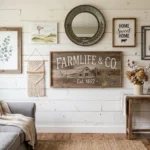
Pottery Barn wall decor has evolved into more than just a visual design preference—it represents a complete interior lifestyle philosophy that blends comfort, elegance, and emotional harmony. In 2026, this aesthetic direction continues to strongly influence homes across Europe, from urban apartments in Berlin and London to countryside villas in Tuscany and Provence.
What makes this design language so powerful is its ability to balance opposites:
- It feels luxurious yet accessible
- It appears minimal yet expressive
- It is structured yet emotionally warm
- It is simple yet deeply meaningful
Unlike short-lived digital trends that circulate on social media platforms and fade quickly, Pottery Barn-inspired wall styling is rooted in timeless interior principles. It emphasizes balance, neutrality, organic textures, and visual storytelling that remains relevant for years rather than seasons.
Across Europe, homeowners and interior designers are increasingly adopting this approach because it creates environments that feel calm, grounded, and aesthetically enduring. The design philosophy encourages mindful living—where every wall element has purpose, emotional value, and spatial harmony.
In this comprehensive guide, you will explore:
- Advanced European wall decor trends for 2026
- Professional gallery wall composition strategies
- Room-specific styling frameworks
- Budget-friendly versus luxury design comparisons
- Psychological impacts of interior wall aesthetics
- Expert-level design systems used by professionals
If your goal is to transform your home into a refined, magazine-quality interior while maintaining comfort and livability, this guide will serve as your complete roadmap.
What Makes Pottery Barn Wall Decor Unique?
Pottery Barn wall decor stands out because it is not driven by excess or visual overload. Instead, it prioritizes intentional design, emotional resonance, and curated simplicity.
At its core, this style follows a few foundational principles that define its global appeal.
1. Neutral & Earth-Inspired Color Systems
The color palette is one of the most defining aspects of this style. Instead of bright or aggressive tones, it focuses on soft, grounded, and natural hues such as:
- Warm beige
- Cream ivory
- Muted taupe
- Soft grey stone
- Off-white linen tones
- Light earthy brown
These shades create a soothing visual atmosphere that reduces cognitive stress and enhances relaxation within interior spaces.
2. Organic & Natural Material Integration
Material authenticity plays a key role in achieving the Pottery Barn aesthetic. Commonly used materials include:
- Solid wood frames
- Linen or cotton canvas
- Stone-textured finishes
- Brushed metal accents
- Handmade ceramic elements
These textures introduce depth and dimension without overwhelming the visual field.
3. Structured Visual Composition
Unlike chaotic wall arrangements, this design philosophy emphasizes order and balance. Every piece is carefully positioned using principles such as:
- Equal spacing between elements
- Symmetrical alignment or intentional asymmetry
- Visual weight distribution
- Clear focal hierarchy
This ensures the wall feels cohesive rather than fragmented.
4. Timeless Artistic Selection
The artwork itself is intentionally chosen to remain relevant over time. Popular categories include:
- Abstract neutral compositions
- Black-and-white photography
- Botanical and nature-inspired prints
- Minimal typography artwork
- Architectural sketches
These pieces avoid seasonal trends and instead focus on enduring visual appeal.
5. Ambient Lighting Enhancement
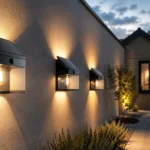
Lighting is used not only for visibility but also for mood creation. Soft, warm lighting highlights wall textures and frames while maintaining a cozy atmosphere.
2026 Pottery Barn Wall Decor Trends in Europe
In 2026, European interior design is shifting toward emotional minimalism, tactile authenticity, and soft luxury aesthetics. Pottery Barn-style wall decor aligns perfectly with these evolving preferences.
Trend 1: Refined Modern Rustic Design
This evolution of farmhouse aesthetics introduces cleaner lines and reduced visual clutter:
- Softer natural wood tones
- Minimal decorative elements
- Clean wall compositions
- Reduced rustic exaggeration
Trend 2: European Neutral Luxury
Inspired by French and Italian interiors, this trend emphasizes understated elegance:
- Cream-based color foundations
- Gold-accent detailing
- Elegant frame structures
- Balanced negative space
Trend 3: Organic Textural Walls
Walls are no longer flat surfaces—they are becoming tactile design elements:
- Limewash paint finishes
- Wooden slat installations
- Fabric wall panels
- Plaster-textured surfaces
Trend 4: Japandi Fusion Influence
A hybrid aesthetic combining Japanese minimalism with Scandinavian warmth:
- Functional simplicity
- Natural material focus
- Soft tonal contrast
- Decluttered composition
Trend 5: Curated Gallery Wall Evolution
Gallery walls are becoming more refined:
- Fewer but more meaningful pieces
- Increased spacing between frames
- Strong focal anchor points
- Reduced visual density
2026 Trend Comparison Overview
| Style | Materials | Colors | Region | Mood |
| Modern Rustic | Wood, iron | Warm neutrals | UK, Germany | Cozy |
| Japandi | Bamboo, linen | Soft beige | Scandinavia | Calm |
| French Luxury | Ornate frames | Cream, gold | France | Elegant |
| Soft Industrial | Steel, brick | Grey tones | Netherlands | Urban |
| Mediterranean | Stone, clay | Earth hues | Italy, Spain | Warm |
Pottery Barn Wall Decor Style Breakdown
Modern Rustic Interiors
A balanced blend of countryside warmth and modern refinement:
- Wooden frame structures
- Soft ambient lighting
- Neutral-toned artwork
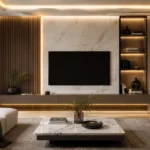
Minimalist Luxury Walls
Focused on restraint and refinement:
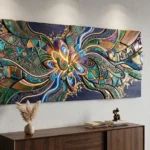
- Large-scale artwork
- Sparse decoration
- Premium framing materials
Coastal European Aesthetics
Inspired by Mediterranean regions:
- Oceanic color palettes
- Whitewashed backgrounds
- Airy compositions
Classic Gallery Wall Systems
A storytelling-based arrangement technique using multiple framed pieces.
European Neutral Design Language
This approach focuses on simplicity, calmness, and balance through muted tones and proportional spacing.
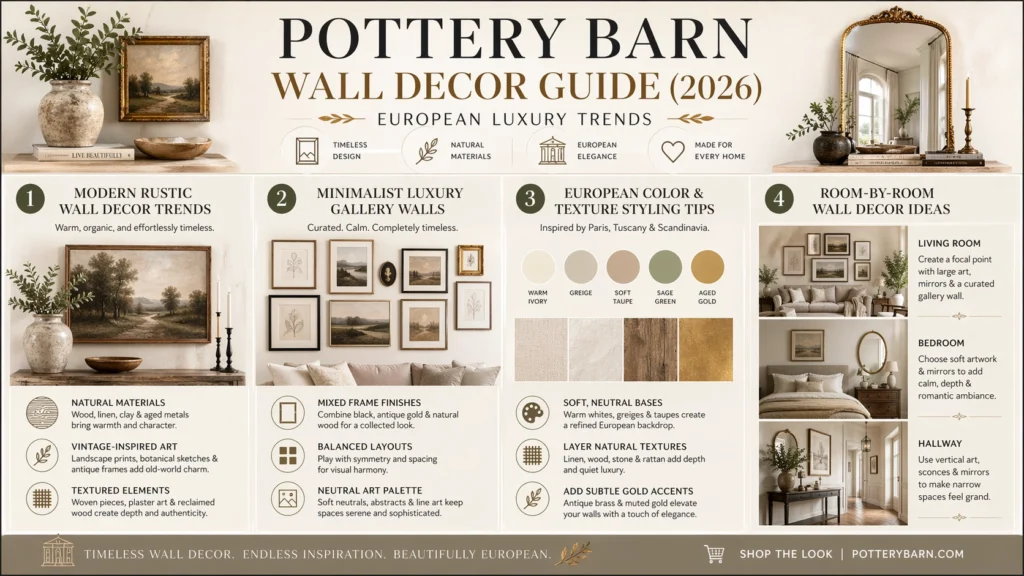
Pottery Barn Gallery Wall Design Strategy
Gallery walls are a central component of this interior style.
Professional Design Rules
- Use odd-number grouping (3, 5, 7)
- Maintain consistent spacing (2–3 inches)
- Stick to a unified color theme
- Combine multiple art styles carefully
Popular Layout Systems
Grid Layout
Ideal for structured modern interiors.
Salon Style
Best for artistic and traditional homes.
Linear Layout
Perfect for hallways and transitional spaces.
Organic Layout
Suitable for creative and expressive interiors.
Planning Overview
| Layout | Best Location | Style Effect | Complexity |
| Grid | Living room | Clean modern | Easy |
| Salon | Dining room | Artistic richness | Medium |
| Linear | Hallway | Directional flow | Easy |
| Organic | Bedroom | Creative freedom | Medium |
Room-by-Room Styling Guide
Living Room
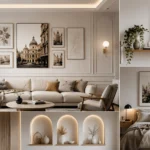
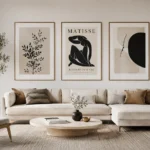
- Statement artwork above sofa
- Neutral gallery composition
- Wood-accent panels
Bedroom
- Soft abstract artwork
- Minimal frame usage
- Warm ambient lighting
Dining Room
- Symmetrical arrangement
- Vintage European prints
- Textural balance
Hallways & Entryways
- Linear frame alignment
- Mirror integration
- Slim shelving units
Budget-Friendly Wall Decor Alternatives
This aesthetic can be achieved without luxury spending.
Affordable Solutions
- Printable digital artwork
- DIY wooden framing
- Neutral-toned posters
- Vintage thrift frames
- Fabric wall hangings
Budget vs Luxury Comparison
| Element | Budget Option | Luxury Option |
| Frames | MDF | Solid oak wood |
| Art | Digital prints | Original artwork |
| Lighting | LED strips | Designer lamps |
| Texture | Paint | Lime plaster |
Common Wall Styling Mistakes
- Overcrowding visual space
- Mixing incompatible color tones
- Ignoring wall proportions
- Poor lighting balance
- Lack of thematic consistency
Expert Interior Design Techniques
60–30–10 Color Principle
- 60% dominant neutral tone
- 30% secondary shade
- 10% accent color
Focal Point Strategy
Each wall should contain a primary visual anchor.
Spacing Discipline
Maintain consistent frame distance for visual clarity.
Layering Method
Combine:
- Frames
- Shelving
- Textural elements
Psychological Impact of Wall Design
Wall aesthetics influence emotional and mental well-being.
- Soft tones reduce stress
- Minimal design enhances focus
- Natural materials improve comfort
- Balanced layouts support calm thinking
Advantages & Limitations
Advantages
- Timeless visual appeal
- Highly adaptable
- Emotionally calming
- Works across all room types
Limitations
- May appear overly neutral if under-styled
- High-end materials can be costly
- Requires careful balance
Final Transformation Insight
Pottery Barn wall decor in 2026 is not just a passing trend—it is a refined design philosophy rooted in emotional comfort, European elegance, and timeless simplicity.
It represents a shift in modern interiors toward:
- Less visual chaos
- More intentional design
- Deeper emotional connection
Whether applied in small apartments or large homes, this style provides a universal framework for creating interiors that feel both luxurious and livable.
FAQs
It is a design approach focused on neutral tones, natural materials, and timeless visual balance.
Yes, it is widely adopted in the UK, Germany, France, and Scandinavian countries.
Use printable art, neutral colors, and DIY framing solutions.
Beige, cream, white, grey, and earthy brown tones.
Yes, it enhances space perception by reducing clutter.
Conclusion
Pottery Barn wall decor continues to define modern interior elegance in 2026 by blending simplicity, emotional depth, and European-inspired aesthetics.
It is not just decoration—it is a structured design language that transforms walls into meaningful visual experiences.
The future of interior design is clear:
Minimal yet expressive
Neutral yet emotional
Simple yet timeless
And this style remains at the center of that evolution.