Introduction
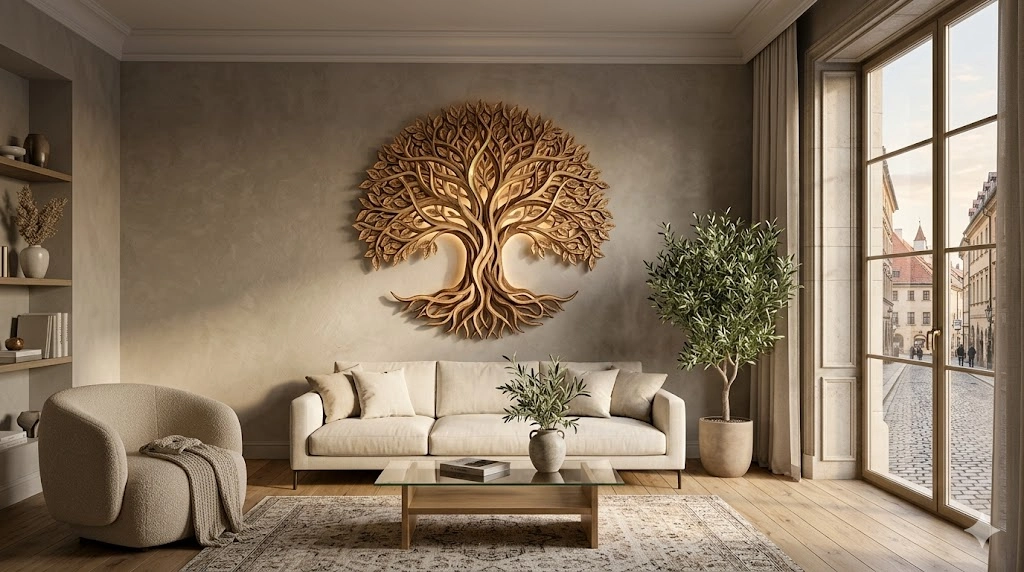
Wood wall art decor is no longer a simple decorative addition placed on empty surfaces. In 2026, it evolved into a foundational interior design language shaping the emotional, psychological, and visual identity of modern European homes. From compact urban apartments in Germany to expansive luxury villas in France and serene minimalist Scandinavian houses, wood has become a defining material that influences how people perceive comfort, warmth, and space.
Unlike synthetic finishes, printed wallpapers, or industrial plastics, wood introduces something deeply organic into interiors—authentic texture, natural warmth, and emotional grounding. It transforms walls from static boundaries into expressive architectural features that communicate lifestyle, values, and identity.
This comprehensive pillar guide explores everything about wood wall art decor in Europe, including its psychological impact, cultural design differences, evolving trends, material selection, room-specific applications, and future innovations shaping 2026 and beyond.
If your goal is to understand wood wall aesthetics like a professional interior designer, architect, or European design consultant, this guide serves as a complete knowledge framework.
Why Wood Wall Art Decor Is Dominating European Interiors 2026
Europe has always been a global leader in interior design evolution. In 2026, one of the most dominant transformations is the shift toward natural, emotionally intelligent, and environmentally responsible interiors. This is not just a design preference—it is a cultural movement.
Core Psychological Shift Behind the Trend
Modern homeowners across Europe are increasingly rejecting:
- Sterile white walls that feel emotionally empty
- Artificial plastic-based materials lacking depth
- Over-minimal spaces that feel cold and lifeless
Instead, they are actively seeking:
- Emotional warmth and tactile comfort
- Stronger connection with natural environments
- Interiors that reduce stress and mental fatigue
- Spaces that feel human, not mechanical
Wood wall art decor directly fulfills these psychological needs.
Biophilic Design Integration
One of the strongest drivers behind this transformation is biophilic design—a concept rooted in human biology that emphasizes connection with nature.
Wood supports this philosophy because:
- It originates directly from natural ecosystems
- It retains organic grain patterns that visually calm the mind
- It introduces biotic warmth into artificial indoor environments
- It improves psychological comfort and reduces stress levels
This is why architects across Europe are integrating natural wood wall design into residential, hospitality, and commercial spaces.
Emotional Architecture Movement
Interior design is no longer purely visual. It is emotional architecture—spaces designed to influence mood, cognition, and behavior.
Wood wall structures contribute by:
- Lowering cognitive overload in busy environments
- Enhancing emotional stability and relaxation
- Creating safe, grounded spatial experiences
- Improving focus in work-oriented environments
This emotional layer is what separates wood wall decor from standard decorative materials.
Sustainability as a European Standard
Sustainability is no longer optional in European design—it is mandatory in modern architectural ethics.
Wood is preferred because:
- It is renewable and responsibly harvested
- It can be recycled or repurposed
- It has a significantly lower carbon footprint
- It offers long-term durability compared to synthetic materials
Therefore, wood wall art decor in Europe represents both aesthetic excellence and ecological responsibility.
European Design Authority Behind Wood Wall Art Decor
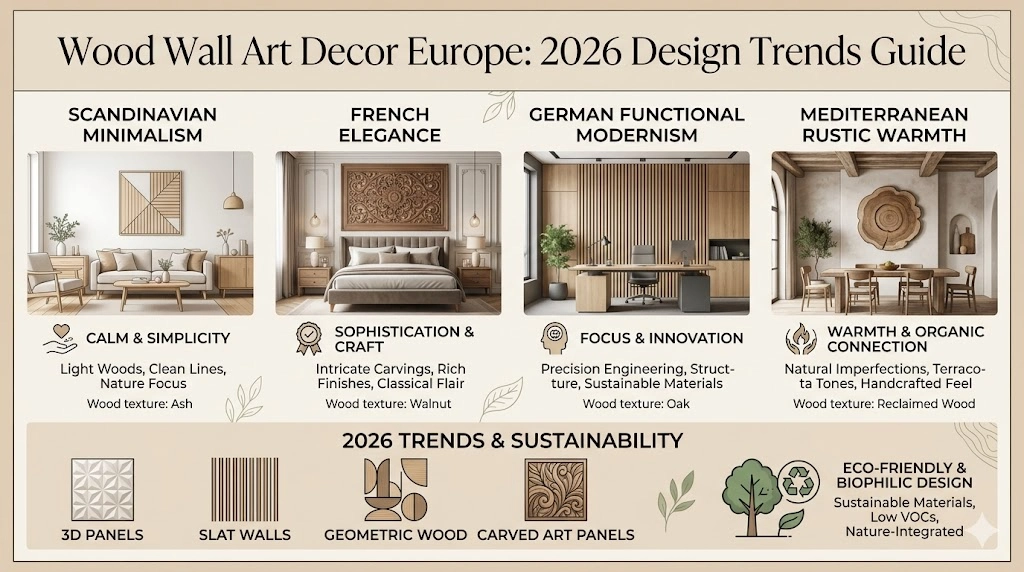
Europe is not a single design identity—it is a collection of distinct cultural aesthetics. Each region applies wood in a different emotional and structural context.
Scandinavian Interior Philosophy – Minimalism + Natural Light
Scandinavian design is one of the most influential forces in modern wood wall aesthetics.
Key Characteristics:
- Light-toned woods such as oak, ash, and birch
- Minimal decorative interruption
- Soft neutral color palettes
- Strong emphasis on daylight integration
Design Objective:
To achieve visual silence, emotional clarity, and mental relaxation.
Vertical wood slat walls are especially popular in bedrooms and living spaces, where calmness is prioritized.
French Interior Design – Luxury + Artistic Expression
French interiors elevate wood into an artistic and cultural medium.
Key Characteristics:
- Hand-carved wooden panels
- Ornamental detailing and symmetry
- Gold-accent integration with wood finishes
- Elegant classical proportions
Design Objective:
To create refined luxury spaces with artistic storytelling.
This is often referred to as luxury wood wall decor in European design circles.
German Interior Design – Precision + Functional Logic
German design emphasizes structure, efficiency, and technical precision.
Key Characteristics:
- Geometric wood panel systems
- Modular wall installations
- Dark walnut and structured oak finishes
- Perfect alignment and engineered detailing
Design Objective:
To balance aesthetic beauty with mechanical precision.
This approach is widely associated with modern wood wall panel systems in Europe.
Mediterranean Interior Style – Warmth + Organic Living
Southern European design prioritizes emotional warmth and relaxed living environments.
Key Characteristics:
- Deep walnut and earthy wood tones
- Natural imperfections preserved intentionally
- Soft ambient lighting integration
- Textural, lived-in surfaces
Design Objective:
To create emotionally comforting and socially inviting spaces.
Psychology of Wood Wall Art Decor
Wood is not only visually appealing—it has measurable psychological effects on human perception and behavior.
Stress Reduction Mechanism
Environmental psychology research shows that natural materials:
- Reduce stress hormone activity
- Improve cognitive recovery
- Enhance emotional balance
Wood surfaces activate these responses through visual texture and organic structure.
Emotional Stability Enhancement
Wood environments are commonly perceived as:
- Safer and more secure
- More emotionally welcoming
- More grounded and stable
This is why wood is widely used in bedrooms and relaxation spaces.
Spatial Perception Alteration
Wood design can visually modify architectural perception:
- Vertical patterns increase perceived ceiling height
- Horizontal patterns expand visual width
- Textured surfaces create dimensional depth
Types of Wood Wall Art Decor
3D Wooden Wall Panels
These panels introduce strong shadow depth and visual layering, often used in luxury interiors and hospitality environments.
Geometric Wood Wall Art
Hexagonal and modular patterns dominate urban European apartments and office environments.
Vertical Slat Wood Walls
A signature Scandinavian design element that enhances minimalism and spatial height.
Carved Artistic Panels
Handcrafted wooden surfaces that emphasize cultural storytelling and luxury craftsmanship.
Comparative Overview
| Type | Style Origin | Visual Effect | Best Use | Emotion |
| 3D Panels | Germany | Depth & luxury | Living rooms | Prestige |
| Geometric | Urban Europe | Structured rhythm | Offices | Focus |
| Slats | Scandinavia | Clean verticality | Bedrooms | Calm |
| Carved | France/Italy | Artistic richness | Villas | Emotion |
Room-by-Room Application Guide
Living Room
- Full feature wall installations
- Mixed wood textures
- Integrated lighting systems
Goal: Strong emotional impression
Bedroom
- Soft oak or walnut headboards
- Ambient LED backlighting
Goal: Restful psychological state
Dining Room
- Vertical warm wood strips
- Mid-tone finishes
Goal: Social warmth and connection
Home Office
- Acoustic wood panels
- Light-toned geometric designs
Goal: Focus and cognitive clarity
2026 Wood Wall Art Decor Trends in Europe
Warm Minimalism
Minimal design now incorporates emotional warmth instead of cold emptiness.
Oversized Wall Installations
Entire wall coverage creates immersive spatial environments.
Material Fusion Systems
Wood is increasingly combined with:
- Glass
- Metal
- Natural stone
Natural Imperfection Aesthetic
Designers now embrace:
- Visible grain patterns
- Organic inconsistencies
- Raw surface textures
Sustainable Architecture Integration
Eco-certified materials and recycled wood systems dominate production standards.
How to Choose the Right Wood Wall Art Decor
Key Decision Factors:
- Room size
- Lighting conditions
- Emotional intention
- Interior design theme
Selection Framework
| Condition | Ideal Choice |
| Small rooms | Light oak tones |
| Large spaces | Dark walnut |
| Low lighting | Reflective finishes |
| Luxury interiors | Carved wood panels |
Common Mistakes in Wood Wall Design
- Overusing dark tones in compact rooms
- Mixing incompatible wood finishes
- Ignoring lighting design balance
- Using artificial printed wood textures
- Overloading textured walls with decor
Pros & Cons
Advantages
- Natural emotional warmth
- Acoustic improvement
- Long-term durability
- Design versatility
- High aesthetic value
Limitations
- Higher installation cost
- Requires maintenance
- Sensitive to humidity
- Risk of visual heaviness if misused
Future of Wood Wall Art Decor
The future of interior design in Europe is moving toward intelligent material ecosystems.
Emerging innovations include:
- Smart wood panels with embedded LED systems
- AI-generated spatial design planning
- Modular eco-wood wall structures
- Hybrid natural-synthetic material integration
Wood will remain central because it bridges technology and nature seamlessly.
FAQs
It is a design method using real or engineered wood to create textured wall surfaces.
Yes, it is widely used in modern European homes for warmth and minimal design.
Oak, walnut, ash, and teak are most popular in Europe.
Yes, but use light colors and vertical patterns.
Warm minimalism with natural textures and mixed materials.
Conclusion
Wood wall art decor has transcended traditional decoration and evolved into a complete lifestyle expression across Europe. It represents a synthesis of nature, emotion, sustainability, and modern architectural intelligence.
In 2026, interiors are no longer defined solely by visual aesthetics—they are defined by emotional experience, psychological comfort, and environmental responsibility.
Wood wall art decor sits at the center of this transformation, shaping how modern Europeans live, feel, and connect with their spaces.
For design platforms like TheWallsArt.com, this topic is not just content—it is a long-term authority pillar shaping the future of interior design discourse in Europe.