Introduction
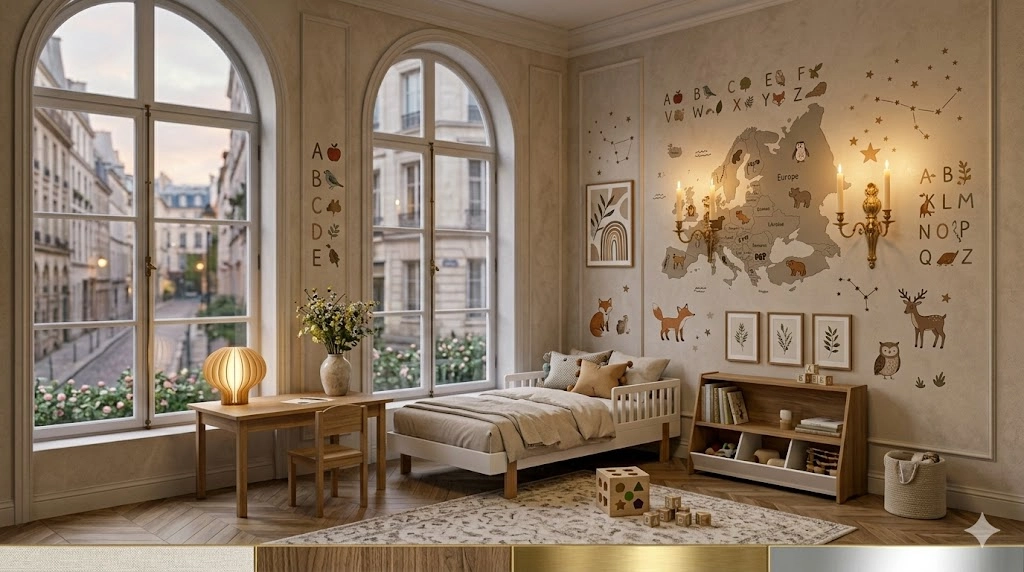
In today’s European interior design landscape, children’s wall decor stickers are no longer treated as simple decorative elements placed randomly on bedroom walls. They have evolved into structured developmental tools that influence how children feel, think, behave, and learn inside their personal environment.
Across countries such as Germany, Sweden, Denmark, France, the Netherlands, and the United Kingdom, parents are increasingly adopting a more intentional design mindset. Instead of focusing purely on visual attractiveness, they are now prioritizing emotional wellbeing, cognitive stimulation, safety compliance, and educational integration.
A child’s bedroom is their first micro-environment. It becomes their emotional foundation, imaginative playground, learning laboratory, and rest space. Every visual element in this environment contributes to neurological stimulation and emotional conditioning—especially wall visuals.
Modern European design philosophy integrates four core dimensions:
- Child psychology and emotional development
- Montessori-inspired learning environments
- Strict European safety regulations
- Minimalist yet functional interior aesthetics
This comprehensive 2026 guide explores everything about childrens wall decor stickers, including psychological influence, design systems, regional European trends, safety frameworks, and room-by-room application strategies for optimal child development.
Understanding Childrens Wall Decor Stickers: Definition, Function & Evolution
Childrens wall decor stickers are removable decorative wall decals manufactured using vinyl, silicone-based compounds, or eco-certified materials. They are designed to adhere smoothly to surfaces such as painted walls, wooden furniture, glass panels, and interior partitions without causing permanent damage.
Unlike traditional wall paint or wallpaper, these stickers offer flexibility, modular design, and interactive placement options that can evolve as the child grows.
Common Themes Include:
- Animals and wildlife environments
- Alphabet and numeric learning systems
- Fantasy and storytelling illustrations
- Space exploration and galaxy themes
- Ocean, jungle, and nature ecosystems
- Minimalist geometric learning shapes
Evolution of Wall Stickers in Children’s Interior Design
The transformation of children’s wall decor stickers over the last two decades reflects a major shift in interior design philosophy.
Earlier Era (Pre-2010):
- Purely decorative purpose
- Cartoon-dominated visuals
- Low-cost synthetic materials
- Random placement approach
- Short-term aesthetic usage
Modern Era (2026 Design Philosophy):
- Educational integration systems
- Psychology-driven visual planning
- Eco-friendly certified materials
- Structured wall zoning concepts
- Long-term developmental design strategy
Today, wall stickers are not considered accessories—they are considered environmental learning tools.
Psychological Impact of Childrens Wall Decor Stickers
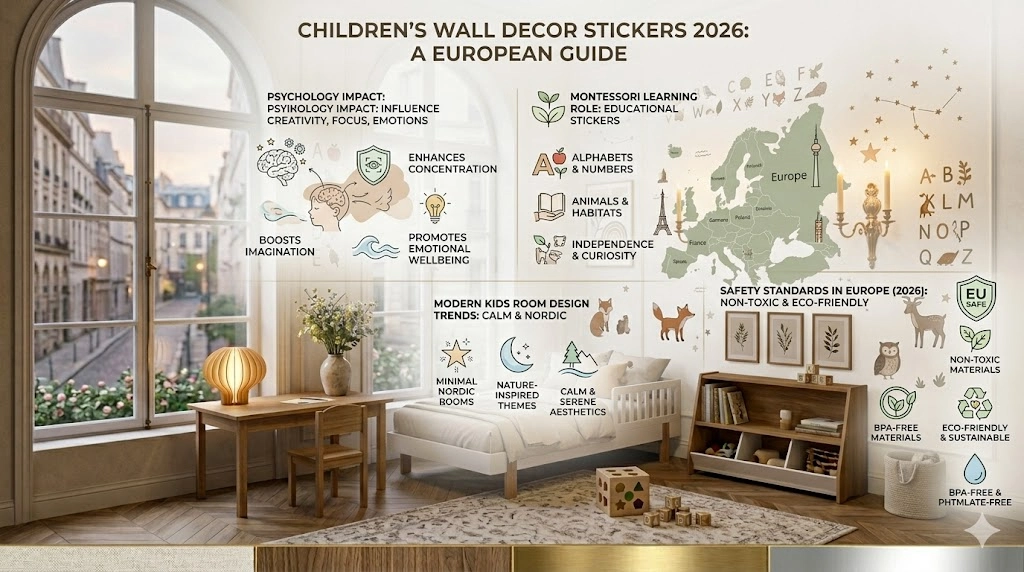
One of the most significant advancements in modern European interior design is the recognition that visual environments directly influence neurological and emotional development in children.
Core Principle:
A child’s surroundings act as silent educators that continuously shape emotional responses, cognitive patterns, and behavioral habits.
Color Psychology in Kids Room Design
Colors are among the most powerful psychological triggers in interior environments.
How Colors Influence Child Behavior:
- Blue & Green tones: Promote calmness, emotional stability, and concentration
- Yellow shades: Enhance creativity, happiness, and cognitive stimulation
- Soft pink and neutral tones: Provide emotional comfort and security
- Red accents: Increase energy levels but should be used sparingly to avoid overstimulation
Improper color balancing may lead to distraction, restlessness, or sensory overload in sensitive children.
Emotional Connection Through Visual Characters
Children form emotional bonds with visual stimuli long before they develop strong linguistic understanding.
Wall stickers featuring:
- Friendly animals
- Soft illustrated characters
- Natural landscapes
- Story-based visual elements
can significantly enhance emotional stability and imagination.
These visuals help children:
- Feel emotionally secure during sleep
- Reduce separation anxiety
- Develop storytelling imagination
- Strengthen empathy through visual association
Visual Learning and Cognitive Development
Modern educational psychology confirms that visual learning is one of the fastest cognitive absorption methods in early childhood development.
Childrens wall decor stickers support:
- Memory retention improvement
- Early literacy development
- Shape and pattern recognition
- Logical thinking development
- Associative learning through repetition
This aligns strongly with Montessori educational principles, where self-directed visual learning environments are prioritized.
European Design Philosophy in Kids Wall Decor Stickers
Europe is globally recognized for its structured and human-centric interior design systems. Each region contributes a unique interpretation of children’s space design.
Scandinavian Minimalist Design Approach
Countries such as Sweden, Norway, and Denmark emphasize simplicity and emotional balance.
Key Characteristics:
- Soft pastel color palettes
- Nature-inspired visuals (trees, clouds, mountains)
- Minimal visual clutter
- Focus on emotional calmness
Design Philosophy:
“Reducing visual noise enhances cognitive clarity.”
German Functional Design System
German interior design is highly structured and logic-driven.
Core Features:
- Educational wall zoning systems
- Organized visual learning layouts
- Clear separation of sleep, play, and study zones
Design Philosophy:
“Functionality is more important than decoration.”
French Aesthetic Emotional Design
French design emphasizes emotional storytelling and artistic expression.
Key Features:
- Soft floral illustrations
- Storybook-inspired visuals
- Elegant pastel gradients
Design Philosophy:
“Beauty enhances emotional intelligence.”
UK Space Optimization Design
Due to smaller living spaces, UK design focuses on efficient wall utilization.
Key Features:
- Vertical learning systems
- Multi-functional sticker zones
- Compact storytelling layouts
Room-by-Room Application Strategy
Proper placement of children’s wall decor stickers varies depending on the developmental stage of the child.
Nursery Room
Primary Objective:
Emotional bonding and sensory calmness
Recommended Designs:
- Soft clouds and moon imagery
- Gentle animal illustrations
- Minimal star patterns
Over-stimulation should be strictly avoided at this stage.
Toddler Room
Primary Objective:
Early learning and curiosity development
Recommended Designs:
- Alphabet and number charts
- Animal classification visuals
- Basic shape recognition systems
Kids Bedroom
Primary Objective:
Imagination expansion and identity formation
Recommended Designs:
- Space exploration themes
- Jungle and ocean storytelling murals
- Personalized name-based wall art
Playroom Environment
Primary Objective:
Creativity, interaction, and exploration
Recommended Designs:
- Interactive world maps
- Growth tracking charts
- Large educational murals
Educational Benefits of Wall Stickers in Child Development
Childrens wall decor stickers function as passive learning systems integrated into daily environments.
Key Educational Advantages:
- Encourages independent exploration
- Strengthens visual memory retention
- Supports early Montessori learning
- Enhances curiosity-driven behavior
- Builds symbolic thinking ability
Popular Educational Themes:
- Alphabet recognition walls
- Global geography maps
- Animal classification systems
- Daily routine visualization charts
Safety Standards in European Kids Room Design
Safety compliance is a critical requirement in modern European interior design.
Required Standards:
- Non-toxic material certification
- BPA-free adhesive technology
- Low VOC emission inks
- Odor-free manufacturing processes
- Hypoallergenic surface design
Why Safety Matters:
Children frequently interact physically with wall surfaces. Poor-quality materials can affect indoor air quality and potentially trigger allergies or sensitivities.
Common Mistakes in Wall Sticker Design
Despite good intentions, many parents make design errors.
Mistake 1: Overcrowded Visual Space
Too many elements create cognitive overload and reduce focus.
Mistake 2: Ignoring Child Personality
Design must reflect the emotional and behavioral preferences of the child.
Mistake 3: Incorrect Color Distribution
Excessive bright colors can increase restlessness.
Mistake 4: Improper Placement Height
Visual elements should align with child eye level for effective engagement.
How to Select the Right Childrens Wall Decor Stickers
Age-Based Selection Framework
| Age Group | Sticker Type | Purpose |
| 0–2 | Soft shapes | Emotional comfort |
| 2–5 | Educational visuals | Learning stimulation |
| 5–10 | Story-based themes | Imagination development |
Pros and Cons Overview
Advantages:
- Easy application and removal
- Cost-effective interior upgrade
- Strong educational integration
- Wide design variety
- Safe modern material options
Limitations:
- Low-quality materials may peel over time
- Overuse can reduce aesthetic balance
- Ineffective on textured wall surfaces
FAQs
The evolution of wall stickers is entering a highly technological phase.
Interactive visuals activated via mobile devices.
Fully biodegradable sticker production systems.
QR-linked educational storytelling environments.
Custom visuals based on child personality profiling.
Final Conclusion
Childrens wall decor stickers have transformed from simple decorative tools into advanced developmental systems that combine psychology, education, and interior design innovation.
When used strategically, they create environments that are not only visually appealing but also emotionally supportive, cognitively stimulating, and developmentally beneficial.
A well-designed wall is no longer decoration—it is a silent educator shaping the child’s future.