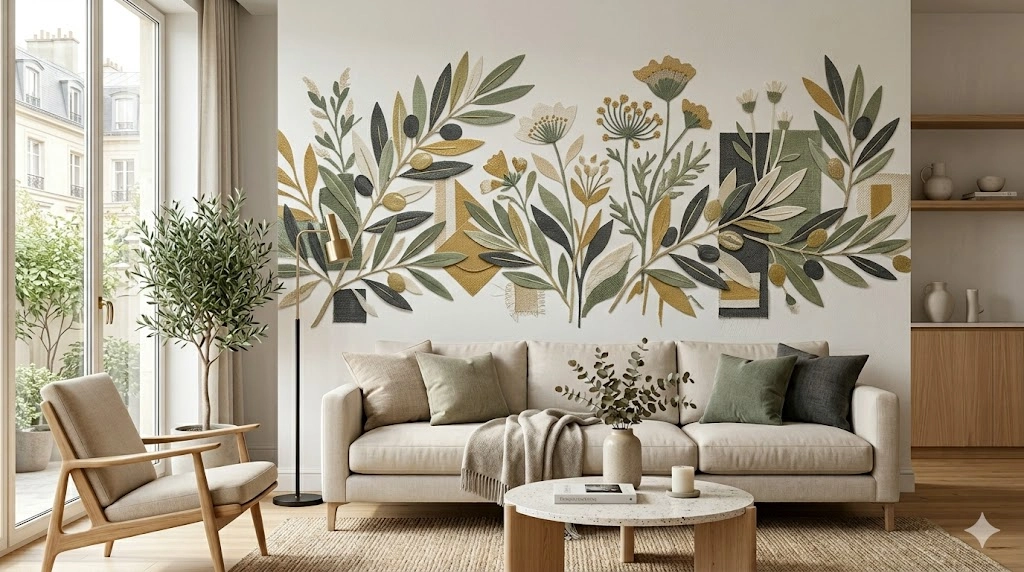
Introduction
Decorating stickers for walls have evolved far beyond simple decorative accessories. In 2026, they are widely recognized across Europe as a functional interior design instrument that blends aesthetics, psychology, and spatial optimization.
From minimalist apartments in Germany to Scandinavian-inspired homes in Sweden and artistic studios in France, wall decals are now part of modern architectural expression.
Their strength lies in one fundamental idea:
they transform the atmosphere of a room instantly—without painting, drilling, or permanent renovation.
This comprehensive guide explains everything in a structured, design-oriented, and semantically optimized way:
- European interior design principles
- Professional placement frameworks
- Color psychology in spatial environments
- Material science and durability factors
- Room-by-room styling strategies
- Common design mistakes
- Future interior trends in Europe (2026 outlook)
By the end of this guide, you will understand how to apply decorating stickers for walls like an interior design professional using structured visual intelligence rather than random decoration.
What Are Decorating Stickers for Walls?
Decorating stickers for walls—also referred to as wall decals, adhesive wall graphics, or peel-and-stick wall décor—are flexible decorative elements designed to adhere directly to interior surfaces such as painted walls, glass, or smooth furniture panels.
They are engineered for:
- Easy application
- Non-destructive removal
- Temporary or semi-permanent design enhancement
Common Categories Include:
- Minimalist linear artwork
- Typographic motivational quotes
- Botanical and natural illustrations
- Abstract geometric compositions
- Children’s imaginative graphics
- Optical illusion 3D decals
Why They Are Highly Popular in Europe:
European interior design culture emphasizes:
- Functional minimalism
- Visual clarity
- Sustainable consumption
- Non-permanent design flexibility
Wall stickers align perfectly with these principles because they offer aesthetic enhancement without structural alteration.
Why Decorating Stickers for Walls Are Trending in Europe
The 2026 European design landscape is shaped by a central philosophy:
“Minimal visual input, maximum emotional meaning.”
Decorating stickers for walls support this shift through controlled visual expression.
Scandinavian Minimalism Influence
Countries such as Denmark, Sweden, and Norway dominate minimalist design culture.
Their interiors emphasize:
- Neutral chromatic palettes
- Open visual breathing space
- Organic simplicity
- Functional composition
In such environments, wall stickers are used sparingly as subtle emotional accents rather than dominant decorative features.
Example:
A thin black line illustration of mountains on a white matte wall creates quiet visual depth.
German Functional Design Logic
German interior aesthetics prioritize:
- Structural precision
- Order-based composition
- Functional alignment
Wall stickers in German-inspired spaces are placed with mathematical consistency, often aligned with furniture axes and architectural symmetry.
French Artistic Interior Expression
French interiors emphasize emotional resonance and artistic storytelling.
Wall stickers are used for:
- Poetic typography
- Elegant script visuals
- Soft romantic illustrations
- Narrative-based wall composition
The goal is expressive sophistication rather than minimal restraint.
Mediterranean Interior Warmth
Spain, Italy, and Greece favor expressive, warm, and nature-driven aesthetics.
Common wall sticker themes include:
- Sun-inspired motifs
- Olive branches and botanical visuals
- Hand-drawn artistic textures
- Earth-toned compositions
These designs introduce warmth and cultural identity into interiors.
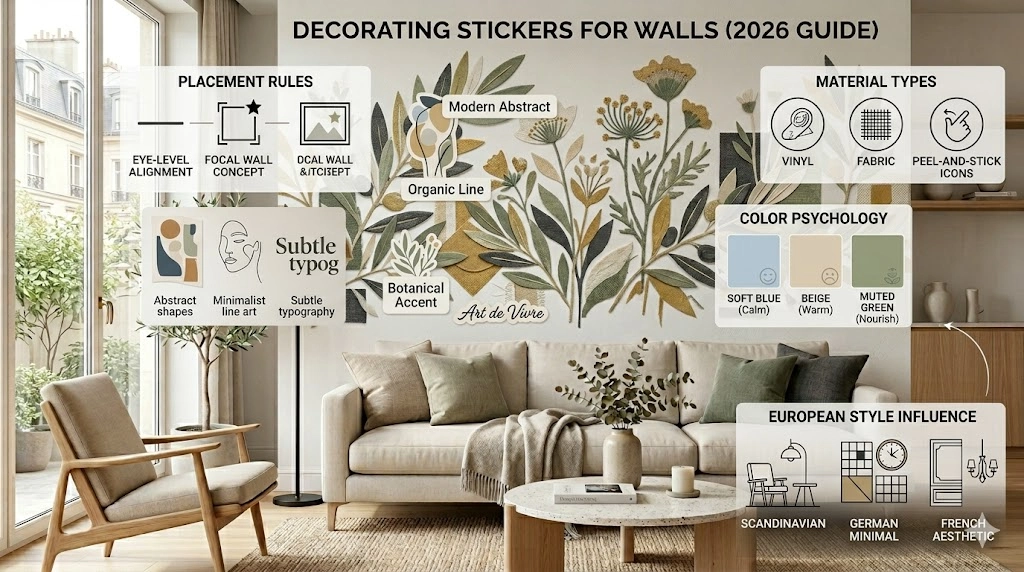
Types of Decorating Stickers for Walls
Selecting the correct material type is essential for long-term visual performance and design coherence.
Vinyl Wall Stickers
Vinyl-based decals are the most widely used category in Europe.
Characteristics:
- High durability index
- Moisture resistance
- Clean matte or glossy finish
- Long-term adhesion stability
Best Applications:
- Living rooms
- Kitchens
- Hallways
These are ideal for permanent or semi-permanent installations.
Fabric-Based Wall Stickers
Fabric decals represent a premium segment of wall decoration.
Characteristics:
- Soft visual texture
- Non-reflective surface
- Eco-conscious material composition
Best Applications:
- Bedrooms
- Nurseries
- Relaxation zones
They create a calming, atmospheric softness.
Peel-and-Stick Removable Decals
These are designed for maximum flexibility and user convenience.
Characteristics:
- Easy repositioning capability
- No surface damage
- Rental-friendly solution
Best Applications:
- Rental apartments
- Temporary interiors
- Seasonal decoration cycles
They are especially popular among young urban Europeans.
3D Optical Wall Stickers
This category represents advanced decorative innovation.
Characteristics:
- Depth illusion effect
- Visual spatial expansion
- High-impact focal design
Best Applications:
- Luxury interiors
- Feature walls
- Modern architectural spaces
They are often used as statement design elements.
Wall Sticker Placement Rules
Design failure rarely comes from poor aesthetics—it comes from incorrect spatial placement.
1: Eye-Level Positioning Principle
Optimal installation height is approximately:
150–160 cm from floor level
This aligns with natural human visual perception and ensures ergonomic viewing comfort.
2: Single Focal Wall Strategy
Over-decoration reduces visual hierarchy.
Professional designers follow:
- One dominant accent wall per room
- Remaining walls remain neutral
- Controlled visual weight distribution
3: Furniture Alignment Principle
Wall décor must synchronize with:
- Sofa center axis
- Bed headboard alignment
- Dining table symmetry line
This creates structural harmony and spatial coherence.
4: Negative Space Optimization
Negative space is not emptiness—it is visual luxury.
- Excess decoration = visual noise
- Balanced spacing = premium perception
Minimalism depends on controlled absence.
Room-by-Room Styling Guide
Living Room Styling
Recommended visual patterns:
- Geometric abstract compositions
- Large central wall decals
- Monochromatic visual systems
Goal: sophisticated modernity and structured elegance.
Bedroom Styling
Recommended design language:
- Soft floral illustrations
- Minimal typography quotes
- Muted pastel tonalities
Goal: psychological relaxation and emotional calmness.
Kids Room Styling
Recommended visual categories:
- Educational alphabets
- Animal illustrations
- Fantasy storytelling visuals
Goal: cognitive stimulation and creative learning.
Kitchen Styling
Recommended design elements:
- Culinary iconography
- Coffee-themed typography
- Water-resistant vinyl designs
Goal: subtle personality infusion without clutter.
Material & Quality Comparison
| Material Type | Durability | Removal Ease | Ideal Space | Visual Effect |
| Vinyl | High | Moderate | Living areas | Clean modern |
| Fabric | Medium | Easy | Bedrooms | Soft premium |
| Peel & Stick | Medium | Very Easy | Rentals | Flexible minimal |
| 3D Stickers | High | Moderate | Feature walls | Luxury depth |
Color Psychology in Wall Sticker Design
Color is not simply visual decoration—it is cognitive emotion stimulation.
Blue Spectrum
- Psychological effect: calmness, clarity, focus
- Ideal environments: bedrooms, offices
Green Spectrum
- Psychological effect: balance, renewal, nature connection
- Ideal environments: living spaces
Yellow Spectrum
- Psychological effect: energy, creativity, optimism
- Ideal environments: creative rooms, kitchens
Black & White Contrast
- Psychological effect: luxury, structure, minimal elegance
- Ideal environments: modern European interiors
2026 European Color Trend
- Muted saturation levels
- Earth-derived tones
- Soft gradient transitions
- Natural chromatic harmony
Common Design Mistakes
Avoid these frequent errors:
- Overcrowding wall surfaces
- Mixing incompatible visual styles
- Ignoring scale proportion
- Neglecting lighting conditions
- Random non-structured placement
Design rule:
One strong visual statement > multiple weak decorations.
Pros and Cons
Advantages
- Cost-efficient interior upgrade
- Non-invasive installation
- Rental-safe design option
- Wide stylistic diversity
- Seasonal adaptability
Disadvantages
- Low-quality materials may peel
- Unsuitable for textured surfaces
- Requires precise alignment
- Overuse reduces aesthetic value
Expert Buying Framework
Before purchasing wall stickers, evaluate:
1. Adhesive Technology
- Removable vs permanent bonding
2. Surface Compatibility
- Works best on smooth, clean walls
3. UV Resistance Level
- Prevents color degradation over time
4. Paint Safety
- Ensures non-destructive removal
Step-by-Step Application Method
- Clean wall thoroughly
- Measure placement precisely
- Mark alignment points lightly
- Peel backing gradually
- Apply from center outward
- Remove air bubbles
- Final alignment correction
Result: professional-grade installation.
European Interior Design Trends
Future design evolution includes:
- Reduced decorative density
- Nature-integrated geometry
- Sustainable adhesive materials
- Soft tonal layering systems
- Personalized storytelling walls
Core direction:
Design becomes meaning-driven, not decoration-driven.
FAQ
Yes, high-quality removable decals are generally safe when applied on properly cured paint surfaces.
Fabric-based versions may be reusable; vinyl versions are usually single-use.
They perform best on smooth and non-porous surfaces.
Typically between 2 to 5 years depending on material quality and environmental exposure.
Yes, peel-and-stick variants are specifically designed for rental-friendly usage.
Final Transformation Principle
Decorating stickers for walls are not just decorative tools—they are spatial communication systems.
A well-designed wall communicates:
- Emotion
- Identity
- Lifestyle intention
- Aesthetic discipline
The future of interior design in Europe is not about filling space—it is about shaping experience through minimal, intentional visual elements.