Introduction
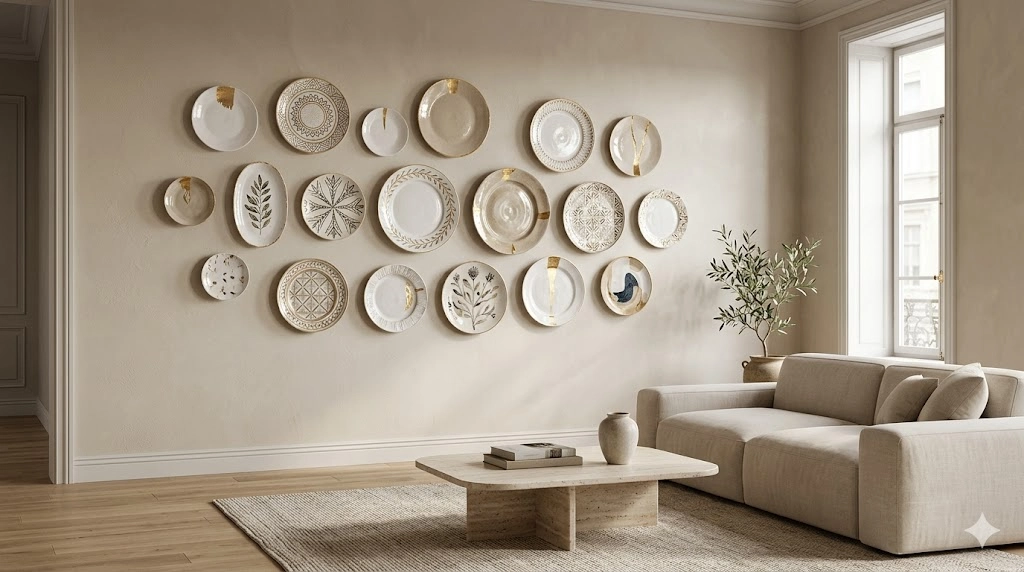
Decorative wall plates have evolved far beyond their traditional function as dining accessories. In modern European interior design (2026), they are recognized as highly expressive wall décor elements that combine artistry, cultural storytelling, and spatial aesthetics.
Unlike flat paintings or printed canvases, wall plates introduce three-dimensional depth, subtle shadow play, and tactile richness. Designers across Europe increasingly use them to create layered interiors that feel more human, emotional, and visually dynamic.
This guide provides a complete, in-depth understanding of decorative wall plates, including their cultural background, psychological impact, styling systems, and advanced arrangement techniques used in luxury European homes.
You will learn:
- What decorative wall plates are
- Why they are trending in 2026 Europe
- Psychological impact of shapes and materials
- Room-by-room placement systems
- European design style interpretations
- Modern luxury arrangement methods
- Common styling mistakes
- Expert buying strategies
- Frequently asked questions
This is a complete pillar-level interior design resource suitable for modern décor blogs like TheWallsArt.com.
What Are Decorative Wall Plates?
Decorative wall plates are artistic ceramic, porcelain, or handcrafted plates specifically designed for wall display instead of food usage. These plates are transformed into decorative objects that function as visual storytelling pieces in interior environments.
They often include:
- Hand-painted motifs
- Geometric compositions
- Floral European patterns
- Minimalist luxury textures
- Cultural heritage designs
- Abstract artistic expressions
In modern interiors, they are no longer viewed as functional kitchenware but as wall-mounted sculptural art pieces.
Their rising popularity is tied to the growing demand for décor that feels authentic, handcrafted, and emotionally expressive rather than mass-produced digital prints.
Why Decorative Wall Plates Are Trending in Europe 2026
The resurgence of decorative wall plates in European interiors is driven by a combination of aesthetic, emotional, and cultural shifts.
Demand for 3D Wall Aesthetics
Flat visuals are no longer enough in modern design. Designers now prioritize physical depth and shadow interaction, which wall plates naturally provide.
Return to Craftsmanship
In a digital-heavy world, homeowners are shifting toward handcrafted objects that feel human, imperfect, and meaningful.
Soft Luxury Movement
Luxury in 2026 is no longer loud or excessive. Instead, it is:
- Quiet
- Minimal
- Textured
- Emotional
Wall plates perfectly align with this philosophy.
Versatility Across Design Styles
They can be integrated into:
- Scandinavian minimalism
- French vintage interiors
- Mediterranean coastal homes
- German structured modernism
Cultural Storytelling
Each plate reflects a heritage—ceramic traditions from Italy, Spain, Portugal, and France are especially influential.
European Origins of Decorative Wall Plates
Decorative wall plates are deeply rooted in European ceramic traditions. Their evolution is tied to centuries of craftsmanship and regional identity.
Italy – Artistic Renaissance Influence
Italy contributed heavily through:
- Renaissance ceramic artistry
- Earth-toned handcrafted pottery
- Decorative wall pottery traditions
Italian designs often emphasize warmth, storytelling, and artisan imperfection.
France – Royal Elegance & Porcelain Heritage
French influence includes:
- Aristocratic porcelain collections
- Floral luxury detailing
- Gold-trimmed ceramic aesthetics
These elements created a sense of refined sophistication still used in luxury interiors.
Spain & Portugal – Azulejo Tile Culture
Southern Europe introduced:
- Hand-painted azulejo patterns
- Blue-and-white ceramic traditions
- Mediterranean architectural ceramics
These designs bring vibrancy and rhythmic pattern repetition.
Germany – Precision & Minimal Structure
German ceramic design focuses on:
- Clean geometry
- Functional aesthetics
- Minimal decorative noise
Scandinavia – Simplicity & Neutral Harmony
Nordic design contributes:
- Soft neutral color palettes
- Minimal arrangement logic
- Emphasis on negative space
Styling Psychology of Decorative Wall Plates
Decorative wall plates are powerful because they influence subconscious emotional responses within interior spaces.
Emotional Psychology Principles
- Circular shapes → harmony, softness, emotional balance
- Ceramic texture → grounding, warmth, authenticity
- Handmade detailing → nostalgia and human connection
- Grouped arrangements → narrative storytelling and creativity
Human Perception Logic
Humans naturally respond positively to:
- Organic shapes
- Natural imperfections
- Tactile surfaces
- Balanced asymmetry
This is why wall plates often feel more “alive” than printed wall art.
European Design Styles Using Wall Plates
Scandinavian Minimalism
- Neutral tones (white, grey, beige)
- Sparse arrangements
- Strong use of empty wall space
Effect: calm, breathable, minimal luxury
French Vintage Luxury
- Floral ceramic detailing
- Gold accents
- Dense gallery compositions
Effect: romantic, elegant, aristocratic atmosphere
Mediterranean Warm Style
- Blue, terracotta, sand tones
- Coastal-inspired ceramics
- Handmade irregular finishes
Effect: warm, artistic, organic living space
German Modernism
- Structured grid placement
- Geometric designs
- Monochrome palettes
Effect: order, clarity, functional beauty
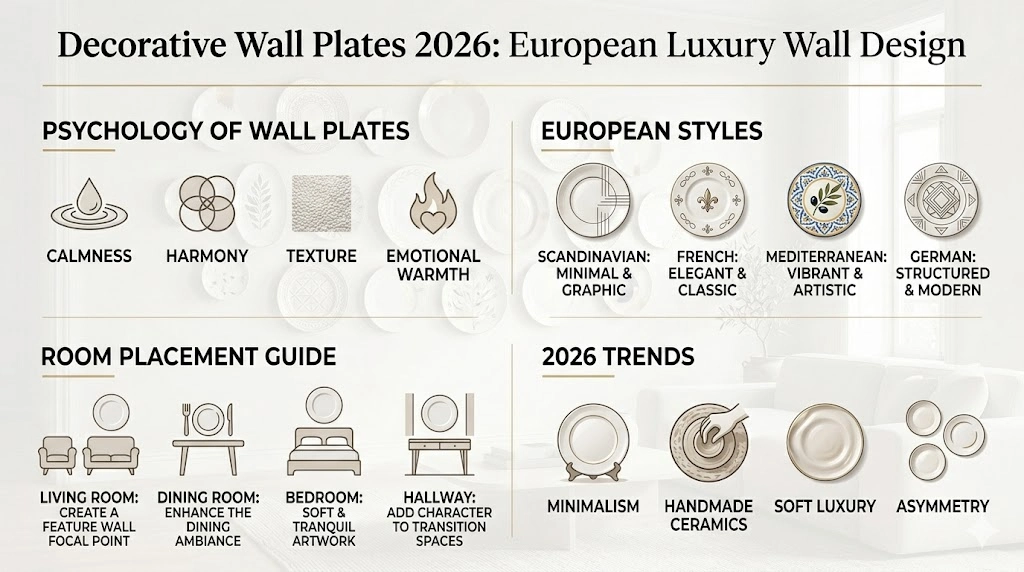
Room-by-Room Wall Plate Styling System
Living Room – Primary Visual Anchor
The living room serves as the main display zone.
Recommended setup:
- Large central focal arrangement
- Balanced symmetrical or clustered design
- Neutral or luxury color palette
Result: strong visual identity and first impression impact
Dining Room – Cultural Expression Space
This is the most historically aligned usage area.
Recommended setup:
- Story-based arrangement
- Heritage-inspired ceramic selection
- Warm ambient lighting
Result: European dining culture atmosphere
Kitchen – Subtle Artistic Layer
Recommended setup:
- Small curated clusters
- Light ceramic tones
- Shelf-based placement
Result: decorative enhancement without clutter
Bedroom – Emotional Softness Zone
Recommended setup:
- Minimal set (2–5 plates)
- Soft pastel palette
- Asymmetrical calm arrangement
Result: relaxation and emotional balance
Hallway – Movement-Based Visual Flow
Recommended setup:
- Vertical progression layout
- Size transition flow (small → large)
- Directional storytelling
Result: dynamic spatial journey experience
Professional Arrangement Systems for Wall Plates
Symmetrical Grid System
- Equal spacing
- Structured alignment
- Balanced visual order
Best for modern luxury interiors
Organic Flow System
- Irregular positioning
- Mixed sizes
- Creative visual storytelling
Best for artistic interiors
Cluster Focal System
- Central dominant plate
- Surrounding smaller plates
- Strong visual hierarchy
Most popular in 2026 European homes
Visual Balance Principle
Always maintain:
- One focal anchor
- Controlled spacing
- Color harmony consistency
Arrangement Style Comparison Table
| Style Type | Best For | Visual Impact | Difficulty |
| Symmetrical Grid | Modern homes | Clean & elegant | Easy |
| Organic Flow | Creative interiors | High artistic feel | Medium |
| Cluster System | Statement walls | High focus impact | Medium |
| Minimal Pairing | Bedrooms | Calm & soft | Easy |
Color Psychology in Wall Plates
Color selection directly influences emotional response:
- Blue → calmness, trust, serenity
- White → purity, openness, minimal luxury
- Gold → prestige, richness, elegance
- Earth tones → grounding, warmth, stability
- Green → freshness, balance, nature connection
Designers use these colors strategically to shape mood perception.
Common Design Mistakes
Avoid these errors:
- Overcrowding the wall
- Ignoring color harmony
- Wrong scale selection
- Poor lighting placement
- Random unplanned layouts
Solutions:
- Define focal point first
- Maintain spacing consistency
- Limit color palette
- Pre-plan layout structure
2026 Decorative Wall Plate Trends
Current European trends include:
- Matte ceramic finishes
- Mixed-material designs (wood + ceramic + metal)
- Ultra-minimal Scandinavian layouts
- Artisan handmade revival
- Neutral luxury palettes
- Asymmetrical gallery compositions
Trend Direction: fewer objects, deeper meaning, stronger storytelling
How to Choose High-Quality Wall Plates
Material Types
- Ceramic → versatile standard
- Porcelain → luxury premium
- Stoneware → rustic durability
Design Indicators
- Hand-painted details preferred
- Smooth, refined edges
- Balanced proportions
Durability Factors
- Secure wall mounting system
- Scratch-resistant glaze
- Proper weight balance
Pros and Cons
Advantages
- Adds 3D spatial depth
- Works in multiple styles
- Affordable luxury aesthetic
- Highly customizable
- Strong cultural storytelling
Disadvantages
- Requires careful installation
- Fragile material handling
- Can overwhelm if overused
- Needs thoughtful planning
FAQs
Yes, they are increasingly popular in European luxury and minimalist interiors.
Living rooms, dining rooms, hallways, kitchens, and bedrooms.
Yes, especially Scandinavian and German-inspired interiors.
Neutral tones, blues, whites, and earthy shades.
They offer texture and depth, but both can be combined effectively.
Final Design Insight
Decorative wall plates represent a shift in modern European interiors—from flat decoration to textural storytelling systems.
They combine:
- Cultural heritage
- Emotional psychology
- Spatial depth
- Artistic craftsmanship
When used correctly, they transform a simple wall into a curated visual narrative.