Introduction
In 2026, interior architecture across Europe is experiencing a profound evolution. Homes are no longer designed solely for visual appeal. Instead, they are being curated as emotional environments that influence mood, comfort, and psychological well-being.
Within this transformation, decorative wood wall panels have emerged as one of the most influential design elements.
From contemporary apartments in Germany to luxurious villas in Italy and minimalist Scandinavian residences, wood wall panels are now a defining feature of modern interior aesthetics.
They are no longer just decorative surfaces.
They function as:
- A luxury architectural system
- A psychological atmosphere enhancer
- A structural design layer
- A sound and acoustic regulator
- A natural material integration method
Unlike paint or wallpaper, wood wall panels introduce depth, tactile richness, and organic warmth that significantly alters spatial perception.
This guide provides a complete understanding of:
Definition and purpose
European design leadership
Psychological and emotional effects
Room-based applications
Material and style variations
2026 design trends
Common design errors
This is not a simple product overview.
It is a complete European wall transformation framework.
What Are Decorative Wood Wall Panels?
Decorative wood wall panels are engineered interior surface systems designed to cover walls using natural or composite wood materials for aesthetic, functional, and acoustic improvement.
In contemporary European architecture, they have evolved beyond traditional wall coverings into integrated design systems.
They now serve as:
- Architectural interior frameworks
- Acoustic optimization layers
- Visual focal point creators
- Emotional environment modulators
- Spatial depth enhancers
Key Characteristics of Modern Wood Panels
Modern systems typically include:
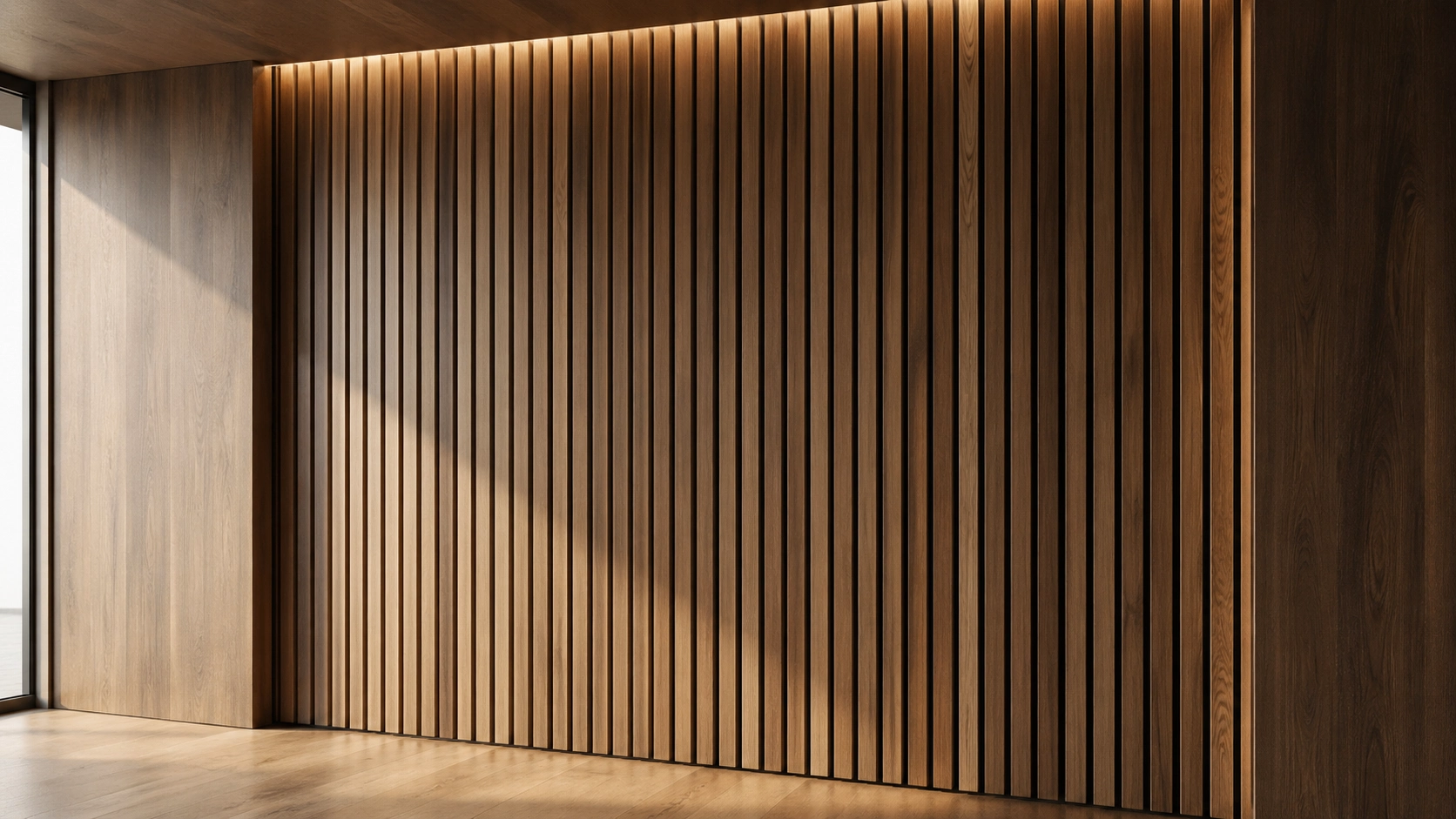
- Vertical slatted geometries
- Three-dimensional textured surfaces
- Natural finishes such as oak, walnut, and ash
- Acoustic insulation integration
- Modular installation technology
Evolution of Wood Wall Panels in Europe
Traditional Era
- Used for insulation and protection
- Found in classic European homes
- Primarily functional, not aesthetic
Modern Era
- Luxury interior design component
- Installed in hotels, offices, and residences
- Combines function + aesthetics
Future Direction
- Smart acoustic integration
- Sustainable modular systems
- AI-generated surface textures
Why Decorative Wood Wall Panels Dominate European Interiors
Europe is at the forefront of this global interior movement due to three major cultural and design shifts.
Return to Natural Material Living
Modern European homeowners are increasingly rejecting sterile, artificial interiors.
Instead, they prefer:
- Organic textures
- Natural material palettes
- Warm visual environments
Wood naturally fulfills these emotional needs.
Biophilic Design Philosophy
Biophilic design emphasizes human connection with nature within built environments.
Wood is central to this concept because it:
- Reduces psychological stress
- Enhances emotional grounding
- Improves cognitive comfort
- Creates sensory balance
Rise of Luxury Minimalism
Luxury in 2026 is no longer defined by excess.
It is defined by:
- Silence in design
- Material authenticity
- Subtle complexity
- Refined simplicity
Wood wall panels perfectly align with this philosophy.
Psychological Impact of Decorative Wood Wall Panels
Wood is not just a visual material—it is a psychological stimulus.
Emotional Stability and Warmth
Wood evokes subconscious feelings of:
- Safety
- Comfort
- Emotional grounding
- Stability
This is why it is widely used in bedrooms and lounges.
Spatial Illusion and Vertical Expansion
Vertical slatted wood panels create optical effects that:
- Increase perceived ceiling height
- Enhance spatial openness
- Improve architectural elegance
Acoustic Enhancement
Wood naturally absorbs and diffuses sound waves, reducing:
- Echo levels
- Environmental noise
- Mental fatigue
This makes it ideal for urban European apartments.
Cognitive Stress Reduction
Natural textures have measurable effects on mental well-being:
- Reduces visual overstimulation
- Lowers digital fatigue
- Supports relaxation response
Types of Decorative Wood Wall Panels
Slat Wood Wall Panels
The most dominant modern European style.
Purpose:
- Clean linear structure
- Minimalist luxury aesthetics
Best Applications:
- Living rooms
- Offices
- Hallways
3D Textured Wood Panels
Highly expressive architectural elements.
Purpose:
- Artistic focal points
- Depth enhancement
Best Applications:
- Feature walls
- Luxury hotels
- Designer interiors
Solid Wood Panels
Traditional high-end interior solution.
Purpose:
- Timeless elegance
- Premium durability
Best Applications:
- Villas
- Heritage homes
Acoustic Wood Panels
Function-driven architectural solution.
Purpose:
- Noise reduction
- Sound control
Best Applications:
- Home offices
- Studios
- Urban apartments
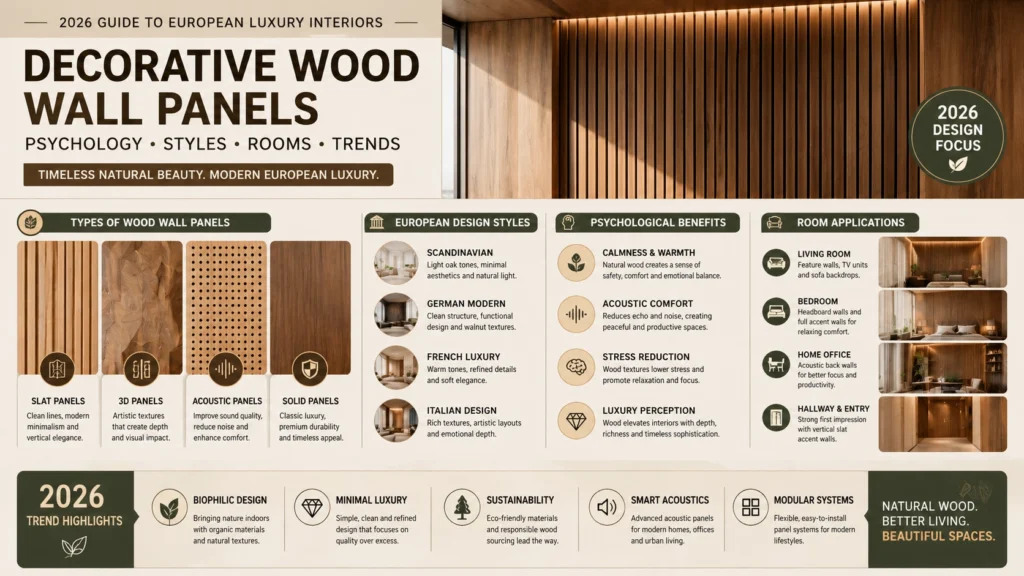
Comparison Table – Wood Panel Types
| Type | Style | Best Use | Benefit |
| Slat Panels | Minimal modern | Living rooms | Elegant simplicity |
| 3D Panels | Artistic | Feature walls | Depth & expression |
| Solid Panels | Classic luxury | Villas | Long-lasting elegance |
| Acoustic Panels | Functional | Offices | Sound optimization |
Room-by-Room Wood Wall Panel Design System
Living Room – Emotional Center
The living room acts as the emotional nucleus of the home.
Applications:
- Television feature wall
- Sofa backdrop
- Fireplace framing
Effect:
- Creates focal balance
- Enhances luxury perception
- Defines social space identity
Bedroom – Restorative Environment
Bedrooms require calm, controlled sensory input.
Applications:
- Headboard wall
- Full accent wall
Effect:
- Enhances sleep quality
- Creates hotel-like ambiance
Home Office – Productivity Zone
Modern European work culture demands focused environments.
Applications:
- Acoustic rear wall
- Partial panel installation
Effect:
- Improves concentration
- Reduces noise distractions
Hallway & Entrance – First Impression Zone
Entrance design defines the identity of a home.
Applications:
- Vertical slatted panels
- Narrow feature walls
Effect:
- Strong visual identity
- Luxury entry perception
European Interior Design Styles Using Wood Panels
Scandinavian Style
- Light oak tones
- Minimal geometry
- Soft natural lighting
German Modernism
- Walnut textures
- Structured alignment
- Functional precision
French Luxury Style
- Warm tonal balance
- Elegant refinement
- Soft contrasts
Italian Design Approach
- Rich wood aesthetics
- Artistic compositions
- Emotional depth
2026 Wood Panel Color Trends
- Natural Oak → Fresh, organic interiors
- Dark Walnut → Premium luxury expression
- Ash Grey → Urban minimalism
- Matte Black → Bold architectural statement
Common Design Mistakes to Avoid
- Overusing dark wood in compact rooms
- Mixing incompatible wood tones
- Ignoring lighting interaction
- Overdesigning small spaces
- Neglecting acoustic balance
Wood Wall Panels vs Paint vs Wallpaper
| Feature | Wood Panels | Paint | Wallpaper |
| Luxury | High | Low | Medium |
| Durability | High | Medium | Low |
| Acoustic Benefit | Yes | No | No |
| Depth | High | Low | Medium |
Future of Decorative Wood Wall Panels
1. Modular Systems
Flexible installation frameworks.
2. Sustainable Materials
Eco-certified wood sourcing expansion.
3. Smart Acoustic Integration
Technology-enhanced wall systems.
4. AI Design Textures
Custom-generated interior patterns.
Pros & Cons
Advantages
- Premium aesthetic value
- Acoustic improvement
- Long lifespan
- Multi-room adaptability
Disadvantages
- Higher cost
- Requires planning
- Not ideal for very small rooms
FAQs
Yes, they remain one of the strongest European interior design movements.
Yes, light tones and vertical layouts are recommended.
Yes, especially slat and acoustic variations.
They are mid-to-premium but offer long-term value.
Conclusion
Decorative wood wall panels are not just a design trend. They represent a structural shift in how Europe approaches interior living.
They combine:
- Emotional comfort
- Architectural depth
- Acoustic intelligence
- Natural aesthetics
In 2026 and beyond, they will remain a cornerstone of luxury interior environments.