Introduction
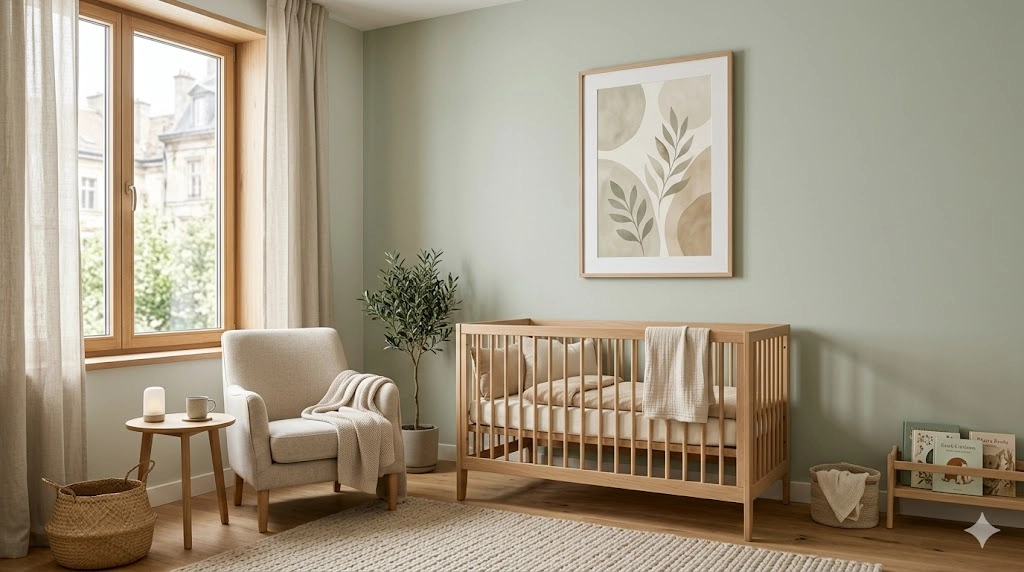
Designing a nursery is not merely about selecting furniture, applying paint, or arranging toys. It is about crafting a nurturing, serene, Wall Art Decor. for Nursery and inspiring environment where your baby can develop, feel protected, and begin their early sensory journey.
One of the most influential—yet frequently underestimated—components in nursery interiors is wall art decor for nursery spaces.
In contemporary European interiors, wall art is not simply ornamental. It functions as a strategic design instrument that:
- Influences emotional ambiance
- Encourages cognitive development
- Enhances comfort and security
- Establishes visual cohesion
However, many parents unknowingly make a critical mistake.
They select nursery wall art based on:
- Temporary trends
- Random inspiration boards
- Personal preference alone
Without a structured framework, the outcome often becomes chaotic, Wall Art Decor. for Nursery overstimulating, or visually inconsistent.
This comprehensive 2026 European design system resolves that challenge.
What You Will Learn in This Guide
- The neuroscience behind nursery wall art
- Different formats and categories of wall decor
- Leading European nursery styles (2026 movements)
- A systematic placement methodology
- Design strategies for small, large, and shared nurseries
- Cost-effective decorating techniques
- Frequent mistakes and how to avoid them
By the end, you will possess a refined, expert-level blueprint to design a nursery that is both aesthetically pleasing and functionally meaningful.
Why Wall Art Decor for Nursery Matters
Visual Stimulation & Brain Development
Infants begin processing visual information immediately after birth.
They are instinctively drawn toward:
- Geometric forms
- Repetitive patterns
- High-contrast imagery
- Soft tonal variations
Carefully curated nursery wall art contributes to:
- Enhanced visual tracking ability
- Improved pattern recognition
- Increased curiosity and engagement
Minimal black-and-white compositions or muted pastel visuals can stimulate early neural activity without overwhelming the senses.
Emotional Safety & Calmness
A nursery should evoke tranquility and reassurance rather than disorder.
Balanced and subtle wall decor:
- Minimizes overstimulation
- Establishes a soothing atmosphere
- Supports healthy sleep rhythms
Excessively bright tones or cluttered compositions can lead to sensory overload and discomfort.
Early Learning Environment
Modern European nurseries frequently adopt Montessori-inspired principles.
In this approach, wall art is transformed into an educational medium that helps:
- Introduce alphabets and numerals
- Familiarize children with animals and natural elements
- Build early language associations
Walls evolve into interactive learning surfaces rather than passive decoration.
Types of Nursery Wall Art Decor
Understanding various formats enables more informed design decisions.
Prints & Posters
Best suited for: Versatility and affordability
- Easily replaceable as the child grows
- Ideal for creating gallery arrangements
- Available in extensive themes and styles
Perfect for parents who enjoy evolving decor concepts.
Wall Decals
Best suited for: Flexibility and ease of installation
- Require no drilling or permanent fixtures
- Removable and reusable
- Highly popular in compact European apartments
Excellent for quick visual transformations without long-term commitment.
Canvas Art
Best suited for: A refined and premium aesthetic
- Durable and long-lasting
- Introduces depth and texture
- Works effectively as a focal feature
Ideal for establishing a central visual statement.
Textiles & Wooden Art
Best suited for: Organic and warm interiors
Common materials include:
- Macramé hangings
- Carved wooden panels
- Fabric-based wall decor
Widely embraced in Scandinavian-inspired nurseries for their natural appeal.
Murals
Best suited for: Spacious rooms with large walls
- Creates immersive storytelling environments
- Covers entire wall surfaces
- Offers strong visual impact
Should be used thoughtfully to avoid sensory overstimulation.
Top Nursery Wall Art Styles
Scandinavian Minimalist
Key characteristics:
- Neutral palettes (white, beige, soft grey)
- Clean compositions
- Simple geometric forms
Focus: Calmness + clarity
Boho Nursery Style
Key characteristics:
- Earth-inspired hues (terracotta, olive, sand)
- Natural textures
- Handmade aesthetics
Focus: Warmth + comfort
Montessori Style
Key characteristics:
- Purpose-driven layouts
- Child-accessible placement
- Educational visuals
Focus: Learning + independence
Nature & Animal Themes
Key characteristics:
- Woodland creatures
- Botanical illustrations
- Earthy color schemes
Focus: Connection with the natural world
Gender-Neutral Design
Key characteristics:
- Soft beige, sage, muted yellow tones
- Minimalistic patterns
- Adaptable themes
Focus: Timelessness + flexibility
How to Choose the Perfect Wall Art Decor for Nursery
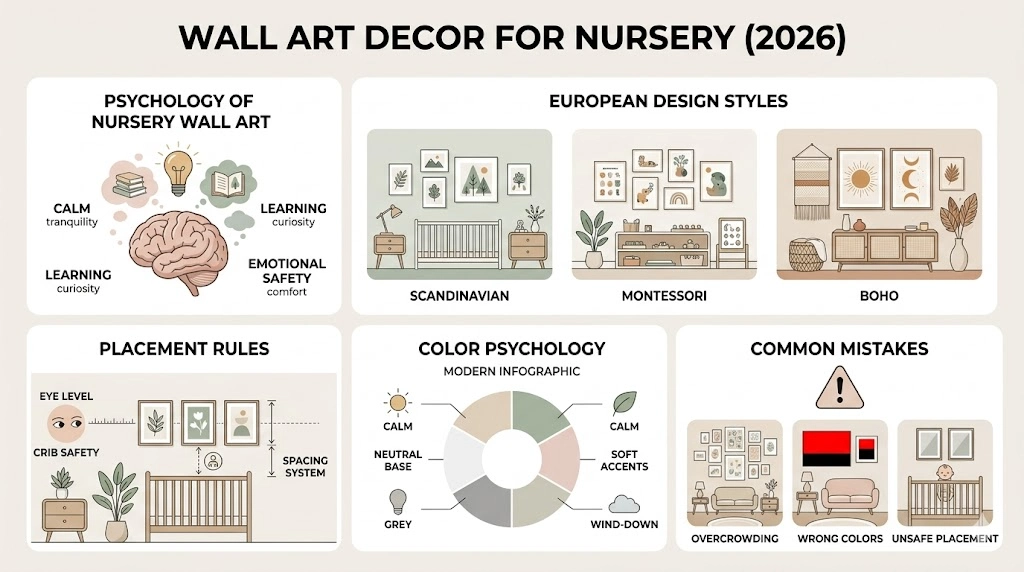
Color Psychology
Apply the 80/20 balance rule:
- 80% calming base tones
- 20% accent hues
Examples:
| Base Color | Accent Color |
| Beige | Sage Green |
| Light Grey | Dusty Blue |
| White | Soft Yellow |
Avoid overly saturated or harsh tones such as neon red or bright orange.
Size & Scale Rule
| Wall Type | Recommended Art |
| Small wall | One medium-sized piece |
| Medium wall | Two to three elements |
| Large wall | 60–75% coverage |
Incorrect proportions disrupt visual harmony.
Placement Strategy
- Position artwork at eye level
- Keep above-crib decor minimal
- Maintain 5–7 cm spacing between pieces
Consistency produces a polished and cohesive look.
Safety Considerations
Always prioritize safety above aesthetics:
- Avoid heavy frames above sleeping areas
- Ensure secure mounting systems
- Select non-toxic materials
Functional safety outweighs visual appeal.
Nursery Wall Art Placement System
This is where most design guides fall short—they lack execution clarity.
Step-by-Step System
1: Identify the focal wall
2: Install one dominant artwork
3: Add supporting decorative elements
4: Balance the visual arrangement
5: Adjust spacing for uniformity
Placement System Overview
| Step | Action | Purpose |
| 1 | Select wall | Establish focus |
| 2 | Main artwork | Anchor composition |
| 3 | Supporting pieces | Add dimension |
| 4 | Balance layout | Ensure harmony |
| 5 | Adjust spacing | Achieve refinement |
Best Nursery Wall Art Ideas by Room Type
Small Nursery
Challenges:
- Limited space
- High risk of visual clutter
Solutions:
- Use vertical compositions
- Stick to light, neutral tones
- Limit the number of decorative elements
Simplicity enhances spaciousness.
Large Nursery
Opportunities:
- Expanded design freedom
- Ability to incorporate statement pieces
Ideas:
- Oversized canvas artwork
- Large gallery arrangements
- Immersive murals
Establish a strong visual focal point.
Shared Nursery
Requirements:
- Visual balance
- Neutral adaptability
Best approach:
- Modular wall art systems
- Soft and cohesive palettes
- Flexible thematic choices
Designed to accommodate multiple children seamlessly.
Common Nursery Wall Decor Mistakes
Avoid these frequent design errors:
- Overcrowding the walls
- Combining incompatible styles
- Ignoring color balance
- Unsafe installation practices
- Choosing decor without purpose
Minimalism consistently outperforms excess.
Budget-Friendly Wall Art Decor for Nursery
A beautiful nursery does not require a large investment.
Affordable ideas:
- Printable artwork
- DIY illustrations
- Peel-and-stick decals
- Repurposed frames
- Minimalist line drawings
Personalization remains a dominant trend in 2026.
Pros & Cons
Pros
- Enhances emotional well-being
- Supports cognitive growth
- Elevates visual appeal
- Adds individuality
Cons
- Improper placement may pose risks
- Overdesign can overwhelm the space
- Trends may become outdated
FAQs
Soft, calming designs like nature themes, minimalist prints, and Montessori-style artwork.
At adult eye level for design, and lower for baby interaction in Montessori setups.
Only lightweight, securely mounted pieces. Avoid heavy frames.
Neutral tones like beige, soft green, pastel blue, and earthy shades.
Use vertical designs, light colors, and minimal pieces to avoid clutter.
Conclusion
Designing a nursery is not about imitating trends.
It is about constructing an environment that nurtures:
- Calmness
- Functionality
- Emotional well-being
By applying:
- Color psychology
- Correct proportions and placement
- European design methodologies
- A structured, intentional system
You transition from random decoration to purposeful design.