Introduction
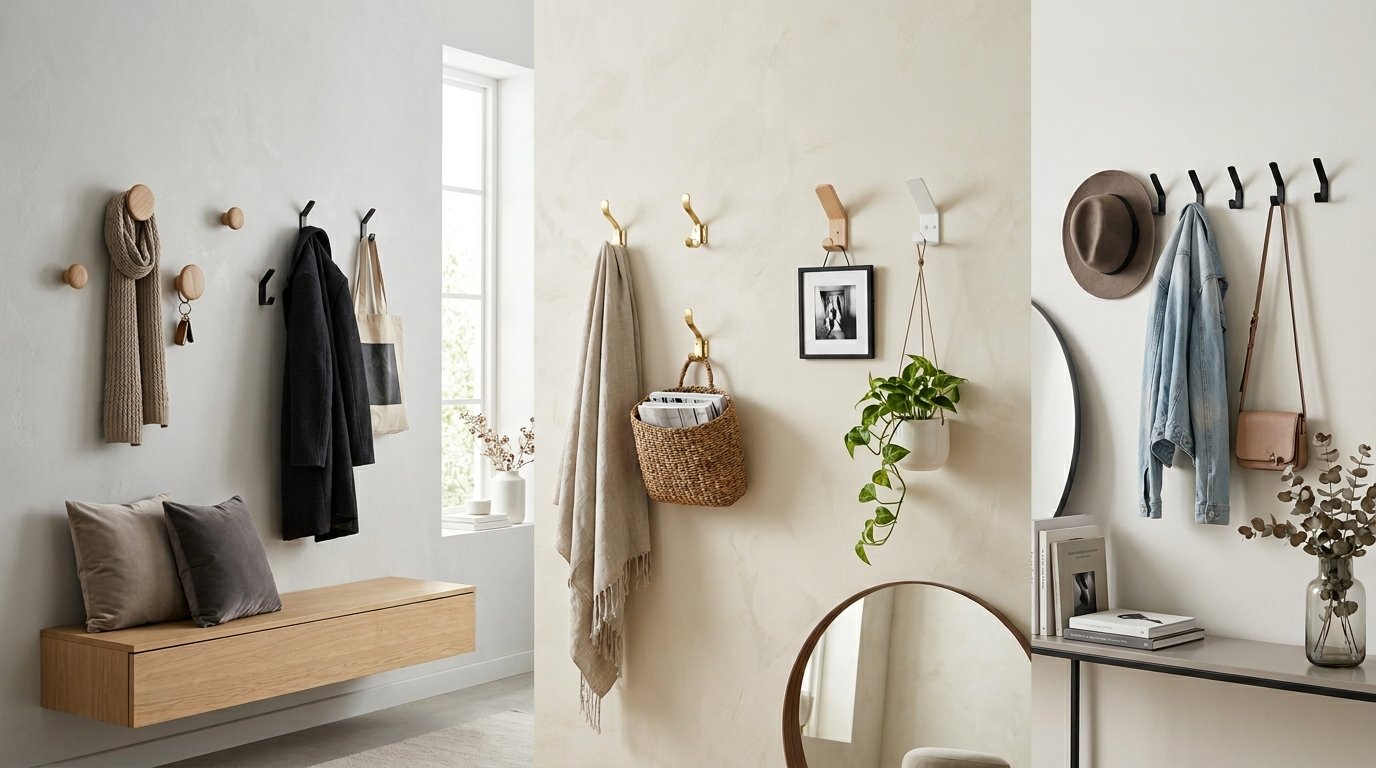
A Decorative Wall Hook may look like a small interior detail, but in modern European homes, it plays a surprisingly powerful role in shaping both function and aesthetics. From compact apartments in Berlin to elegant Parisian studios and Scandinavian minimalist homes, wall hooks are no longer just utility tools—they are becoming essential elements of wall composition and spatial design.
In today’s interior design world, where space optimization and visual harmony matter more than ever, decorative wall hooks help transform empty walls into structured, functional, and visually balanced surfaces. They support daily organization while subtly influencing how a room feels and flows.
This guide explores decorative wall hooks from a deeper design perspective—covering placement science, material psychology, European styling trends, and practical room-by-room strategies. Whether you’re designing a modern apartment in Germany, a coastal home in Spain, or a minimalist Nordic space in Sweden, this guide will help you understand how small wall elements can create powerful visual and functional impact.
What Are Decorative Wall Hooks?
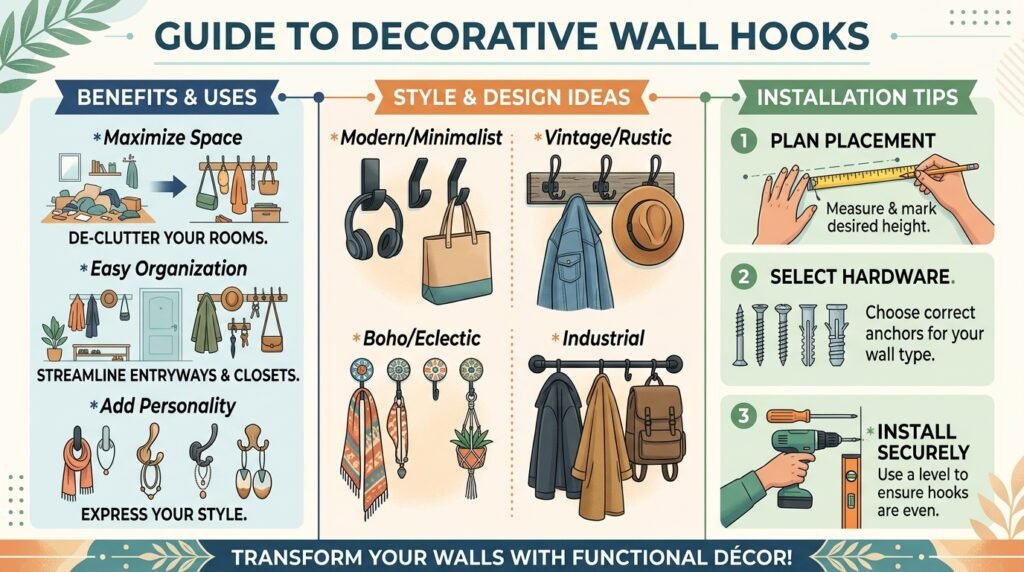
Decorative wall hooks are wall-mounted elements designed to hold objects like coats, keys, bags, towels, or accessories—while simultaneously enhancing interior aesthetics.
Unlike basic hooks, they serve a dual role:
- Functional storage solution
- Visual design feature
They are widely used in modern European interiors due to their ability to combine minimalism, efficiency, and artistic expression in one object.
Key Design Value:
- Turn empty walls into usable space
- Reduce floor clutter
- Enhance vertical design flow
- Add personality to interiors
Why Decorative Wall Hooks Matter in Interior Design
Modern Interior design focuses on psychological comfort + visual clarity, and wall hooks contribute to both.
Spatial Psychology Impact
A well-organized wall reduces “visual noise,” helping the brain perceive a space as larger and calmer.
Behavioral Design Influence
Hooks naturally encourage organization habits—items get placed instead of dropped.
Visual Rhythm Creation
Evenly spaced hooks act like a visual pattern, similar to wall art composition.
Functional Aesthetic Balance
They merge utility with design, a core principle of Scandinavian and Japanese-inspired European interiors.
Types of Decorative Wall Hooks
Minimalist Scandinavian Hooks
Simple wooden pegs or neutral-toned hooks inspired by Nordic design.
- Best for: clean interiors
- Style: subtle, functional
- Popular in: Denmark and Sweden
Modern Metal Hooks
Sleek stainless steel or matte black finishes.
- Best for: industrial interiors
- Strength: high durability
Artistic Sculptural Hooks
Hooks shaped like abstract forms, animals, or geometric art.
- Best for: statement walls
- Function: décor + utility
Rustic Wooden Hooks
Warm textures inspired by countryside homes.
- Popular in: Alpine and rural European homes
Luxury Brass Hooks
Elegant metallic finish used in boutique hotels and luxury apartments.
- Best for: premium interiors
- Style influence: French and Italian design
Best Materials for Decorative Wall Hooks
| Material | Strength | Aesthetic | Best Use |
| Wood | Medium | Warm & natural | Bedrooms, living rooms |
| Metal | High | Modern & industrial | Entryways, kitchens |
| Brass | Medium-High | Luxury & elegant | Premium interiors |
| Ceramic | Low-Medium | Artistic & decorative | Bathrooms |
| Stainless Steel | Very High | Clean & functional | High-moisture areas |
Expert Insight:
Material choice affects not only durability but also emotional tone. Warm materials reduce stress, while metal enhances structure and discipline in design.
Wall Hook Placement Strategy
Placement is the most overlooked yet most important factor.
Height Psychology Rule
Ideal height range: 140–165 cm from floor
- Lower = child-friendly / casual use
- Higher = formal / adult usage
Spacing Rule
Maintain a 10–15 cm gap between hooks for visual breathing space.
Symmetry vs Asymmetry
| Style | Effect |
| Symmetry | Formal, structured, calm |
| Asymmetry | Creative, modern, dynamic |
Entryway Flow Rule
Hooks should align with natural movement paths:
- near door edges
- along transition walls
- near drop zones
Room-by-Room Wall Hook Design Guide
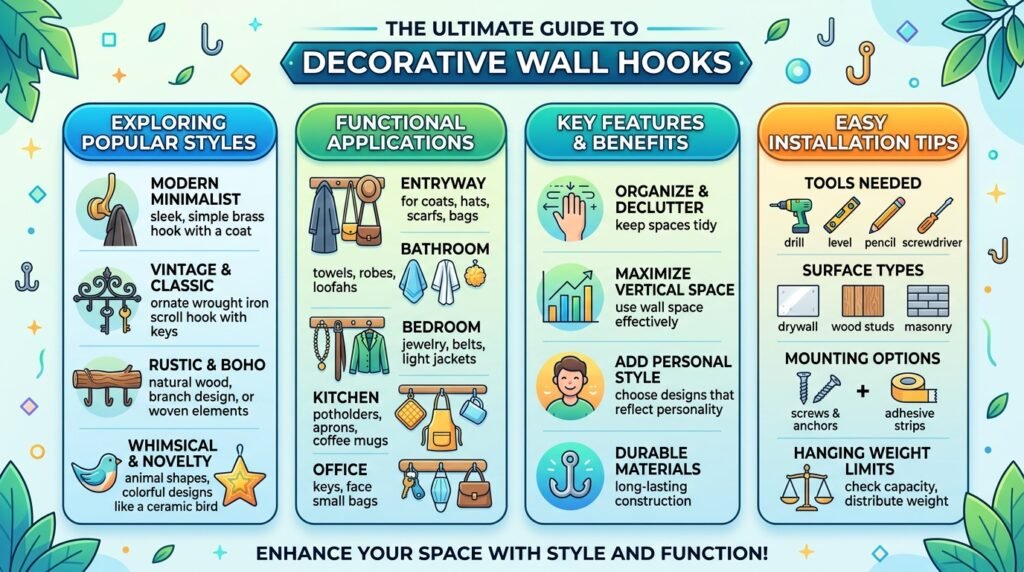
Entryway
The most important functional zone.
- Use strong metal hooks
- Combine with shelves for keys
- Keep symmetrical layout for order
Bedroom
Focus on aesthetics + light functionality.
- Use wooden or brass hooks
- Hang accessories or décor pieces
- Avoid overcrowding
Bathroom
Moisture-resistant materials are essential.
- Stainless steel or ceramic hooks
- Minimal spacing
Kitchen
Highly functional placement.
- Use compact hooks for utensils
- Install near cooking zones
How to Choose the Right Decorative Wall Hook
Before selecting, evaluate:
- Weight capacity (light vs heavy items)
- Installation type (adhesive vs drilled)
- Wall type (tile, drywall, wood)
- Design compatibility
- Functional purpose
Decision Framework:
- If décor-first → sculptural hooks
- If storage-first → metal hooks
- If balanced → wood + metal mix
Common Mistakes in Wall Hook Design
- Overcrowding hooks too closely
- Ignoring wall strength and material
- Choosing aesthetics over durability
- Using identical hooks in every room
- Incorrect height alignment
Future Trends in Wall Hook Design
European interior design is evolving toward smarter, more integrated solutions:
- Smart hooks with sensors
- Magnetic invisible wall systems
- Sustainable bamboo materials
- Hooks integrated with lighting
- Art-inspired sculptural installations replacing wall décor
Comparison Table: Functional vs Decorative Hooks
| Feature | Functional Hooks | Decorative Hooks |
| Purpose | Storage | Storage + Aesthetic |
| Design | Simple | Artistic |
| Placement | Utility-based | Design-driven |
| Material Focus | Durability | Style + balance |
| Best Use | Kitchens, bathrooms | Living rooms, bedrooms |
Pros & Cons
Pros
- Maximizes small space usage
- Improves wall aesthetics
- Reduces clutter
- Easy installation options
- Enhances organization habits
Cons
- Overuse can create visual noise
- Poor installation may damage walls
- Cheap materials reduce durability
Expert Interior Design Tips
- Treat hooks like “mini wall art pieces”
- Align hooks with furniture edges for harmony
- Use negative space intentionally
- Mix materials for visual contrast
- Keep entryway hooks the most structured
European Design Inspiration
European interiors emphasize balance, function, and emotional comfort.
- Scandinavian design → simplicity + light wood
- French interiors → elegance + symmetry
- Italian design → luxury materials + bold accents
- German design → efficiency + minimalism
- Mediterranean style → warmth + rustic textures
Each region interprets wall hooks differently, but all share one principle: form must follow function, but never ignore beauty.
People Also Ask
Yes, but it depends on material and installation. Metal and drilled hooks are best for heavy coats and bags, while adhesive hooks suit lighter items.
Most designers recommend 140–165 cm from floor level, adjusted based on user height and room purpose.
In small European apartments, yes. They are often used instead of bulky furniture to save space and improve flow.
Use spacing rules, limit hook quantity, and choose a consistent material or theme to maintain visual harmony.
Yes, high-quality adhesive hooks are renter-friendly, but always check wall compatibility before installation.
Conclusion
A decorative wall hook is far more than a simple storage tool—it is a subtle yet powerful interior design element that influences how space is organized, perceived, and experienced. In modern European homes, especially where space efficiency is crucial, wall hooks represent the perfect blend of functionality and aesthetic intelligence.
From minimalist Scandinavian apartments to elegant French interiors, the right hook design can transform empty walls into structured, meaningful compositions. The key lies in understanding placement, material, and visual balance rather than treating hooks as isolated accessories.
As interior design continues to evolve, decorative wall hooks will remain essential in shaping smarter, cleaner, and more emotionally balanced living spaces. Explore more design insights and wall styling guides on TheWallsArt.com to elevate your home aesthetics with confidence.