Introduction
Chinese Wall Art has become one of the most influential interior design elements in modern global décor. It is not just decoration—it is a visual language of balance, nature, philosophy, and emotional calm. From traditional ink landscapes to modern minimalist prints, Chinese wall art brings depth and harmony into living spaces.
Across Europe, designers and homeowners are increasingly adopting Chinese wall art to enhance minimalist apartments, luxury villas, and Scandinavian-inspired interiors. Whether in Germany, France, or Sweden, this style is becoming a symbol of calm luxury and cultural fusion.
What makes Chinese wall art so powerful is its ability to connect nature with emotion. A simple bamboo painting can create serenity, while a dragon artwork can introduce strength and energy into a space.
In this guide, we will explore everything about Chinese wall art—its styles, meanings, European applications, Feng Shui principles, and expert interior design strategies to help you transform your home into a refined, balanced environment.
What Is Chinese Wall Art?
Chinese wall art refers to decorative artworks inspired by Chinese culture, philosophy, and traditional aesthetics. It is deeply rooted in harmony, nature, and symbolic storytelling.
Unlike purely decorative Western art styles, Chinese art often carries meaning. Every brushstroke, color, and symbol represents a deeper idea about life, balance, and energy flow.
Common Forms of Chinese Wall Art:
- Traditional ink paintings (mountains, rivers, mist landscapes)
- Calligraphy art (symbols of peace, love, strength)
- Feng Shui symbolic art (dragons, koi fish, lotus flowers)
- Modern Chinese minimalist prints
- Abstract fusion designs
Chinese wall art is widely used in both classic and modern interiors because it adapts beautifully to different design languages—from rustic European homes to ultra-modern apartments.
Types of Chinese Wall Art for Modern Interiors
Traditional Chinese Ink Paintings
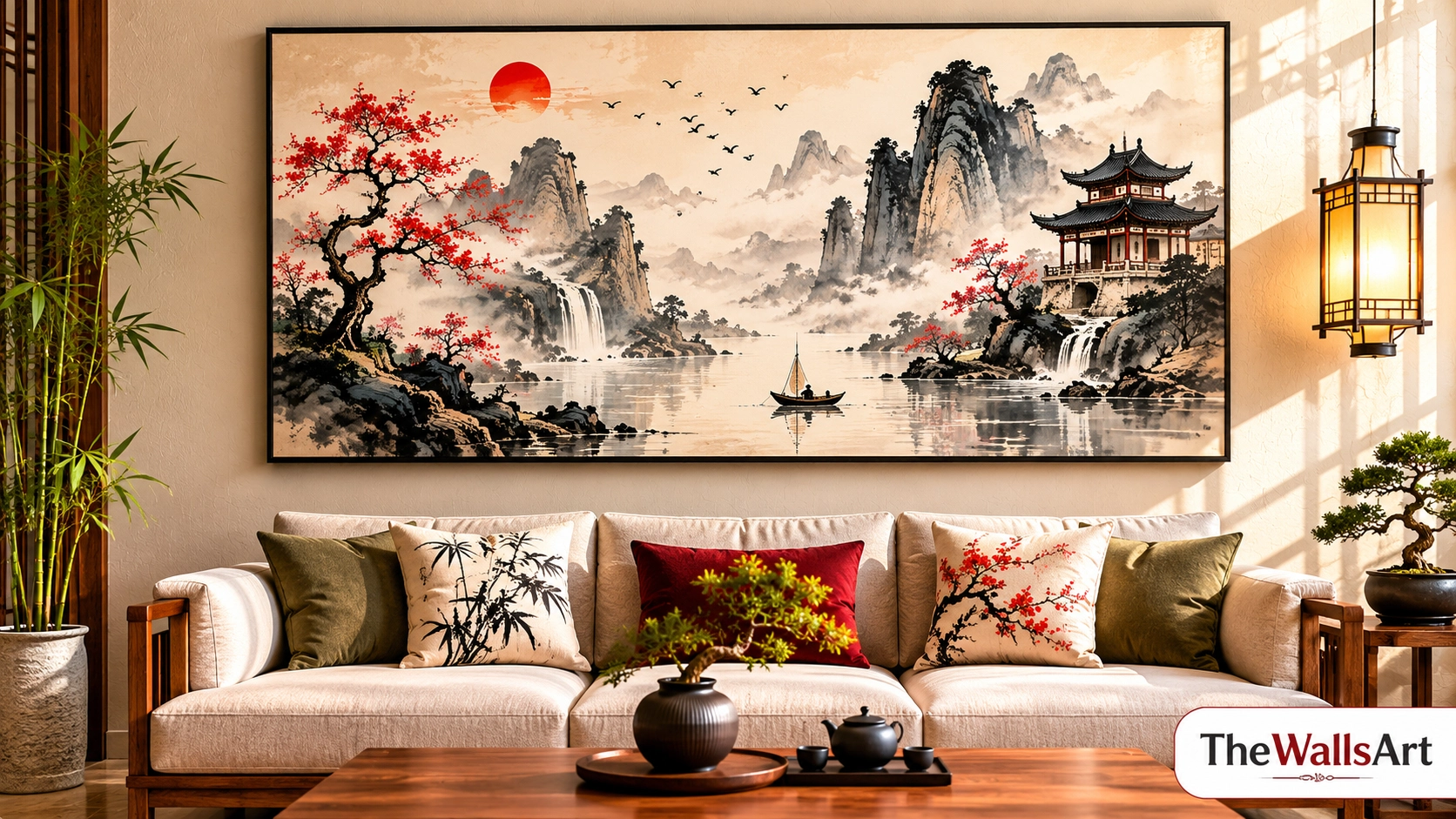
Traditional ink art is the oldest and most respected form of Chinese visual expression. It uses black ink, soft brushwork, and natural themes like mountains, rivers, and bamboo forests.
Design Impact:
- Creates calm and timeless atmosphere
- Adds depth without overwhelming space
- Perfect for minimalist interiors
Best European Use:
- Nordic homes in Norway
- Rustic countryside villas in Italy
- Minimalist apartments in Germany
Chinese Calligraphy Wall Art
Calligraphy is considered the highest form of Chinese art. It combines writing with artistic expression.
Popular symbols:
- Love (爱)
- Peace (和平)
- Strength (力量)
Design Impact:
- Strong emotional expression
- Minimal but meaningful décor
- Works well in office spaces and hallways
Feng Shui Wall Art Designs
Feng Shui-based wall art focuses on energy flow, harmony, and balance in space.
Key symbols:
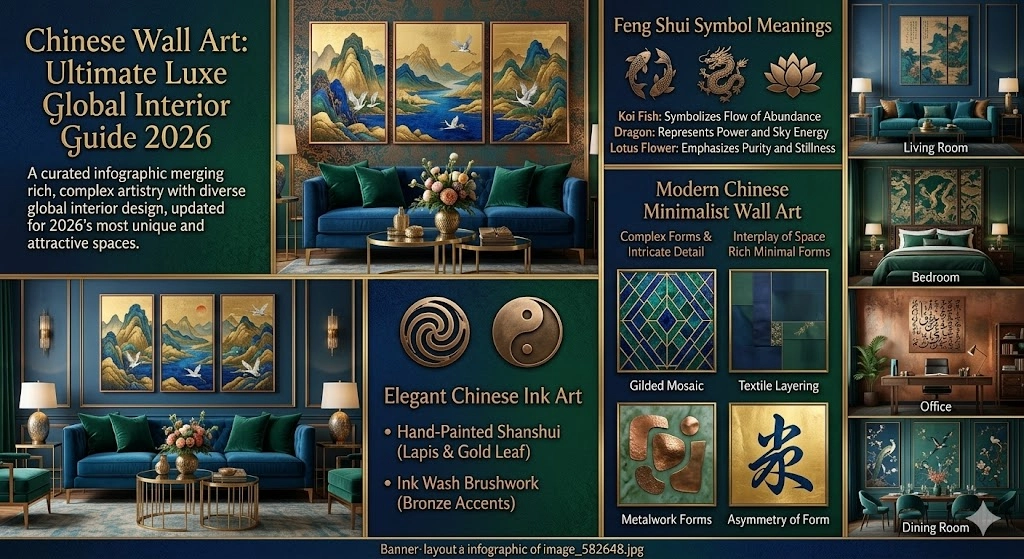
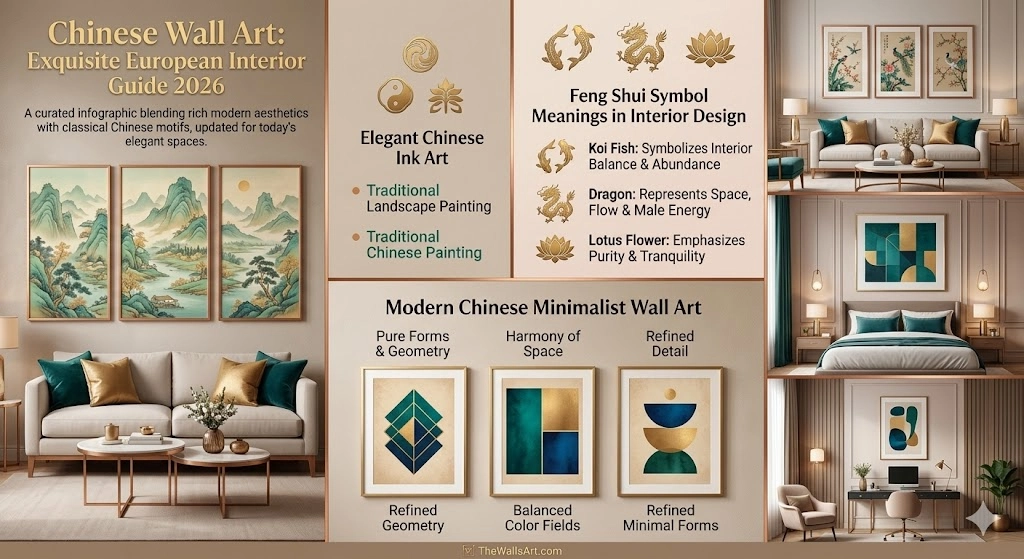
- Koi Fish → wealth and success
- Dragon → strength and protection
- Lotus → purity and enlightenment
Design Impact:
- Enhances positive energy in homes
- Aligns emotional balance with environment
- Often used in living rooms and entryways
Modern Chinese Canvas Art
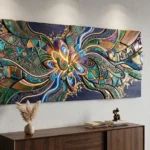
Modern Chinese wall art blends traditional symbolism with contemporary aesthetics.
Style Features:
- Abstract brush textures
- Neutral tones with gold or red accents
- Minimal composition with strong visual focus
Best for Europe:
- Urban apartments in United Kingdom
- Scandinavian-inspired homes in Denmark
- Luxury interiors in Switzerland
How to Use in European Interiors
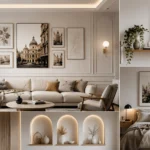
Chinese wall art is extremely versatile and can elevate different rooms when placed correctly.
Living Room Styling
- Use large panoramic landscape art above sofas
- Choose neutral tones with subtle red/gold highlights
- Keep surrounding décor minimal for balance
Bedroom Design
- Use bamboo or nature-inspired artwork
- Avoid overly energetic symbols (like dragons)
- Focus on soft, calming visuals
Office Spaces
- Calligraphy art for motivation and focus
- Mountain landscapes for ambition and stability
- Clean, minimal framing styles
Entryway / Hallway
- Vertical scroll art works best
- Feng Shui protection symbols recommended
- Creates strong first impression energy
Feng Shui Meaning
Feng Shui is a traditional Chinese philosophy focused on energy flow in environments. In interior design, it plays a major role in Chinese wall art selection.
Symbol Meaning Table
| Symbol | Meaning | Best Placement |
| Koi Fish | Wealth & success | Living room, office |
| Dragon | Power & protection | Entryway, study |
| Bamboo | Growth & flexibility | Bedroom, hallway |
| Crane | Longevity | Calm spaces |
| Lotus | Spiritual purity | Meditation areas |
Feng Shui wall art is especially popular in modern European interiors because it aligns with wellness-focused design trends.
Trends in Europe 2026
Modern European interior design has embraced Chinese aesthetics in subtle and elegant ways.
Key Trends:
- Black & white ink minimalist art
- Japandi + Chinese fusion décor
- Large-scale landscape canvases
- Gold-accent calligraphy prints
- Eco-friendly natural canvas materials
In countries like the Netherlands and Sweden, homeowners prefer neutral, calming tones that integrate seamlessly with Scandinavian design principles.
How to Choose the Right Size of Wall Art
Correct sizing is crucial in interior design.
Size Guide:
- Large walls (sofa/bed): 120–200 cm artwork
- Medium walls: 60–120 cm artwork
- Small spaces: vertical or framed prints
Expert Tip:
Always match artwork width with furniture width (around 70–80%). This creates visual balance and avoids cluttered interiors.
Materials & Texture Styles in Chinese Wall Art
Chinese wall art comes in different material formats:
Canvas Prints
- Most common in modern homes
- Lightweight and affordable
- Suitable for all rooms
Rice Paper Art
- Traditional and cultural
- Requires careful framing
- Best for collectors
Metal & Acrylic Prints
- Modern luxury interiors
- High gloss and bold appearance
- Ideal for offices or galleries
Pros and Cons
Pros:
- Rich cultural meaning
- Works in modern and traditional homes
- Enhances emotional balance
- Highly versatile design style
- Fits European minimalist interiors
Cons:
- Some symbols require cultural understanding
- Overuse can make space visually heavy
- Authentic pieces may require careful selection
Common Interior Design Mistakes
Many homeowners misuse unintentionally.
Avoid:
- Overcrowding multiple symbolic artworks
- Mixing conflicting Feng Shui elements
- Using oversized pieces in small rooms
- Ignoring color harmony with furniture
Budget vs Luxury Styling Approach
Budget Styling:
- Printed canvas art
- Simple black frames
- Minimal symbolic designs
Luxury Styling:
- Hand-painted ink art
- Gold leaf detailing
- Large panoramic compositions
- Custom framing systems
Expert Interior Design Tips
- Keep walls minimal when using Chinese art
- Pair with natural materials (wood, linen, stone)
- Use soft lighting to enhance brush textures
- Combine with Scandinavian furniture for balance
- Avoid overly saturated colors in small rooms
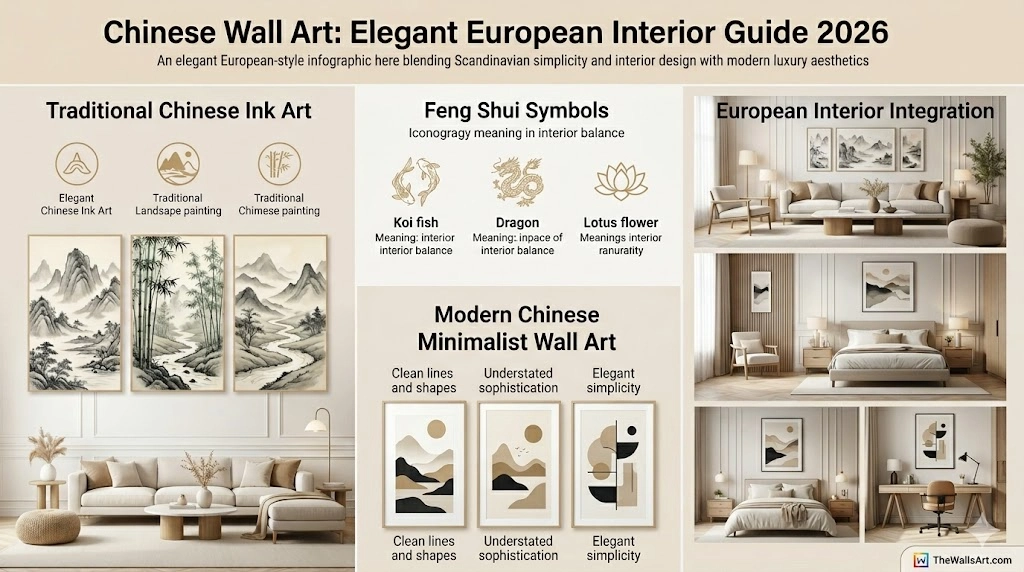
Why Works in European Homes
Chinese wall art aligns perfectly with modern European design philosophy:
- Scandinavian simplicity
- French elegance
- Italian luxury aesthetics
- German functional minimalism
- Mediterranean warmth
This fusion creates interiors that feel both peaceful and sophisticated.
People Also Ask
Yes, it blends perfectly with modern European interiors, especially minimalist and Scandinavian designs. Its calm visuals enhance balance and elegance in any space.
Start with bamboo, lotus, or koi fish. These symbols are easy to understand and bring positive energy without overwhelming your décor.
Absolutely. Minimal ink prints or vertical calligraphy pieces work best in compact European apartments without making the space feel crowded.
Neutral tones like beige, white, and grey work best. Accents of red, gold, or black can enhance traditional Chinese aesthetics.
Yes, it is growing in popularity due to the rise of Japandi, minimalist, and wellness-focused interior design trends across Europe.
Conclusion
Chinese wall art is more than just decoration—it is a philosophy of balance, emotion, and cultural storytelling. From traditional ink landscapes to modern minimalist prints, it offers endless possibilities for transforming interiors.
In European homes, it brings a unique fusion of East and West design languages, blending simplicity with symbolic depth. Whether you live in a modern apartment in Germany or a countryside villa in France, can elevate your space with calm elegance and meaning.
For homeowners and designers, this art style is not just a trend—it is a long-term design investment in emotional well-being and aesthetic harmony.
To explore more interior design inspirations and wall art guides, visit TheWallsArt.com and discover how global art styles can transform your living space.