Introduction
Accent Wall Decor is one of the most powerful interior design strategies used in modern European homes to completely redefine a space without structural renovation. A single well-designed wall can change the mood, depth, and personality of an entire room.
Across countries like France, Italy, Germany, and Sweden, interior designers rely heavily on accent walls to create emotional focal points. Whether it is a minimalist Scandinavian apartment in Copenhagen or a luxury Parisian living room, accent wall decor defines visual storytelling.
Unlike basic wall painting trends of the past, today’s accent walls combine texture, lighting, material layering, and spatial psychology. They are no longer decorative extras—they are design anchors.
This guide explores how accent wall decor works, why it is essential in modern interiors, and how you can use it to transform bedrooms, living rooms, offices, and small apartments with European-inspired elegance.
What is Accent Wall Decor?
Accent wall decor refers to a single wall in a room designed differently from the others to create a focal point.
Instead of treating all walls equally, designers highlight one wall using:
- Color contrast
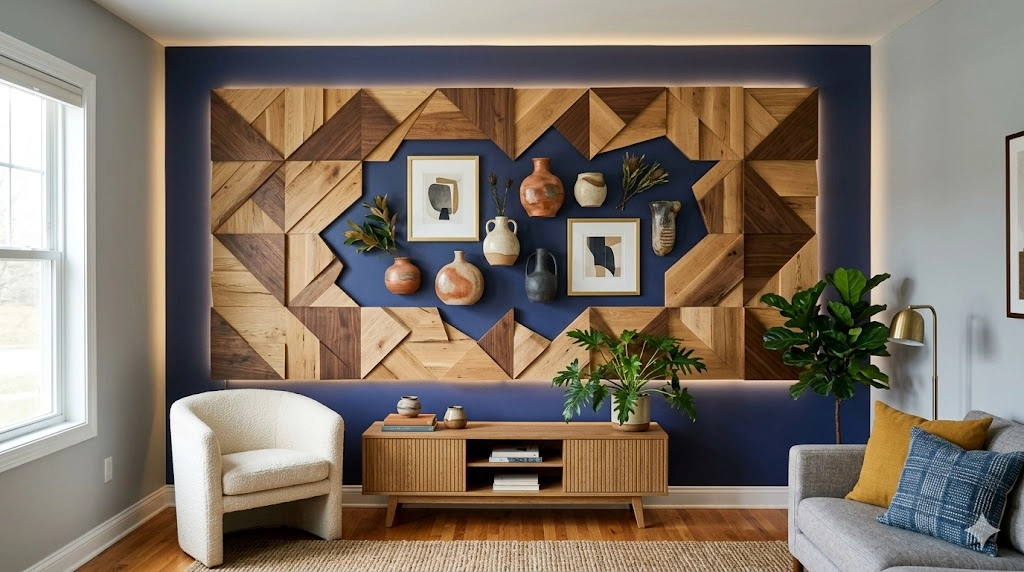
- Texture (wood, stone, fabric, marble)
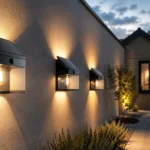
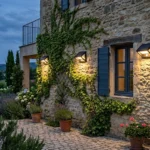
- Lighting effects
- Art compositions
- Structural panels
In modern interior design, accent walls are used to guide the eye naturally toward the most important area of a room—such as a bed, sofa, or TV unit.
The Psychology Behind Accent Wall Decor
Accent walls are not just aesthetic—they are deeply psychological.
Visual Hierarchy
The human brain naturally seeks focal points. An accent wall provides structure to visual chaos, making a room feel organized and intentional.
Color Psychology
Different tones create different emotional responses:
- Dark tones → luxury, depth, intimacy
- Light neutrals → calm, openness
- Earth tones → comfort, nature connection
- Cool tones → focus and clarity
Spatial Perception
Accent walls can visually:
- Expand small rooms
- Add depth to flat spaces
- Balance asymmetrical layouts
This is why Scandinavian designers in Norway and Denmark often use light textured walls to enhance natural light.
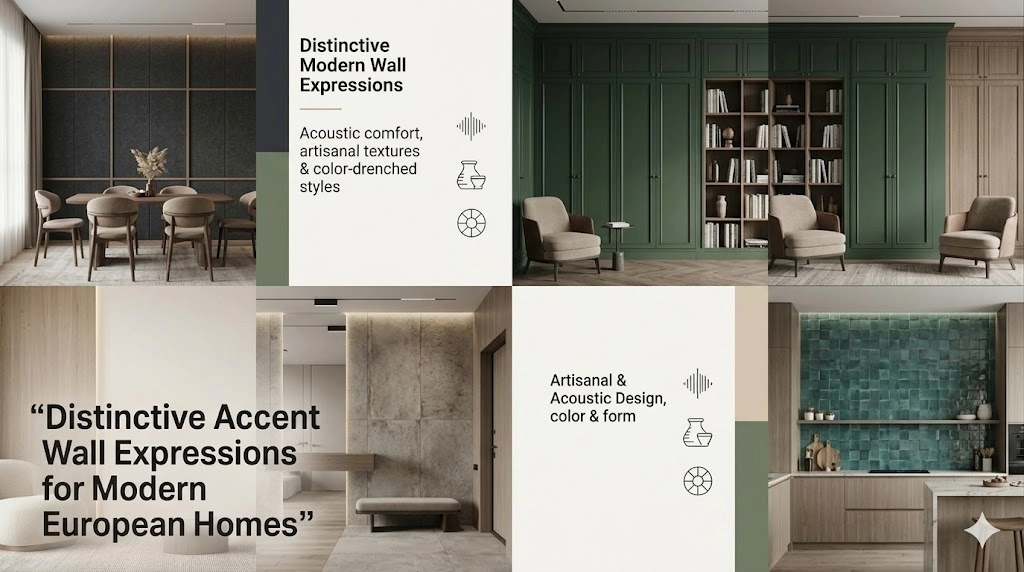
Accent Wall Decor Ideas by Room Type
Living Room Accent Wall Design Ideas
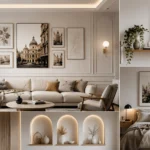
The living room is the heart of modern homes. European designers often treat it as a gallery of personality.
Best Ideas:
- Wooden slat walls (Nordic style)
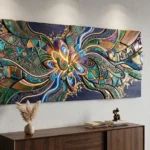
- Large abstract art compositions
- Stone texture TV wall
- Backlit LED feature wall
Styling Tip:
Keep furniture minimal so the accent wall becomes the visual anchor.
Best Keyword Variation:
living room accent wall design modern minimalist
Bedroom Accent Wall Ideas
Bedrooms require emotional softness and comfort.
Popular European Styles:
- Upholstered fabric panels (luxury hotel style)
- Warm beige or taupe painted walls
- Wooden headboard feature wall
- Soft LED hidden lighting
Design Insight:
In Switzerland and Austria, bedroom accent walls often combine natural wood textures with soft neutral palettes for calm energy.
Dining Room Accent Wall Ideas
Dining rooms focus on atmosphere and connection.
Ideas:
- Marble-effect feature wall
- Vertical mirror strips
- Deep green or navy accent paint
- Textured plaster wall
Emotional Impact:
Darker tones encourage intimacy and slow dining experiences.
Office Accent Wall Ideas
Home offices need focus and clarity.
Best Options:
- Clean wooden panel wall
- Neutral textured background
- Motivational art grid layout
- Matte paint accent wall
Productivity Tip:
Avoid overly busy patterns—simplicity enhances concentration.
Popular Accent Wall Materials
| Material | Style Impact | Best Use Case | European Influence |
| Wood Panels | Warm, natural, premium | Living & bedroom | Nordic & German interiors |
| 3D Wall Panels | Modern texture depth | TV walls, offices | Contemporary EU apartments |
| Stone Finish | Luxury & elegance | Living rooms | Italian luxury homes |
| Wallpaper | Creative & flexible | Bedrooms, rentals | UK apartment styling |
| Paint + Lighting | Minimalist & modern | Any room | Scandinavian design |
Modern Accent Wall Trends 2026
Across Europe, accent wall decor is evolving rapidly.
Key Trends:
- Minimalist European aesthetics
- Integrated LED lighting systems
- Natural textures (wood + stone dominance)
- Soft luxury color palettes
- Vertical slat wall designs
- Matte finishes instead of glossy surfaces
In cities like Paris, Milan, and Amsterdam, designers now prioritize emotional warmth over excessive decoration.
How to Choose the Perfect Accent Wall
1: Identify the focal wall
Usually:
- Behind the bed
- Behind the sofa
- TV wall
2: Define the mood
- Calm → beige, white, soft gray
- Luxury → black, gold, marble
- Nature → wood, green tones
3: Select materials wisely
- Budget-friendly → paint, wallpaper
- Premium → stone, wood panels
Common Accent Wall Mistakes to Avoid
- Over-decorating the wall
- Ignoring lighting balance
- Choosing the wrong focal wall
- Mixing too many textures
- Using clashing colors
Even in stylish apartments in the Netherlands, designers emphasize restraint over complexity.
Pros & Cons
Pros:
- Instantly transforms a room
- Adds personality and depth
- Cost-effective design upgrade
- Works in all room types
- Enhances spatial perception
Cons:
- Poor design can overpower a room
- Requires planning for balance
- Trend-dependent if over-stylized
- May reduce flexibility in decor changes
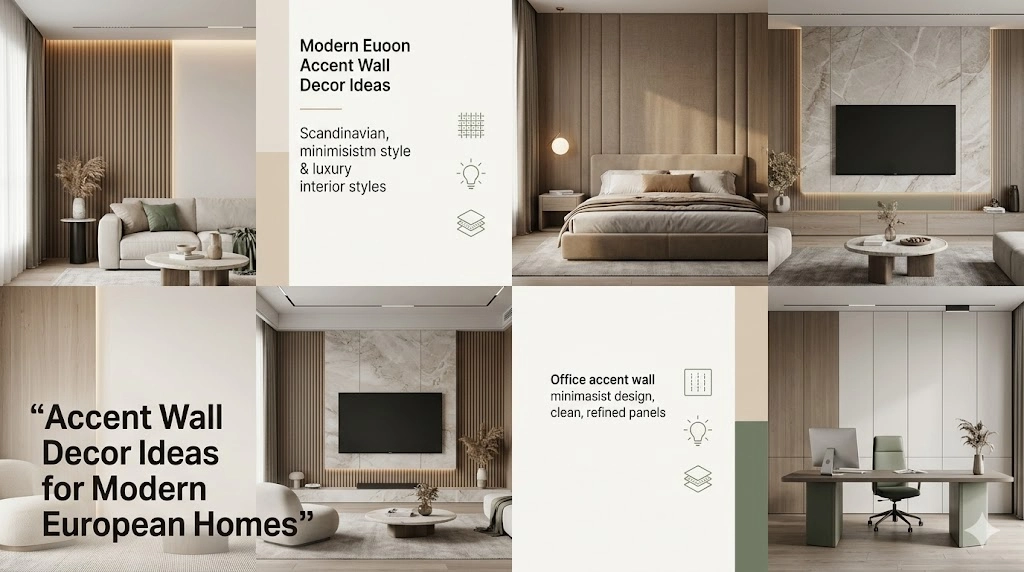
Wall Placement & Proportion Guide
Accent wall success depends on correct placement.
Golden Rules:
- Always choose the most visible wall
- Align with main furniture (bed/sofa/TV)
- Maintain visual symmetry
- Avoid walls with too many doors/windows
Pro Tip:
European designers often use the “first glance rule”—the wall you see first when entering the room becomes the accent wall.
Wall Color Psychology in Accent Design
| Color | Mood | Best Room |
| White | Clean & spacious | Small rooms |
| Beige | Warm & elegant | Bedrooms |
| Green | Natural & calming | Living rooms |
| Navy Blue | Depth & luxury | Dining rooms |
| Black | Bold & dramatic | TV walls |
Budget vs Luxury Accent Wall Ideas
Budget-Friendly:
- Paint accent walls
- Peel-and-stick wallpaper
- DIY art grids
- Simple shelving displays
Luxury Approach:
- Natural stone cladding
- Custom wood paneling
- Integrated lighting systems
- Designer wall art installations
Minimalist vs Maximalist Accent Walls
Minimalist Style (Nordic Influence)
- Clean lines
- Neutral colors
- Natural textures
- Empty space balance
Maximalist Style (Mediterranean Influence from Spain)
- Bold Colors
- Layered textures
- Artistic patterns
- Statement decor pieces
Expert Styling Tips
- Always match wall texture with flooring tone
- Use indirect lighting for depth
- Keep furniture contrast subtle
- Stick to 2–3 material combinations max
- Design for natural daylight flow
People Also Ask
A:The best accent wall is usually the one behind your main furniture, like a bed or sofa. It naturally draws attention and creates balance in the room layout.
A:Yes, accent walls are very popular in modern European interiors. However, the trend has shifted toward subtle textures and natural materials instead of bold paint contrasts.
A:Neutral tones like beige, gray, and white are timeless, while darker shades like navy or green add luxury and depth depending on the room.
A:Yes, small rooms benefit greatly from accent walls. Light colors and vertical textures can make the space feel larger and more open.
A:Painting is the most affordable option. Wallpaper and DIY wood strips are also cost-effective ways to achieve a stylish accent wall.
Conclusion
Accent Wall Decor is more than a design trend—it is a visual language that defines how a space feels and functions. Whether you prefer minimalist Scandinavian calm or luxurious Italian richness, the right accent wall can transform your home instantly.
By balancing texture, color, lighting, and proportion, you can create interiors that feel both modern and timeless. European design principles show us that simplicity, when executed correctly, always delivers elegance.
For more inspiration on modern wall art, interior design trends, and European home aesthetics, explore more guides on TheWallsArt.com and continue building spaces that truly reflect your personality.