Introduction
Western wall decor has undergone a profound transformation over the past decade. What was once associated primarily with rustic American ranch aesthetics, cowboy-inspired motifs, and traditional Western-themed ornaments has now evolved into a sophisticated, emotionally intelligent, and architecturally refined European interior design language.
In 2026, Western wall decor is no longer limited to decorative styling. Instead, it operates as a complete spatial design methodology—one that integrates psychology, material authenticity, minimalist principles, and curated visual storytelling.
Modern European interiors have redefined this concept into something more subtle, more architectural, and significantly more emotionally resonant. The focus is no longer on filling walls with objects, but on shaping atmosphere, identity, and spatial perception through intentional design.
This comprehensive guide will break down the entire system behind Western wall decor in 2026, helping you understand not just how it looks, but how it functions as a design philosophy.
You will explore:
- The modern definition of Western wall decor
- How European aesthetics reshaped the style
- Psychological principles behind wall design
- Color systems and material intelligence
- Professional styling frameworks
- Spatial placement rules used by designers
- Emerging trends shaping future interiors
What Is Western Wall Decor in 2026?
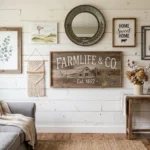
Historically, Western wall decor emerged from cultural imagery tied to the American West. This included visual references such as ranch environments, desert landscapes, wooden textures, horses, leather materials, and vintage Western symbolism.
However, contemporary European design thinking has significantly reinterpreted these elements.
Modern Definition of Western Wall Decor
In 2026, Western wall decor can be defined as a hybrid design system that merges:
- Organic rustic materiality
- European minimalist composition
- Subtle luxury expression
- Nature-inspired tonal harmony
- Emotion-driven visual storytelling
It is no longer about thematic decoration, but about curated spatial communication.
Key Evolution in 2026
| Traditional Western Style | Modern Western Wall Design |
| Thematic decoration | Architectural composition system |
| Heavy rustic elements | Minimal curated accents |
| Literal cowboy imagery | Abstract emotional symbolism |
| Cluttered arrangements | Balanced negative space |
The most significant transformation is conceptual:
Western wall decor has shifted from ornamentation to emotional architecture.
Why Western Wall Decor Is Trending in Europe 2026
Across major European design capitals such as Paris, Milan, Amsterdam, and Berlin, Western-inspired wall design has become increasingly influential.
But its popularity is not accidental. It is deeply connected to broader lifestyle and psychological shifts.
The Demand for Emotional Interiors
Modern interior design is no longer focused solely on visual appeal. Instead, it prioritizes emotional resonance. Home environments are expected to provide:
- Psychological calm
- Emotional grounding
- Sensory comfort
- Mental clarity
Western wall decor achieves this through its use of natural tones, organic materials, and balanced compositions.
The Softening of Minimalism
Strict minimalism, while visually clean, often feels emotionally cold and sterile. Western-inspired design introduces warmth into minimal spaces through:
- Textural variation
- Earth-based color palettes
- Natural imperfections
- Subtle layering
This creates what designers call “warm minimalism.”
The Rise of Quiet Luxury
Luxury in 2026 has shifted away from overt display toward subtle sophistication. Instead of metallic finishes and excessive ornamentation, luxury is now defined by:
- Space
- Silence
- Material authenticity
- Proportional balance
Western wall decor aligns perfectly with this philosophy.
Core Design Philosophy of Western Wall Decor
To understand this style at a professional level, it must be broken down into its foundational principles.
Emotional Interior Design
Every wall is treated as a psychological surface that communicates emotional meaning. Instead of decoration, walls express feelings such as:
- Freedom through open compositions
- Stability through grounded tones
- Nostalgia through vintage references
- Calmness through spatial simplicity
A wall is therefore not an object of decoration—it is an emotional interface.
European Minimalist Influence
European design has heavily influenced the refinement of Western wall aesthetics by introducing:
- Strict spatial alignment
- Controlled visual hierarchy
- Larger focal elements
- Reduction of unnecessary objects
This ensures clarity and architectural discipline.
Material Authenticity Principle
Material selection plays a critical role in defining realism and depth:
- Raw timber
- Natural stone
- Linen canvas
- Matte metal framing
The goal is not decorative excess but honest material expression.
Western Wall Decor Color Psychology
Color selection is one of the most powerful elements in modern Western wall design.
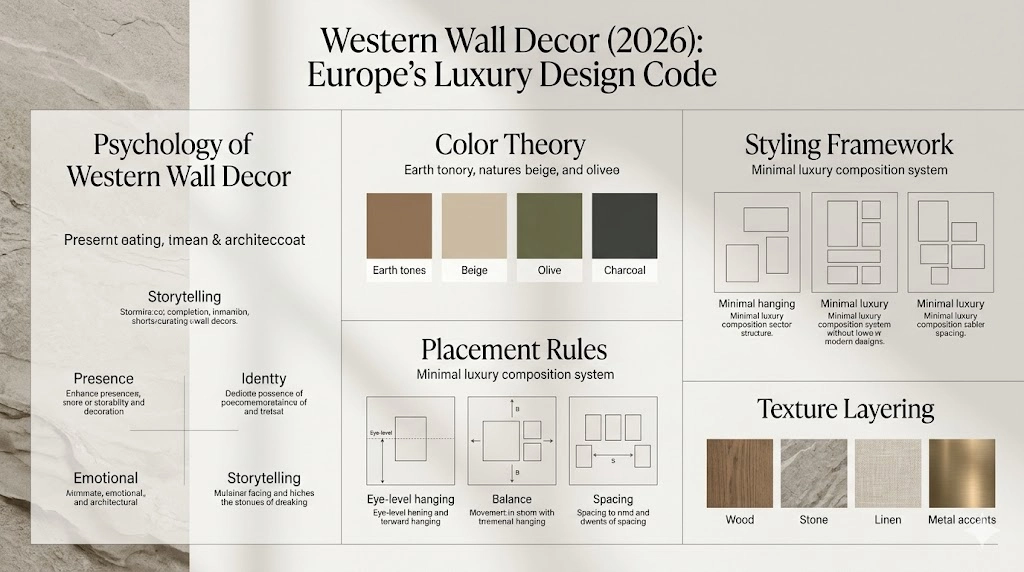
Core Color Structure
| Color Category | Shades | Emotional Effect |
| Earth Browns | Clay, Mocha, Sand | Stability, warmth |
| Desert Neutrals | Ivory, Beige, Stone | Calm, openness |
| Natural Greens | Olive, Sage | Balance, renewal |
| Deep Accents | Charcoal, Rust | Depth, contrast |
Psychological Function of the Palette
These tones reflect natural landscapes such as deserts, forests, and stone terrains. This creates subconscious associations with:
- Safety
- Grounding
- Organic harmony
Western Wall Decor Styles
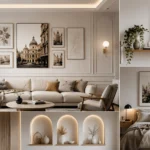
Minimal Western Luxury Style
This style focuses on:
- Large-scale artwork
- Neutral backgrounds
- Clean spatial layouts
- Soft ambient lighting
Ideal for modern apartments and urban interiors.
Rustic Modern Fusion
Combines Contemporary design with natural materials:
- Wood textures
- Neutral layering
- Mixed material compositions
Suitable for villas and countryside homes.
Desert Minimalism
Defined by:
- Beige dominance
- Abstract landscapes
- Soft shadow transitions
Creates highly calming environments.
Vintage Western Revival
Focuses on emotional nostalgia:
- Monochrome photography
- Antique framing
- Muted tonal palettes
Best Western Wall Decor Ideas 2026 Trends
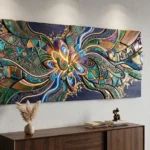
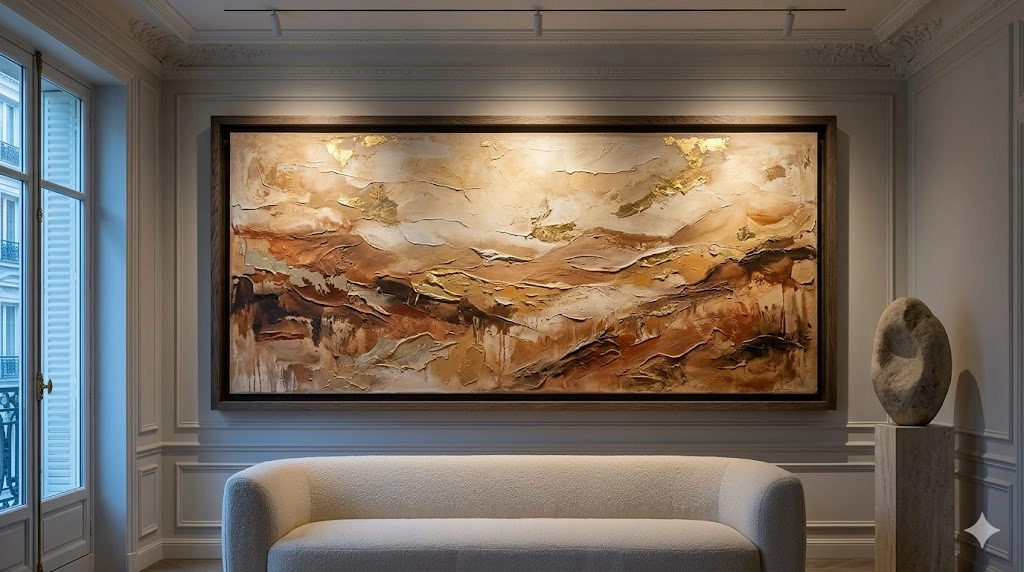
Oversized Statement Art
A single large artwork replaces multiple small pieces, creating:
- Strong focal hierarchy
- Visual clarity
- Luxury perception
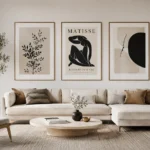
Structured Gallery Systems
Unlike traditional random arrangements:
- Equal spacing is maintained
- Alignment is precise
- Frames remain uniform
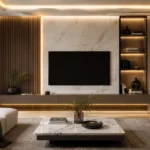
Textured Architectural Walls
Walls themselves become design elements:
- Wooden slats
- Clay plaster
- 3D panels
Minimal Line Artwork
Includes abstract forms such as:
- Landscapes
- Animal silhouettes
- Organic shapes
Mixed Material Composition
Combines:
- Canvas
- Metal
- Wood
Step-by-Step Western Wall Design Framework
1: Define Emotional Intent
Determine whether the space should feel:
- Calm
- Bold
- Warm
- Natural
2: Identify Focal Element
Choose one dominant visual anchor such as:
- Large artwork
- Textured wall
- Central frame
3: Add Supporting Layers
Introduce secondary elements carefully:
- Smaller frames
- Subtle textures
- Accent objects
4: Maintain Composition Balance
Use proportional distribution:
- 60% negative space
- 30% visual elements
- 10% accents
5: Lighting Strategy
Lighting defines depth and luxury:
- Warm white tones (2700K–3000K)
- Wall washers
- Directional soft lighting
Western Wall Decor Placement Rules
Eye-Level Alignment
Optimal center height: 145–155 cm
Scale Matching
- Large walls: oversized art
- Medium walls: medium compositions
- Small walls: single focal piece
Spacing Consistency
- Gallery spacing: 5–8 cm
- Uniform alignment is essential
Visual Balance
Avoid:
- Overcrowding
- Uneven spacing
- Competing focal points
Western Wall Decor in European Interiors
Different regions interpret the style uniquely:
- France: soft rustic elegance
- Italy: warm Mediterranean minimalism
- Scandinavia: clean natural fusion
- Germany: structured architectural order
Common Mistakes
- Excessive decoration
- Incorrect scaling
- Poor lighting design
- Mixing incompatible styles
Pros and Cons
Advantages:
- Timeless aesthetic
- Highly adaptable
- Emotional depth
Limitations:
- Requires balance
- Sensitive to overdesign
- Lighting dependent
Future Trends
- Ultra-minimal luxury walls
- Nature-integrated interiors
- Sustainable materials
- Emotional storytelling design systems
FAQs
A fusion of rustic Western influence and European minimal design systems.
Yes, especially in minimalist luxury interiors.
Yes, with single focal compositions.
Earth tones such as beige, olive, and clay.
Over-decorating and ignoring spatial balance.
Final Insight
Western wall decor in 2026 represents a complete shift in interior design thinking. It is no longer a decorative theme but a structured design system that integrates emotion, architecture, and material intelligence.
When applied correctly, it transforms walls into:
- Emotional expressions
- Architectural statements
- Timeless luxury surfaces
This is not decoration. It is spatial identity design.