Introduction
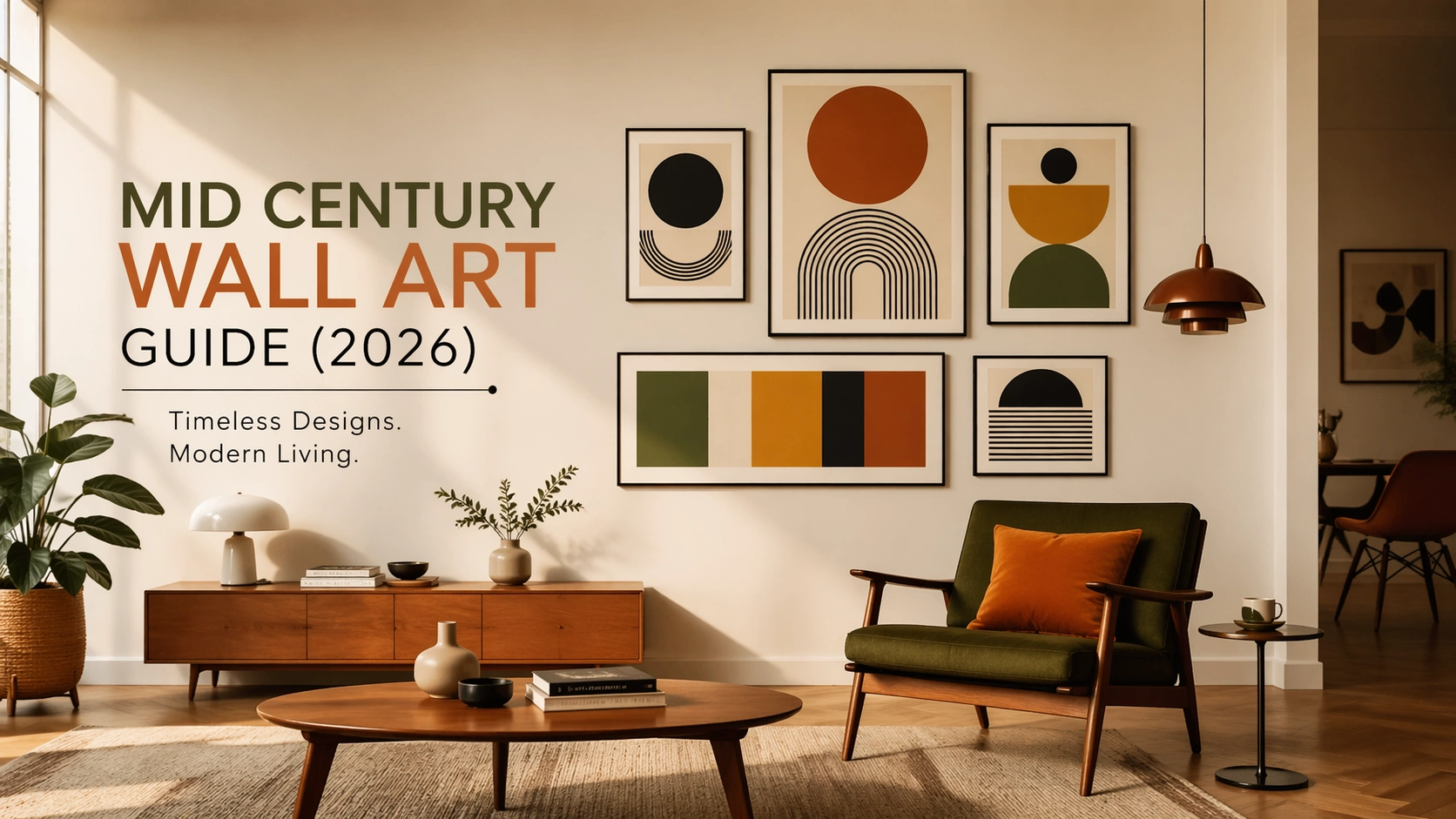
Mid Century Wall Art has become one of the most influential visual design directions in modern interior aesthetics for 2026. It is widely recognized for its structured simplicity, visual clarity, and emotional harmony. This design language blends geometric abstraction, muted tonal palettes, and minimal composition systems to create interiors that feel balanced, intentional, and timeless.
Across Europe and beyond, homeowners are increasingly shifting toward interiors that express calmness, order, and meaningful simplicity. This is where mid century wall art plays a transformative role. It aligns perfectly with major European interior philosophies such as Scandinavian minimalism, German Bauhaus functionality, and French modern elegance.
In this comprehensive mid century wall art guide (2026), you will explore:
- Core definitions and origins
- Why it is trending globally
- European design influence
- Room-by-room styling strategies
- Color psychology applications
- Common design errors
- Future interior trends
- Expert-level styling frameworks
Whether your environment is a compact urban apartment in Berlin or a spacious villa in Tuscany, this guide will help you construct visually coherent and emotionally balanced interiors using mid century principles.
What is Mid Century Wall Art?
Mid Century Wall Art refers to a design category rooted in the mid-20th century aesthetic movement, approximately spanning from the 1940s to the 1960s. It represents a shift away from ornate decoration toward structured simplicity and purposeful visual composition.
This style is defined by:
- Clean linear geometry
- Abstract visual systems
- Balanced asymmetry and symmetry
- Functional artistic expression
- Reduced ornamental complexity
Unlike traditional decorative artwork, mid century wall art does not rely on intricate storytelling or heavy detailing. Instead, it emphasizes visual order, spatial harmony, and psychological calmness.
Simple Definition:
Mid century wall art is a minimalist yet expressive design form that uses geometric balance, muted color harmony, and structured composition to create timeless interior aesthetics.
Origins of Mid Century Wall Art
The foundation of mid century wall art is deeply embedded in European design history. Several major artistic and architectural movements contributed to shaping its identity.
Bauhaus Movement
The Bauhaus philosophy introduced revolutionary design principles that prioritized functionality over decorative excess.
Key characteristics:
- Rational geometric construction
- Grid-based visual balance
- Integration of art and architecture
- Elimination of unnecessary detail
This movement strongly influenced modern minimalist wall compositions.
Scandinavian Design Philosophy
Nordic interior aesthetics contributed emotional softness and natural simplicity.
Core principles:
- Light-filled environments
- Organic textures
- Neutral color palettes
- Human-centered design
This influence made mid century art more calming and livable.
French Modernism
French design introduced refinement and subtle sophistication.
Key traits:
- Elegant minimal expression
- Controlled artistic emotion
- Soft luxury aesthetics
- Balanced visual storytelling
Key Insight:
Mid century wall art is not a single-origin concept. It is a hybrid European design evolution combining structure, simplicity, and emotional intelligence.
Why Mid Century Wall Art is Trending in 2026
The growing popularity of mid century wall art in 2026 is not accidental. It is directly connected to global lifestyle transitions and psychological design needs.
1. Warm Minimalism Movement
Modern interiors are moving away from cold minimalism toward warm, emotional simplicity.
2. Mental Wellbeing Awareness
Scientific studies in environmental psychology show that simplified visual environments reduce cognitive overload and stress levels.
3. Urban Space Optimization
Smaller apartments require intelligent wall utilization strategies that maximize visual impact without clutter.
4. Strong European Design Influence
Scandinavian, German, and French design philosophies continue to dominate global interior trends.
5. Natural Aesthetic Shift
There is increasing demand for organic textures, earthy palettes, and sustainable design materials.
Key Characteristics of Mid Century Wall Art
Mid century wall art can be easily identified through a set of consistent visual and structural attributes.
Core Characteristics:
- Geometric composition systems
- Abstract visual representation
- Earth-inspired tonal ranges
- Minimal layering techniques
- Flow-based organic balance
- Canvas-driven texture usage
Design Principle:
Reduction in complexity results in an increase in visual impact and emotional clarity.
Popular Mid Century Wall Art Styles
Geometric Abstract Art
This is the most recognizable form of mid century wall expression.
Features:
- Circles, triangles, rectangles
- Strong structural alignment
- Mathematical visual rhythm
Best suited for:
- Living rooms
- Office environments
Vintage Retro Posters
This style reflects mid-century commercial and travel culture.
Features:
- Nostalgic visual storytelling
- Typography-focused layouts
- Muted vintage color grading
Best suited for:
- Kitchens
- Dining spaces
Minimal Line Art
A refined and highly simplified artistic expression.
Features:
- Continuous line illustration
- Monochromatic palettes
- Extreme visual reduction
Best suited for:
- Bedrooms
- Personal relaxation zones
Nature-Inspired Abstract Art
This style connects interior design with natural movement systems.
Features:
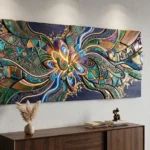
- Organic fluid shapes
- Soft transitions
- Earth-toned gradients
Best suited for:
- Wellness spaces
- Reading areas
Bauhaus-Inspired Art
A structured and highly functional visual language.
Features:
- Primary color usage
- Grid-based alignment
- Architectural precision
Best suited for:
- Workspaces
- Studios
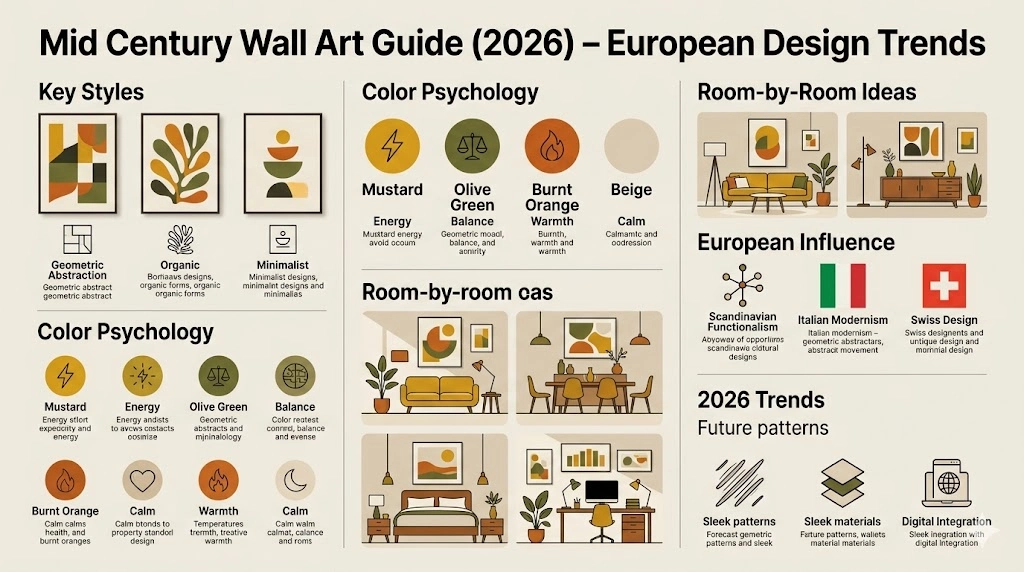
Color Psychology in Mid Century Wall Art
Color selection plays a critical role in mid century interior composition systems.
| Color | Psychological Meaning | Emotional Effect |
| Mustard Yellow | Creativity | Energizing |
| Olive Green | Nature | Calming |
| Burnt Orange | Warmth | Comforting |
| Teal Blue | Depth | Sophisticated |
| Black & White | Structure | Clarity |
Design Insight:
European interiors often use neutral base environments with controlled accent color deployment for visual equilibrium.
How to Style Mid Century Wall Art
Living Room Strategy
- Large-scale focal artwork above seating areas
- Balanced gallery wall arrangements
- Symmetrical spacing systems
Purpose:
Creates strong visual anchoring and spatial hierarchy.
Bedroom Strategy
- Soft abstract compositions
- Neutral tonal consistency
- Minimal visual complexity
Purpose:
Enhances relaxation and sleep quality.
Dining Room Strategy
- Vintage-inspired storytelling pieces
- Warm color harmonization
- Social atmosphere enhancement
Purpose:
Encourages conversation and emotional warmth.
Home Office Strategy
- Structured geometric layouts
- Focus-oriented visuals
- Clean compositional alignment
Purpose:
Improves productivity and cognitive focus.
Mid Century Wall Art Styling Table
| Room | Style | Emotion | Colors |
| Living Room | Abstract Geometric | Balance | Teal, Beige |
| Bedroom | Minimal Line Art | Calm | Grey, White |
| Dining Room | Retro Posters | Warmth | Orange, Mustard |
| Office | Bauhaus Style | Focus | Blue, Black |
European Interior Design Influence
Scandinavian Design
- Bright, airy interiors
- Natural daylight optimization
- Minimal decorative layering
German Bauhaus Design
- Functional visual systems
- Strong geometric structure
- Logical spatial organization
French Modern Style
- Artistic elegance
- Subtle luxury expression
- Soft emotional aesthetics
Italian Modern Design
- Rich emotional warmth
- Balanced decorative restraint
- Artistic storytelling integration
How to Choose the Right Mid Century Wall Art
Before selecting artwork, evaluate:
- Spatial dimensions
- Lighting conditions
- Existing furniture style
- Color harmony systems
- Emotional design intention
- Wall proportion balance
Golden Rule:
Visual equilibrium always outweighs decorative excess.
Common Mistakes to Avoid
- Overcrowding walls with excessive frames
- Mixing incompatible art styles
- Ignoring scale proportions
- Using overly saturated color combinations
- Incorrect artwork placement height
Fix Strategy:
Always maintain simplicity, proportionality, and structured spacing.
Pros and Cons
Advantages:
- Timeless aesthetic value
- Universal design compatibility
- Easy integration into interiors
- Strong European influence
- Psychological calming effect
Disadvantages:
- Can appear overly minimal if misused
- Requires careful placement strategy
- Less suitable for maximalist design styles
Future Trends
Organic Evolution
Shift toward flowing, natural shapes.
Textural Expansion
Integration of fabric, wood, and layered materials.
Frame-Free Art Systems
Floating visual compositions without traditional frames.
Emotional Narrative Design
Artwork focused on emotional storytelling rather than pure geometry.
Hybrid Interior Styles
Fusion of Nordic minimalism, luxury aesthetics, and modern abstraction.
FAQs
It is art inspired by 1940s–1960s design with focus on simplicity and geometry.
Yes, it is highly popular due to European warm minimalism trends.
Earth tones like mustard, olive green, teal, and burnt orange.
Yes, it is perfect for small spaces due to minimal design.
It combines Scandinavian simplicity, German structure, and French elegance.
Use symmetry, equal spacing, and consistent color tones.
Final Thought
Mid Century Wall Art (2026) represents a refined synthesis of European design intelligence and modern lifestyle needs. It blends structure with emotion, simplicity with meaning, and tradition with innovation. When applied thoughtfully, it elevates any interior into a timeless expression of balance, clarity, and aesthetic harmony.