Introduction
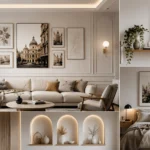
Nature Wall Art represents far more than simple interior decoration. It is a sophisticated lifestyle expression deeply rooted in emotional wellness, environmental connection, and modern European design philosophy. Across contemporary homes in Europe—from minimalist Scandinavian apartments to rustic French countryside villas—nature-inspired wall décor has become a defining element of modern living spaces.
In today’s interior design landscape, homeowners are no longer satisfied with purely decorative visuals. Instead, they seek meaningful, emotionally intelligent, and psychologically supportive environments. Nature Wall Art fulfills this demand by merging aesthetic beauty with mental well-being.
This comprehensive guide explores everything you need to know, including design psychology, European styling frameworks, material selection, room-wise applications, color theory, trends, and expert-level implementation strategies.
What is Nature Wall Art?
Nature Wall Art refers to visual artistic compositions inspired directly or abstractly by elements found in the natural environment. These elements include forests, botanical structures, oceans, mountains, wildlife, floral compositions, organic textures, and atmospheric landscapes.
Instead of artificial or industrial visuals, this art category emphasizes organic harmony, ecological beauty, and natural symmetry, transforming indoor spaces into visually calming environments.
Common Forms of Nature Wall Art:
- High-resolution forest landscape canvas prints
- Botanical illustrations featuring flora and plant anatomy
- Nature photography capturing mountains, rivers, skies, and clouds
- Abstract organic textures inspired by natural movement
- Minimalist line-art depicting natural forms
- Wooden, stone, or textured eco-inspired wall panels
Simplified Conceptual Meaning:
Nature Wall Art = A decorative bridge connecting indoor environments with outdoor natural ecosystems, enhancing emotional stability and visual harmony.
Why Nature Wall Art is Dominating European Interiors
Across Europe, interior design has undergone a significant transformation toward biophilic, sustainable, and emotionally intelligent living spaces. This shift is driven by psychological well-being, urban lifestyle stress, and eco-conscious design principles.
Key Drivers of Popularity:
- Increasing urban stress and digital overload
- Strong adoption of biophilic design principles
- Scandinavian minimalism influence across global interiors
- Rising sustainability and eco-living movements
- Demand for emotionally restorative home environments
Leading European Design Regions:
- ???????? Sweden → Scandinavian simplicity and light aesthetics
- ???????? Germany → Functional modern design with structured harmony
- ???????? Norway → Deep forest-inspired Nordic interiors
- ???????? France → Rustic countryside elegance with natural warmth
- ???????? Netherlands → Eco-modern fusion interiors
Europe is no longer just designing homes—it is engineering psychologically balanced living ecosystems.
Psychology of Nature Wall Art
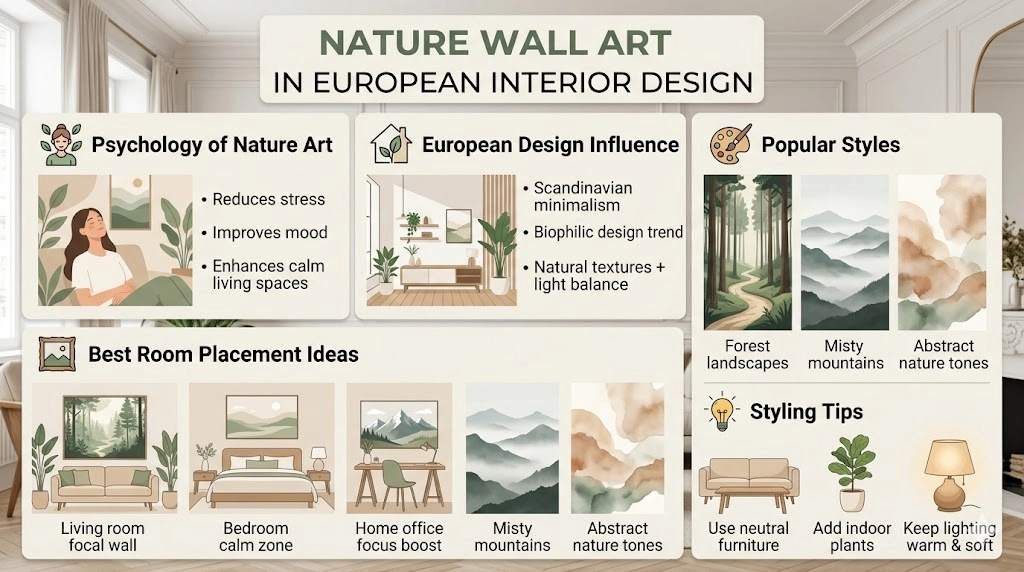
Nature Wall Art operates strongly within environmental psychology and biophilic design theory. This concept explains how humans instinctively respond to natural elements, even when viewed digitally or artistically.
Emotional and Cognitive Effects:
- Reduces psychological stress and anxiety levels
- Enhances cognitive clarity and mental focus
- Promotes emotional equilibrium and stability
- Encourages restful sleep in bedroom environments
- Creates perception of spatial openness and airiness
Scientific Interpretation:
When the human brain visually processes natural patterns such as foliage, water bodies, or organic textures, it activates neurological pathways associated with relaxation and reduced cortisol levels.
This is why hospitals, wellness centers, luxury hotels, and corporate offices across Europe integrate natural imagery into interior spaces.
Major Types of Nature Wall Art
1. Botanical Wall Art
Focus: Plant structures, leaves, floral compositions
Best Use: Bedrooms, study rooms, workspaces
Effect: Cleanliness, freshness, structured calmness
2. Landscape Wall Art
Focus: Mountains, rivers, skies, open horizons
Best Use: Living rooms and large wall spaces
Effect: Freedom, inspiration, visual expansion
3. Forest Wall Art
Focus: Dense woodland, green ecosystems
Best Use: Bedrooms and relaxation areas
Effect: Deep grounding, emotional calm
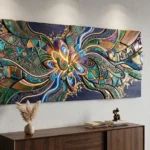
4. Abstract Nature Art
Focus: Organic movement, natural textures
Best Use: Modern apartments and studios
Effect: Creativity, sophistication, luxury appeal
5. Minimal Line Nature Art
Focus: Simplified natural outlines
Best Use: Compact urban interiors
Effect: Elegance, clarity, minimal aesthetic balance
European Nature Wall Art Styles Explained
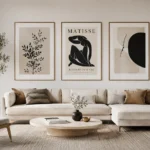
Scandinavian Style
Characterized by:
- White dominant walls
- Light oak or pine furniture
- Subtle green forest artwork
- Minimal framing and spacing
Emotional Output: Calmness, purity, simplicity
German Modern Style
Characterized by:
- Neutral grayscale palettes
- Functional spatial planning
- Structured artistic alignment
Emotional Output: Order, precision, efficiency
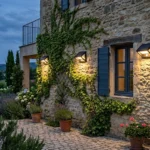
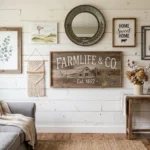
French Rustic Style
Characterized by:
- Warm beige and earthy tones
- Vintage wooden frames
- Countryside-inspired landscapes
Emotional Output: Romance, warmth, nostalgia
Nordic Forest Style
Characterized by:
- Deep green and dark tonal contrasts
- Moody atmospheric visuals
- Strong visual depth
Emotional Output: Introspection, emotional grounding
Room-by-Room Nature Wall Art Implementation Guide
Living Room
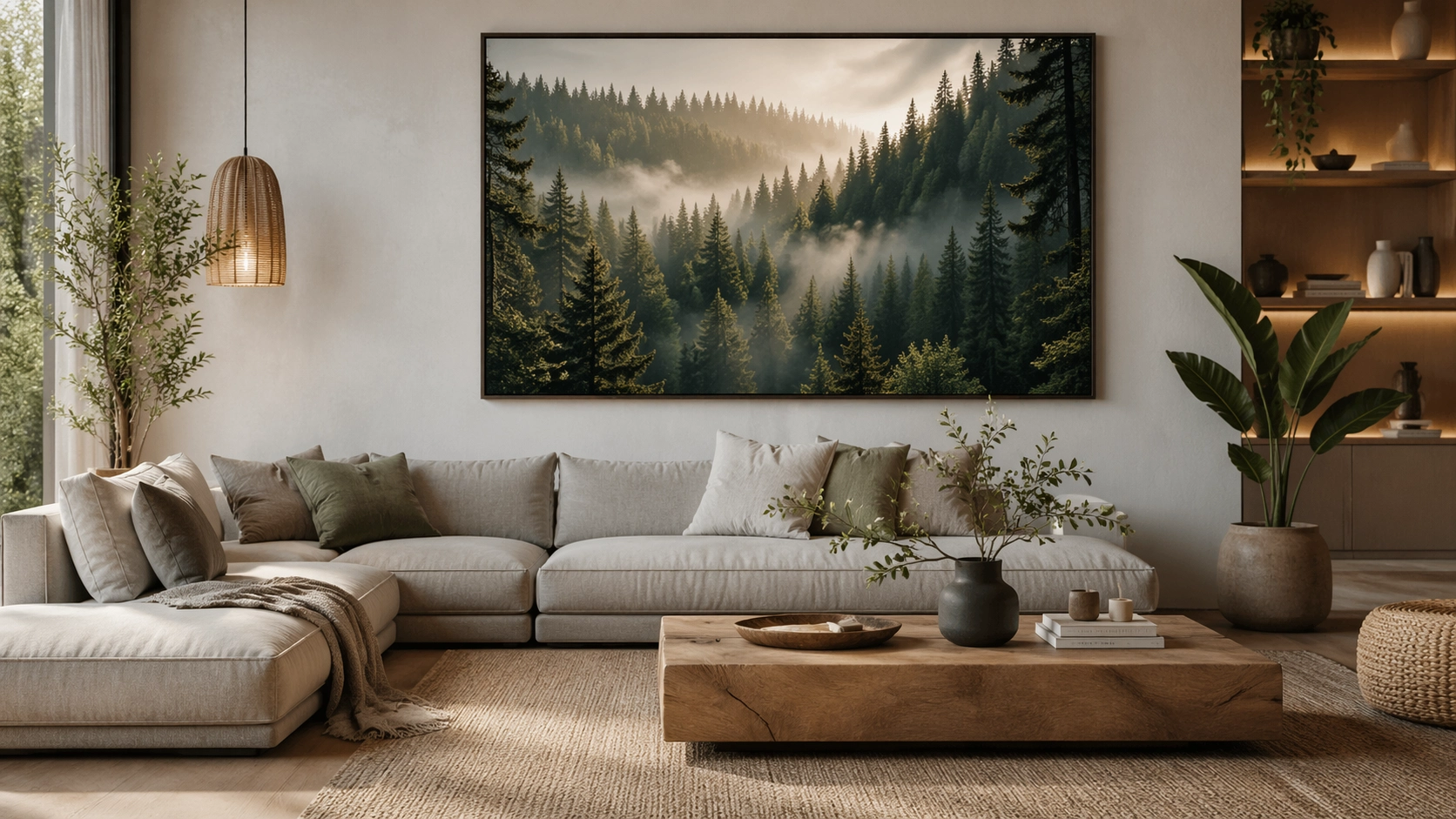
Recommended: Large-scale landscape visuals
Placement: Central wall above seating area
Effect: Strong focal anchor and visual storytelling
Bedroom
Recommended: Soft botanical or forest imagery
Colors: Muted greens, beige, pastel tones
Effect: Sleep enhancement and relaxation
Home Office
Recommended: Minimal forest or abstract nature art
Effect: Increased productivity and mental clarity
Hallways
Recommended: Vertical botanical sequences
Effect: Flow continuity and spatial connection
Children’s Room
Recommended: Nature animals and soft illustrations
Effect: Creativity stimulation and emotional safety
Nature Wall Art Comparative Table
| Style | Core Focus | Ideal Space | Emotional Impact | European Influence |
| Botanical | Plants & Flora | Bedroom / Office | Calm & Organized | Scandinavian |
| Forest | Woodland Nature | Bedroom | Deep Relaxation | Nordic |
| Landscape | Mountains & Skies | Living Room | Inspiration | Alpine Europe |
| Abstract Nature | Organic Forms | Modern Homes | Creativity | Contemporary EU |
| Minimal Line | Simplified Nature | Small Spaces | Clarity | Minimalist Europe |
How to Select the Perfect Nature Wall Art
Key Selection Parameters:
- Wall dimension and spatial proportion
- Ambient lighting conditions
- Existing furniture composition
- Color harmony alignment
- Emotional intention of the space
Optimization Rule:
- Small interiors → minimal botanical art
- Large interiors → expansive landscape visuals
- Dim environments → bright natural imagery
Nature Wall Art Color Psychology
- Green → Restoration, healing, ecological balance
- Blue → Mental clarity, calmness, serenity
- Brown → Stability, grounding, comfort
- White → Clean space perception, openness
- Yellow → Emotional warmth, positivity
European designers frequently prefer muted green palettes combined with neutral tones for timeless aesthetics.
Common Design Mistakes
Frequent Errors:
- Overcrowding wall surfaces with excessive visuals
- Mixing incompatible art styles
- Ignoring natural and artificial lighting balance
- Using low-resolution or pixelated prints
- Improper scaling relative to wall size
Result: Loss of visual harmony and aesthetic disruption
Advantages and Limitations
Advantages:
- Enhances psychological wellness
- Universally compatible with European interiors
- Timeless and evergreen design category
- Easy integration into multiple styles
- Supports eco-conscious living trends
Limitations:
- Overuse may reduce visual uniqueness
- Requires thoughtful composition planning
- Low-quality materials reduce aesthetic impact
Step-by-Step Implementation Strategy
Step 1: Define Purpose
Identify whether the space requires relaxation, productivity, or aesthetic enhancement.
Step 2: Choose Artistic Direction
Select botanical, forest, abstract, or landscape categories.
Step 3: Align Color System
Match artwork palette with existing interiors.
Step 4: Determine Scale
Balance wall size with artwork dimensions.
Step 5: Optimize Placement
Maintain eye-level alignment for maximum visual impact.
Future Evolution of Nature Wall Art in Europe
The future of Nature Wall Art is evolving toward intelligent, sustainable, and hybrid design ecosystems.
Emerging Trends:
- AI-generated nature compositions
- Sustainable eco-material wall prints
- Digital dynamic nature frames
- Wellness-driven interior systems
- Hybrid physical + digital art integration
Nature-inspired design is no longer a trend—it is becoming a permanent architectural language of modern Europe.
FAQs About Nature Wall Art
It is primarily used to enhance interior aesthetics while improving emotional well-being through natural visual exposure.
Yes, minimal botanical or light-toned designs are ideal for compact spaces.
Scandinavian and Nordic forest-inspired designs dominate European interiors.
Yes, multiple environmental psychology studies confirm its calming effects.
Living rooms, bedrooms, and office spaces are the most effective placements.
Conclusion
Nature Wall Art is more than just a decorative element—it is a powerful blend of aesthetics, psychology, and European design philosophy. By integrating natural visuals like forests, plants, and landscapes into your interiors, you create a calmer, more balanced, and emotionally supportive living environment.
From Scandinavian minimalism to rustic French charm, this design approach fits seamlessly into modern European homes and continues to grow as a long-term interior trend. When chosen thoughtfully, Nature Wall Art can transform any space into a peaceful, nature-inspired sanctuary that improves both mood and lifestyle.