Introduction
Art Deco wall design is far more than surface decoration—it is a commanding expression of sophistication, precision, and elevated aesthetics. In 2026, this iconic design language is experiencing a remarkable resurgence across Europe, redefining how interiors communicate elegance and identity. From refined Parisian residences to contemporary Berlin lofts and Scandinavian-inspired apartments, Art Deco walls are reshaping interiors into visually compelling environments.
Unlike understated or purely minimal walls, an Art Deco wall introduces character, structure, and layered depth. It establishes a rhythmic visual flow through geometric repetition, enhances richness with premium materials, and creates dramatic contrast through bold color interplay.
Modern homeowners and interior designers are increasingly drawn to this design style because it masterfully blends historical opulence with contemporary clarity. It is both nostalgic and forward-thinking—perfectly suited for the evolving European lifestyle.
In this comprehensive guide, you will learn:
- What an Art Deco wall is
- Its historical origins and transformation
- Core design principles and visual traits
- Different types of Art Deco wall applications
- Room-by-room inspiration for European homes
- Color combinations and material selection
- Emerging Neo Deco trends for 2026
- Common design errors to avoid
- Expert-level practical insights
By the end, you will have a complete blueprint to design an extraordinary Art Deco wall that enhances your space with confidence and elegance.
What Is an Art Deco Wall?
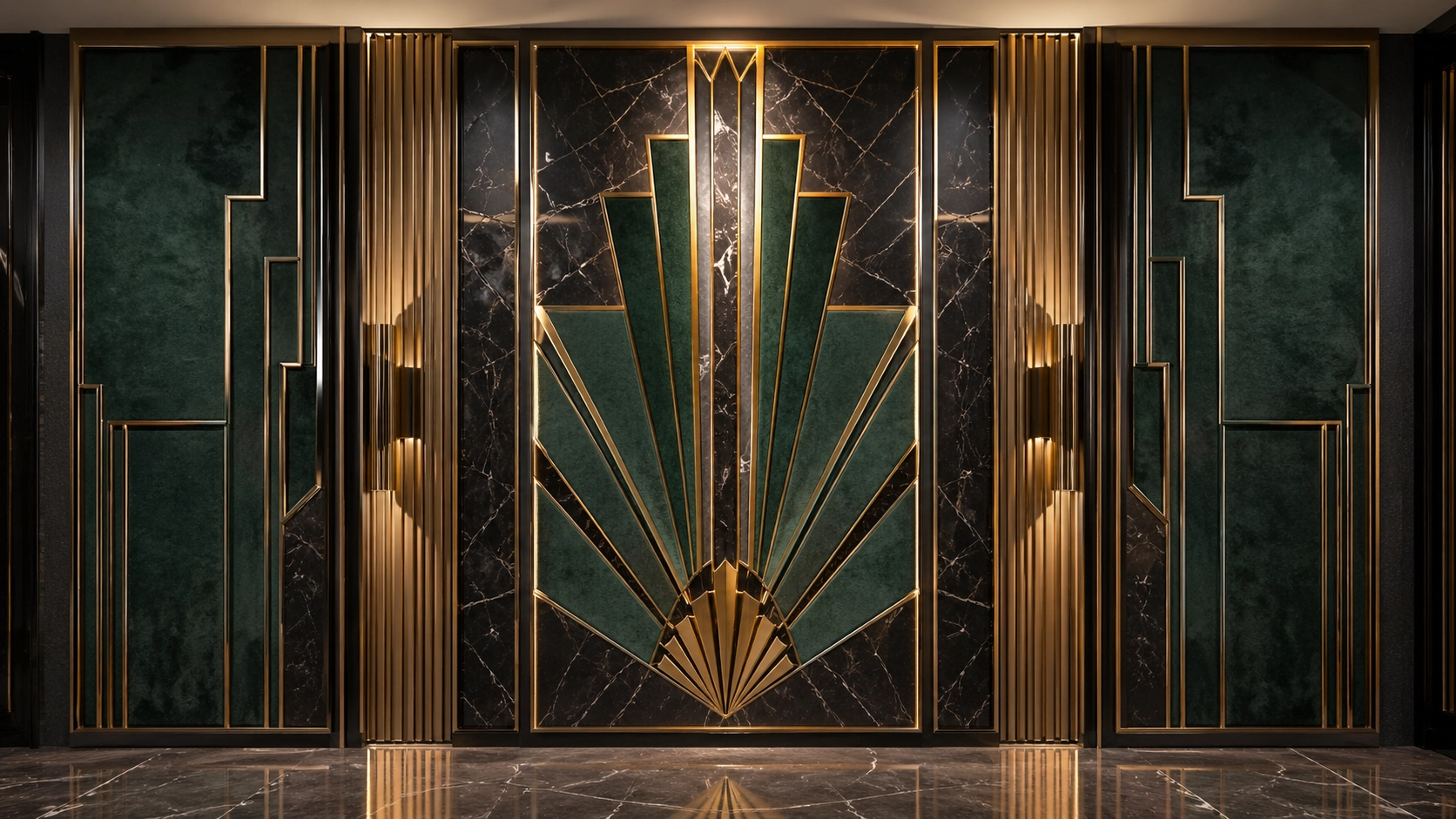
An Art Deco wall is a decorative architectural feature defined by structured geometry, visual symmetry, and luxurious finishes. It is intentionally designed to stand out and create a focal point within a space.
Core Elements of Art Deco Walls
- Distinct geometric motifs
- Balanced and symmetrical arrangements
- Premium-quality materials and textures
- Bold and contrasting color schemes
This design movement emerged in the early 20th century and represents modernity, craftsmanship, and artistic innovation.
Key Identity of Art Deco Walls
Visual Dominance: Designed to attract attention rather than fade into the background
Architectural Presence: Feels integrated into the structure rather than applied superficially
Luxury Expression: Emphasizes richness through texture and finish
Harmonious Balance: Symmetry is not optional—it is essential
Simple idea:
If minimalism represents quiet refinement, Art Deco represents confident elegance.
The History Behind Art Deco Walls
Art Deco originated in France and gained international recognition during the 1925 Paris Exposition. It quickly spread across Europe and North America, influencing architecture, interiors, and decorative arts.
Evolution Timeline
| Period | Development |
| 1920s | Emergence of Art Deco in France |
| 1930s | Rapid global expansion |
| 1940s | Decline due to wartime shifts |
| 2000s | Revival in luxury interiors |
| 2026 | Transformation into Neo Deco |
Art Deco vs Art Nouveau
| Feature | Art Deco | Art Nouveau |
| Style | Geometric | Organic |
| Lines | Angular | Curvilinear |
| Mood | Bold & structured | Soft & natural |
| Materials | Metal, marble | Wood, glass |
Art Deco replaced organic softness with structured precision and architectural clarity.
Key Characteristics of Art Deco Wall Design
1. Geometry & Symmetry
The foundation of every Art Deco wall lies in organized patterns and balanced compositions. Common motifs include:
- Chevron patterns
- Zigzag formations
- Sunburst designs
- Arches and fan shapes
These shapes create rhythm, repetition, and visual harmony, making the wall feel intentional and refined.
2. Bold Colors & Contrast
Art Deco walls rely on striking color pairings to create depth and drama. Popular combinations include:
- Black with gold accents
- Emerald green with brass tones
- Navy blue with chrome finishes
- White paired with metallic highlights
These contrasts amplify visual interest and give the wall a layered, dimensional effect.
3. Luxurious Materials
Material selection defines the overall richness of the design. Frequently used materials include:
- Marble and natural stone
- Polished wood veneers
- Brass, chrome, and gold metals
- Glass panels and mirrored surfaces
- Lacquered finishes
Each material contributes to the tactile and visual sophistication of the wall.
4. Statement Visual Impact
An Art Deco wall is always a focal point. It is designed to dominate the visual hierarchy of the room.
It is not passive decoration—it is the centerpiece.
Types of Art Deco Wall Designs
1. Art Deco Wall Panels
Wall panels introduce structure and dimensional depth.
Best suited for:
- Living rooms
- Bedrooms
- Home offices
Key features:
- Geometric carvings
- Metallic detailing
- Symmetrical layouts
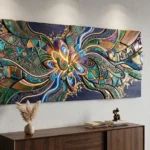
2. Art Deco Wall Art
This is a flexible option that delivers impact without construction.
Includes:
- Abstract geometric artwork
- Metallic-framed compositions
- Balanced visual arrangements
3. Art Deco Wallpaper & Murals
An accessible and cost-effective solution.
Popular designs:
- Sunburst patterns
- Repeating arches
- Fan-inspired motifs
4. Sculptural & 3D Walls
A modern evolution of traditional Art Deco.
Characteristics:
- Layered textures
- Shadow-enhancing surfaces
- Mixed material applications
Highly popular in contemporary European apartments.
Room-by-Room Art Deco Wall Ideas
Living Room
- Design a feature wall behind the sofa
- Incorporate geometric panels or bold wallpaper
- Add metallic detailing for emphasis
Creates a refined focal area.
Bedroom
- Symmetrical design behind the bed
- Upholstered or velvet panels
- Soft ambient lighting
Produces a hotel-inspired luxury atmosphere.
Dining Room
- Use mirrored surfaces to reflect light
- Introduce gold accents
- Opt for deeper, richer tones
Enhances warmth and sophistication.
Hallway & Entryway
- Apply strong geometric patterns
- Add statement murals
- Use vertical panel layouts
Creates a memorable first impression.
Bathroom
- Marble-effect surfaces
- Glossy finishes
- Black and gold palettes
Inspired by high-end European hotels.
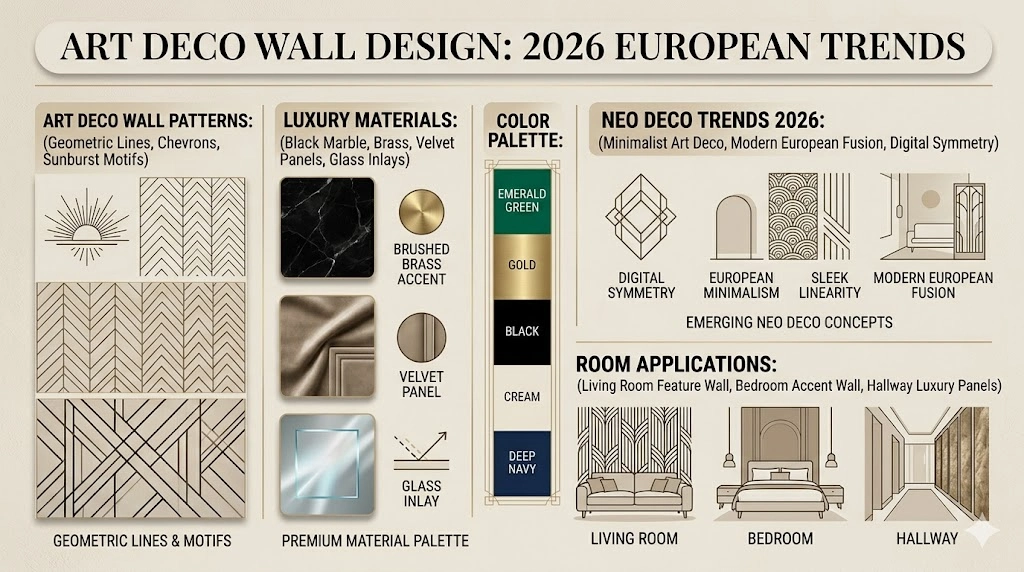
Art Deco Wall Color Palette Guide
1. Jewel Tones
- Emerald green
- Sapphire blue
- Ruby red
These tones convey richness and depth.
2. Neutral Luxury
- Beige with gold
- Cream with brass
- Grey with chrome
These combinations provide subtle elegance.
3. High Contrast
- Black and white
- Dark blue with metallics
These palettes create a bold visual impact.
Color Psychology in European Interiors
| Color | Effect | Best Use |
| Emerald Green | Calm luxury | Living rooms |
| Black | Strength & depth | Feature walls |
| Gold | Warm elegance | Accents |
| Navy Blue | Refined sophistication | Bedrooms |
Materials & Finishes for Art Deco Walls
Essential Materials
- Marble → enduring luxury
- Wood veneer → natural warmth
- Metal inlays → refined detailing
- Glass & mirrors → light enhancement
- Velvet panels → soft richness
Finish Types
| Finish | Effect |
| Glossy lacquer | Reflective sophistication |
| Matte | Subtle modern softness |
| Polished stone | Classic elegance |
| Metallic | Premium aesthetic |
How to Create a Modern “Neo Deco” Wall 2026 Trends
In 2026, Art Deco is evolving into a more refined and adaptable style known as Neo Deco.
Key Trends
- Simplified geometry
- Muted color palettes
- Layered textures
- Subtle metallic accents
Step-by-Step Design System
- Choose a focal wall
- Select a geometric pattern
- Define your color scheme
- Introduce one luxury material
- Maintain symmetry
- Add lighting or artwork
This method ensures a cohesive and polished result.
Art Deco Wall vs Modern Minimalist Wall
| Feature | Art Deco Wall | Minimalist Wall |
| Style | Decorative & bold | Clean & subtle |
| Colors | High contrast | Neutral tones |
| Materials | Luxurious | Simple |
| Impact | Strong presence | Soft presence |
Pros & Cons
Pros
- Timeless elegance
- Strong visual identity
- High design value
- Works in both classic and modern interiors
Cons
- Can feel overwhelming if overdone
- Requires careful planning
- Higher cost compared to basic walls
- Demands symmetry and balance
Common Mistakes to Avoid
Overloading with patterns
Ignoring symmetry
Mixing unrelated styles
Using low-quality materials
Poor lighting choices
Balance and restraint are essential for success.
Practical Tips for European Homes
Small Apartments
- Focus on one feature wall
- Use lighter color palettes
- Avoid heavy textures
Luxury Villas
- Full wall paneling
- Marble with gold accents
- Statement lighting fixtures
Scandinavian Homes
- Soft Neo Deco interpretation
- Light tones
- Minimal metallic detailing
Maintenance & Durability
- Use moisture-resistant materials
- Avoid low-grade laminates
- Clean metallic finishes regularly
- Protect wood from humidity and temperature changes
FAQs
An Art Deco wall design uses geometric patterns, symmetry, and luxury materials to create a bold and elegant look.
Yes, it is evolving into Neo Deco, which blends luxury with modern minimalism.
Yes:
Use one wall
Choose light colors
Keep patterns simple
Black and gold
Emerald green
Navy blue
Neutral + metallic
They can be medium to high cost, but wallpaper and paint options are affordable.
Conclusion
Art Deco walls are not merely a passing trend—they represent a lasting design philosophy rooted in elegance, structure, and artistic expression.
In 2026, the emergence of Neo Deco makes this style more versatile, allowing it to adapt seamlessly to modern European interiors.
Whether you are designing:
- A Paris apartment
- A Scandinavian home
- A contemporary German interior
The principle remains simple:
Focus on symmetry, geometry, and a single powerful statement wall.
When executed correctly, an Art Deco wall does more than decorate a space—it defines its identity and elevates its entire atmosphere.