Introduction
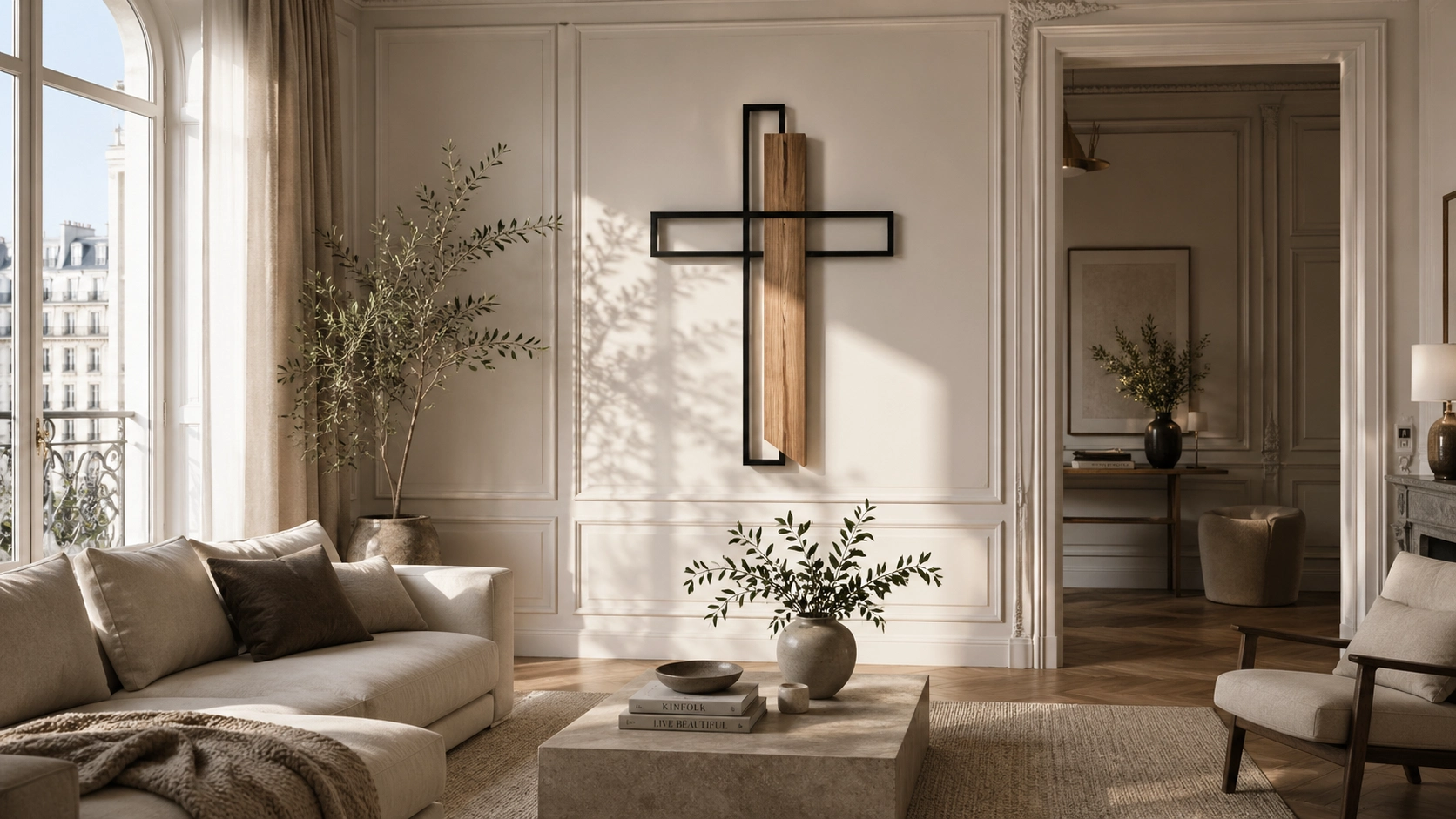
Cross decor for walls has evolved far beyond its historical or purely symbolic roots. In 2026, it is widely recognized as a refined interior design element that integrates aesthetics, emotional resonance, and spatial harmony. Across Europe—particularly in Scandinavian apartments, German minimalist residences, and French rustic villas—cross-shaped wall décor is being adopted as part of a broader shift toward meaningful, calm, and intentional living environments.
Modern interior design is no longer focused solely on visual appeal. Instead, it increasingly emphasizes psychological comfort, emotional grounding, and lifestyle alignment. Homeowners want spaces that reflect identity, values, and tranquility. Within this context, cross wall décor has emerged as a powerful design tool because it offers structure, symbolism, and simplicity in one unified form.
Unlike excessive ornamental trends of the past, 2026 design philosophy favors minimal yet meaningful objects. People now prefer décor that carries:
- Emotional grounding and psychological comfort
- Clean geometric structure and balance
- Natural, sustainable materials
- Subtle elegance rather than visual overload
Cross wall décor aligns perfectly with these principles, making it one of the most versatile and timeless design elements in modern interiors.
In this comprehensive guide, we will analyze everything about cross decor for walls in 2026, including its meaning, psychological effects, trending styles, European influences, placement strategies, design mistakes, and expert recommendations.
What is Cross Decor for Walls?
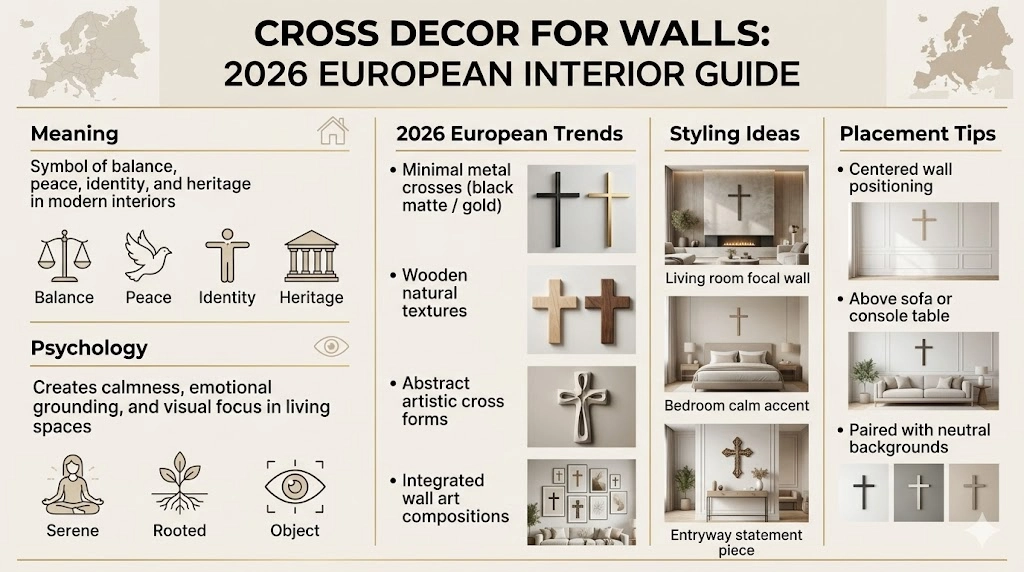
Cross decor for walls refers to decorative interior elements designed in the shape of a cross and mounted on vertical surfaces such as living room walls, bedroom backdrops, or entryway focal points. These items can range from traditional handcrafted wooden pieces to ultra-modern abstract metal sculptures.
In contemporary interior design, cross décor is no longer limited to religious symbolism. Instead, it is increasingly interpreted as a geometric and architectural motif used to enhance spatial balance and visual rhythm.
???? Common Materials Used in 2026
Material selection plays a critical role in defining the emotional tone of cross décor:
- Natural wood varieties such as oak, walnut, pine, and ash
- Industrial metals including matte black steel, brushed iron, and aluminum
- Hybrid composites combining wood and metal for contrast
- Textured resin or stone-inspired finishes for artistic variation
Functional Purpose in Modern Interiors
In modern design theory, cross wall décor functions as:
- A visual anchoring mechanism within a room composition
- A structural balance element enhancing symmetry
- A focal point guiding spatial attention
- A minimalist art object supporting aesthetic coherence
From a design psychology perspective, it organizes visual noise and introduces order into spatial perception.
Why Cross Wall Decor is Trending in 2026
The increasing popularity of cross décor across European interiors is not random; it is driven by deeper cultural and psychological shifts.
1. Emotional Minimalism Movement
Modern homeowners are shifting toward emotional minimalism, a lifestyle approach that emphasizes mental clarity through simplified environments. Cross décor supports this by:
- Reducing visual clutter
- Enhancing spatial calmness
- Supporting emotional regulation
2. Natural Material Revival
Across Europe, there is a strong return to organic materials and sustainable aesthetics. Interiors now feature:
- Raw wood textures
- Earth-toned palettes
- Matte, non-reflective surfaces
Cross décor aligns naturally with this movement due to its material adaptability.
3. Meaning-Driven Interior Design
Consumers are increasingly seeking objects that hold meaning rather than purely decorative value. Cross shapes often symbolize:
- Balance and unity
- Directional harmony
- Structural stability
4. Quiet Luxury Aesthetic
The quiet luxury trend emphasizes subtle sophistication over excessive display. Key features include:
- Neutral color schemes
- Minimal object usage
- High-quality craftsmanship
Cross wall décor embodies this aesthetic through its simplicity and depth.
Popular Cross Decor Styles for Walls
1. Wooden Cross Wall Decor
Wooden cross décor remains one of the most dominant styles in European interiors.
Ideal for:
- Scandinavian homes
- Japandi interiors
- Minimalist apartments
Design characteristics:
- Natural oak, pine, or walnut textures
- Soft matte finishes
- Geometrically balanced shapes
Psychological impact: Creates warmth, emotional grounding, and natural harmony.
2. Metal Cross Wall Decor
Metal designs are widely used in urban environments.
Ideal for:
- Industrial lofts
- Modern apartments
- Monochrome interiors
Design characteristics:
- Matte black steel
- Thin linear structures
- Sharp, precise edges
Psychological impact: Conveys strength, clarity, and modern sophistication.
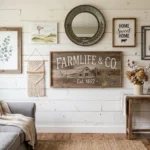
3. Rustic Farmhouse Cross Decor
Rustic styles remain popular in countryside-inspired European homes.
Ideal for:
- French rural homes
- Vintage villas
- Cottage interiors
Design characteristics:
- Distressed or reclaimed wood
- Handcrafted imperfections
- Larger, expressive forms
Psychological impact: Evokes nostalgia, warmth, and comfort.
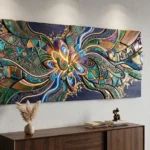
4. Abstract & Contemporary Cross Art
This is the most experimental and artistic interpretation.
Ideal for:
- Luxury interiors
- Designer apartments
- Art-inspired homes
Design characteristics:
- Mixed materials
- Asymmetrical composition
- Sculptural presence
Psychological impact: Stimulates creativity and visual curiosity.
Style Comparison Table
| Style | Material | Best Interior | Emotional Impact | Mood |
| Wooden Cross | Natural wood | Scandinavian, Japandi | Soft harmony | Calm |
| Metal Cross | Steel, iron | Industrial, modern | Structured strength | Minimal |
| Rustic Cross | Distressed wood | Farmhouse, vintage | Warm nostalgia | Cozy |
| Abstract Cross | Mixed materials | Luxury, artistic | Creative stimulation | Bold |
Where to Place Cross Decor for Walls
Bedroom Placement
Optimal placement locations include:
- Above the headboard
- Central feature wall
- Opposite natural light sources
Effect: Enhances emotional calm and spatial symmetry.
Living Room Styling
Key positions include:
- Above sofas
- Fireplace walls
- Main feature walls
Effect: Establishes focal hierarchy and room identity.
Entryway Design
Effect:
- Creates welcoming atmosphere
- Establishes first impression
- Defines spatial identity
Dining Area Styling
Effect:
- Improves visual balance
- Enhances social harmony
- Complements dining furniture composition
Interior Psychology of Cross Wall Decor
From a cognitive design perspective, cross shapes influence visual processing due to their structural geometry.
Psychological Mechanism:
- Vertical axis → stability perception
- Horizontal axis → calmness perception
- Intersection point → balance focus
Emotional Outcomes:
- Reduced cognitive overload
- Improved spatial clarity
- Increased emotional stability
Cross Decor in European Interior Trends 2026
Scandinavian Design
- Light wood tones
- White and gray palettes
- Minimal spatial density
French Rustic Design
- Vintage textures
- Warm beige tones
- Handcrafted finishes
German Minimalism
- Black metal accents
- Precision geometry
- Functional aesthetics
Mediterranean Style
- Earthy tones
- Artistic expression
- Organic materials
Styling Rules for Cross Wall Decor
Do’s
- Use neutral backgrounds
- Maintain single focal emphasis
- Match material with furniture
- Preserve symmetry
Don’ts
- Avoid wall overcrowding
- Do not mix conflicting styles
- Avoid excessive gloss finishes in rustic interiors
- Prevent incorrect sizing ratios
Common Mistakes to Avoid
- Over-decorating wall spaces
- Incorrect proportional scaling
- Style inconsistency within room design
- Improper installation height (below eye level)
Cross Decor vs Traditional Wall Art
| Feature | Cross Decor | Traditional Art |
| Meaning | Symbolic | Visual narrative |
| Role | Structural anchor | Decorative enhancement |
| Emotion | Strong | Moderate |
| Use | Minimal focus | General décor |
Pros and Cons
Advantages
- Strong visual anchoring effect
- Versatile across design styles
- Emotional and symbolic depth
- Timeless aesthetic quality
Limitations
- Requires careful placement
- Not suitable for overly busy walls
- Can appear too minimal if under-styled
How to Choose the Right Cross Decor for Walls
1: Define Interior Style
- Modern
- Rustic
- Minimalist
- Luxury
2: Select Material
- Wood → warmth
- Metal → modernity
- Mixed → artistic expression
3: Determine Size
- Large walls → oversized piece
- Small walls → compact design
4: Color Harmony
Neutral backgrounds provide optimal contrast.
Expert Design Tips
- Integrate soft ambient lighting behind décor
- Pair with natural textures like linen or stone
- Maintain visual breathing space
- Use single statement focal point strategy
- Coordinate with furniture tone palettes
FAQs
No, it is also widely used as a modern interior design element.
Living rooms, bedrooms, and entryways are ideal locations.
Wood offers warmth, metal provide
conclusion
Cross decor for walls in 2026 stands out as a timeless blend of tradition and modern design. It adds meaning, balance, and calmness to interiors while fitting seamlessly into contemporary European homes. Whether used as a subtle accent or a focal point, it enhances both emotional depth and visual harmony in any space.