Introduction
Wall decor for bathroom environments has evolved far beyond simple ornamentation or casual visual enhancement. In 2026, the European interior design philosophy redefines bathroom wall styling as a holistic environmental design system, where every surface, object, and spatial decision is governed by functionality, psychology, and aesthetic coherence.
Across Germany, Scandinavia, France, and Italy, bathrooms are no longer treated as purely utilitarian spaces. Instead, they are transformed into wellness sanctuaries, designed to promote mental clarity, emotional stability, and sensory relaxation. Wall surfaces play a central role in shaping this experience.
This comprehensive guide presents a professional-level European design framework for wall decor for bathrooms, integrating spatial psychology, material science, layout systems, and modern 2026 design trends.
You will learn:
- Cognitive design psychology behind bathroom walls
- European spatial zoning system
- Moisture-resistant material intelligence
- Small bathroom optimization strategies
- Minimalist vs luxury design structures
- Professional placement formulas
- Common design mistakes and corrections
- Future bathroom design evolution
Wall Decor for Bathroom as a Structured Design System
Most individuals approach bathroom wall styling in an unstructured, spontaneous manner—placing frames, mirrors, or shelves without spatial logic or design hierarchy.
However, European interior methodology treats wall decor for bathrooms as a systemized spatial composition model rather than random decoration.
Core Idea: System Over Decoration
Instead of asking “What should I hang on the wall?”, designers ask:
- What function does this wall serve?
- What emotional response should it create?
- What moisture exposure level exists here?
- What visual balance is required?
This systematic thinking eliminates chaos and creates design intelligence.
The Three Core Bathroom Wall Zones
European designers divide bathroom walls into three functional layers:
Wet Zone
This zone includes showers and areas directly exposed to water.
Characteristics:
- Constant humidity exposure
- High condensation levels
- Risk of material degradation
Recommended materials:
- Ceramic tiles
- Stone cladding
- Waterproof panels
- Glass surfaces
Functional Zone
This zone includes sinks and mirrors.
Characteristics:
- Daily grooming interaction
- Requires visual clarity
- Balanced lighting is essential
Recommended elements:
- Mirrors
- Wall-mounted lights
- Minimal shelves
Decorative Zone
This zone focuses purely on visual storytelling.
Characteristics:
- Low moisture exposure
- Emotional design impact
- Visual relaxation focus
Recommended elements:
- Framed art
- Minimalist shelves
- Textural panels
Why This System Works
This zoning methodology ensures:
- Visual harmony
- Functional clarity
- Long-term durability
- Reduced clutter perception
- Enhanced spatial psychology
European designers follow one guiding principle:
Functionality precedes decoration.
European Bathroom Design Psychology
Bathrooms in European design are not just visual compositions—they are psychologically engineered environments designed to influence emotional and cognitive states.
Core Psychological Objectives
The primary emotional goals of wall decor for bathroom include:
- Mental calmness
- Visual clarity
- Emotional balance
- Sensory comfort
- Stress reduction
Psychological Impact of Wall Design
| Wall Condition | Psychological Effect |
| Overdecorated walls | Anxiety, cognitive overload |
| Minimal balanced design | Relaxation, mental clarity |
| Natural textures | Grounding, stability |
| Soft color palettes | Emotional openness |
Scandinavian Psychological Influence
In Scandinavian bathroom design:
- White dominates visual field
- Decorative objects are minimal
- Natural wood introduces warmth
- Lighting is soft and diffused
Result:
A low-stimulation environment that supports mental recovery.
Moisture-Safe Materials for Wall Decor for Bathroom
Bathrooms are high-humidity ecosystems, requiring scientifically selected materials for durability and aesthetics.
Approved Material Systems
- Tempered glass framing systems
- Powder-coated metallic structures
- Ceramic and porcelain surfaces
- Waterproof canvas compositions
- Sealed natural wood finishes
Prohibited Materials
- Paper-based posters
- Unsealed MDF boards
- Fabric without protective coating
- Cardboard composites
European Material Rule
Design principle:
If a material cannot withstand humidity cycles, it cannot exist in bathroom wall decor systems.
This ensures long-term preservation and aesthetic consistency.
Above Toilet Wall Design Strategy
The space above the toilet is often underutilized, yet European designers consider it a primary micro-gallery zone.
Layout Systems
Single Statement Composition
- One central artwork
- Strong visual anchor
- Minimal complexity
Vertical Gallery System
- 2–3 aligned frames
- Equal spacing distribution
- Balanced vertical rhythm
Floating Shelf Composition
- One slim shelf
- Minimal decorative objects
- Natural accents like plants
Golden Spatial Rule
Maintain 60–70% negative space to enhance:
- Visual breathing room
- Cleanliness perception
- Luxury interpretation
Vanity Wall Styling Formula
The vanity wall is the most cognitively active zone in bathroom design.
Core Formula
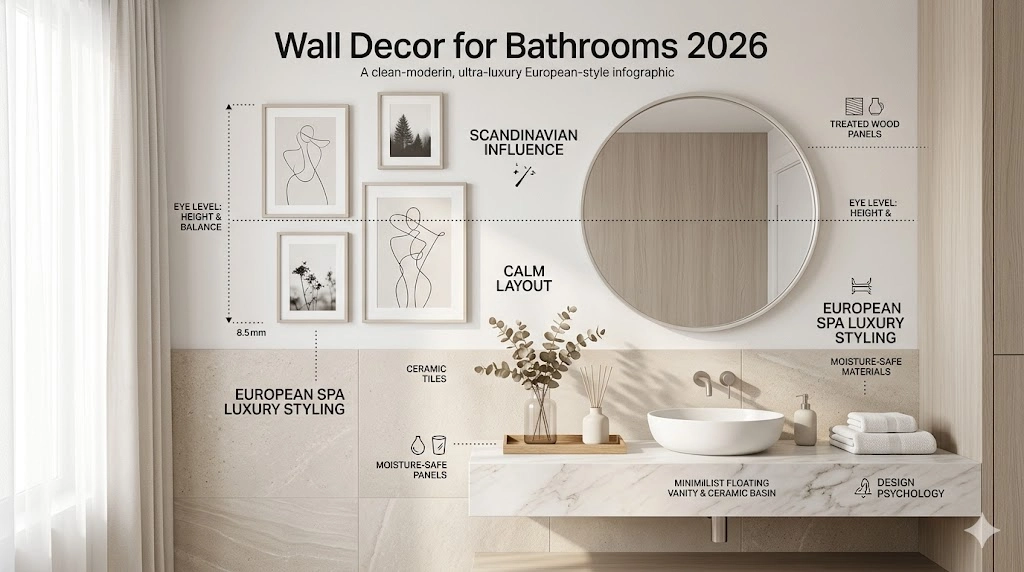
Mirror + Lighting + Minimal Accent Object
Essential Components
- Round or oval mirror (soft geometry trend)
- Warm ambient lighting
- Single decorative accent (plant, ceramic object, or stone detail)
Common Design Errors
- Overloaded shelving systems
- Poor lighting symmetry
- Excess decorative layering
- Visual imbalance around mirror axis
Small Bathroom Wall Optimization System
Small bathrooms require precision-based minimalism.
Structural Rules
- One focal point only
- Vertical composition preference
- Light color expansion strategy
- Minimal surface interruption
Space Expansion Techniques
- Mirror amplification effect
- Vertical artwork elongation illusion
- Empty wall breathing strategy
Scandinavian Efficiency Model
Scandinavian design dominates small bathrooms due to:
- Functional minimalism
- Natural lighting optimization
- Space-efficient beauty systems
Minimalist vs Luxury Bathroom Wall Systems
Minimalist System
Characteristics:
- Neutral tones
- Thin frames
- Clean geometry
- Absence of clutter
Advantages:
- Easy maintenance
- Psychological calmness
- Small space compatibility
Disadvantages:
- Risk of visual emptiness
Luxury Spa System
Characteristics:
- Stone textures
- LED mirror integration
- Layered lighting systems
- Large statement art
Advantages:
- High-end aesthetic
- Spa-like immersion
- Strong visual identity
Disadvantages:
- Requires careful balance
- Not suitable for very small spaces
2026 European Bathroom Wall Trends
Modern design evolution focuses on nature integration and sensory calmness.
Key Trends
- Natural stone wall textures
- Fluted surface panels
- LED mirror ecosystems
- Botanical wall compositions
- Beige and sand color dominance
- Indirect lighting systems
Design Philosophy Shift
Bathrooms are evolving into:
- Wellness environments
- Emotional recovery zones
- Stress relief interiors
- Private spa ecosystems
Common Mistakes in Wall Decor for Bathroom
Frequent Errors
- Overcrowded wall compositions
- Incorrect material selection
- Misaligned spatial geometry
- Lack of spacing discipline
- Excess decoration in compact areas
Design Term
Experts call this:
“Random Decoration Syndrome”
A condition where aesthetic decisions lack structural reasoning.
Professional Alignment & Spacing Rules
Core Principles
- Center artwork at 145–150 cm height
- Maintain equal spacing between objects
- Use odd-number grouping (1, 3, 5)
- Preserve negative space balance
Alignment Logic
Align decor with:
- Mirror centerline
- Sink axis
- Wall symmetry grid
This produces visual order and luxury perception.
Pros and Cons
Advantages
- Enhances spatial perception
- Improves emotional relaxation
- Adds luxury identity
- Organizes visual flow
- Increases property appeal
Disadvantages
- Requires planning discipline
- Needs correct material selection
- Poor execution creates clutter
- Not universally adaptable
Future of Wall Decor for Bathroom
The future of bathroom design is shifting from decoration to intelligent environmental systems.
Future Directions
- Smart lighting ecosystems
- Organic material dominance
- Emotion-driven spatial design
- Spa-inspired residential interiors
- AI-assisted layout planning
FAQs
Minimalist waterproof art, mirrors, and natural textures are the most effective options.
Use vertical layouts, mirrors, and maintain a single focal point strategy.
Tempered glass, metal, ceramic, and sealed wood are recommended.
Yes, but only moisture-resistant or sealed canvas materials.
Stone textures, LED mirrors, fluted panels, and botanical designs dominate trends.
Conclusion
Wall decor for bathrooms in 2026 is no longer simple decoration—it is a structured European design system built on psychology, function, and material intelligence. Instead of randomly placing art or mirrors, modern interiors focus on zoning, balance, and moisture-safe choices to create calm and long-lasting spaces.
Whether you prefer a minimalist or luxury spa style, the key principle remains the same: less clutter, more intention, and better spatial harmony. When walls are designed with purpose, even a small bathroom can feel like a premium wellness retreat.