Introduction
Fabric wall art in 2026 is no longer interpreted as a simple decorative element. In contemporary European interior architecture, it has evolved into a structured environmental design system that integrates aesthetics, psychology, material science, spatial logic, and sensory engineering.
Across Europe—ranging from Scandinavian minimalist residences, French luxury apartments, German functional workspaces, to Italian expressive design homes—fabric-based wall installations are now considered a communication medium of interior identity.
Instead of being just “wall decoration,” fabric wall art now operates as:
- A spatial emotion controller
- A texture-based acoustic modifier
- A visual hierarchy tool
- A sustainability-driven material choice
- A cultural design language
This guide provides a deeply structured and NLP-enhanced explanation of fabric wall art, rewritten as a complete design intelligence framework for 2026 interiors.
What Is Fabric Wall Art?
Fabric wall art refers to textile-based surface installations applied to vertical architectural spaces instead of traditional mediums such as paint, plaster art, vinyl prints, or canvas-based artworks.
It includes multiple material categories such as:
- Textile wall hangings with woven structures
- Linen-based stretched panels
- Cotton fabric canvas systems
- Jacquard patterned textile compositions
- Bohemian decorative fabric tapestries
- Acoustic textile wall absorption panels
NLP Conceptual Definition:
Fabric wall art =
(Visual Layering System + Emotional Response Trigger + Functional Interior Optimization Tool)
This definition highlights that fabric wall systems operate across three semantic dimensions:
- Visual Dimension → color, texture, pattern recognition
- Emotional Dimension → comfort, warmth, psychological calmness
- Functional Dimension → acoustics, insulation, spatial balance
Thus, modern European designers classify fabric wall art not as decoration, but as a multi-sensory environmental interface.
Why Fabric Wall Art Is Dominating Europe
The European interior market is undergoing a transformation driven by behavioral psychology, sustainability awareness, and sensory design evolution.
Transition from Visual Minimalism to Textural Minimalism
Traditional minimalism emphasized emptiness, flat surfaces, and visual reduction. However, 2026 European design introduces a refined model:
Old Paradigm:
- Empty white walls
- Cold visual environments
- Flat surface dominance
New Paradigm:
- Soft tactile layers
- Fabric-based wall depth
- Warm sensory architecture
This shift is often described as “Textural Minimalism”, where simplicity is maintained but enriched through material complexity.
Emotional Interior Engineering
Modern homeowners increasingly demand environments that regulate emotional states.
Fabric wall systems contribute to:
- Reduced cognitive stress response
- Increased relaxation signals
- Improved perceived safety
- Enhanced emotional grounding
From a psychological perspective, fabric introduces visual softness signals, which the human brain interprets as comfort and safety.
Sustainability-Driven Material Adoption
European design regulations and consumer preferences strongly prioritize eco-conscious materials:
- Organic linen derived from flax cultivation
- Recycled cotton fibers
- Natural dye-based textiles
- Low-carbon production fabrics
Fabric wall art aligns with circular economy principles and reduces dependency on synthetic wall finishes.
Revival of Cultural Craft Intelligence
Across Europe, artisanal craftsmanship is regaining importance:
- France: embroidery-based textile revival
- Italy: woven luxury textile heritage
- Scandinavia: handcrafted minimal textile art
This movement elevates fabric wall art into cultural storytelling surfaces, not just interior elements.
European Fabric Wall Art Design System
Fabric wall art in European interiors follows distinct system-based design methodologies. Each system represents a regional aesthetic logic.
Scandinavian Minimal Textile System
Core Characteristics:
- Neutral chromatic palette (beige, off-white, grey)
- Linen-dominant textile usage
- Visible but subtle weave textures
- Geometric simplicity and alignment
Suitable Spaces:
- Compact apartments
- Bedrooms
- Calm living environments
Design Principle:
“Reduce visual noise, amplify material honesty.”
This system prioritizes sensory silence and emotional neutrality.
French Soft Luxury Textile System
Core Characteristics:
- Velvet-based fabric compositions
- Gold-thread accents and refined detailing
- Layered textile framing systems
- Soft lighting interaction
Suitable Spaces:
- Luxury apartments
- Boutique interiors
- Elegant salons
Design Principle:
“Luxury is expressed through layered softness, not excess.”
Italian Expressive Statement Textile System
Core Characteristics:
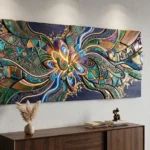
- Oversized textile wall compositions
- Bold chromatic contrasts
- Geometric or artistic patterns
- Strong focal dominance
Suitable Spaces:
- Designer homes
- Artistic studios
- Modern villas
Design Principle:
“One wall becomes one emotional statement.”
German Functional Acoustic Textile System
Core Characteristics:
- Acoustic absorption panels
- Industrial-grade textile finishes
- Grid-based installation systems
- Function-first architecture
Suitable Spaces:
- Offices
- Studios
- Urban apartments
Design Principle:
“Function defines form before aesthetics.”
Fabric Wall Art Placement System
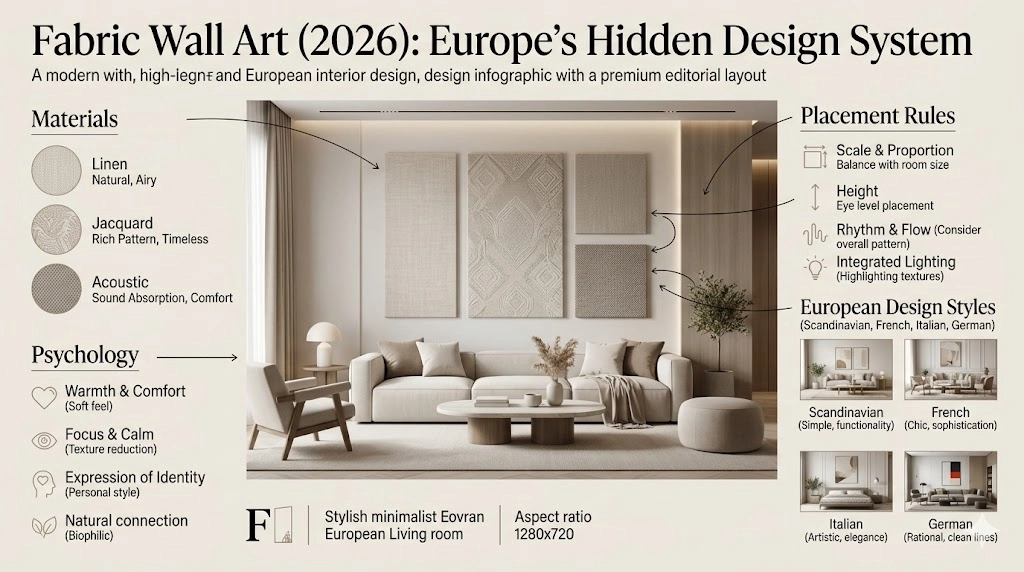
Placement is the most critical determinant of visual success. Even premium textile materials fail when spatial ratios are ignored.
Living Room Placement Algorithm
- Optimal width ratio: 60%–75% of sofa width
- Vertical spacing: 15–25 cm above furniture line
- Single focal dominance required
Interpretation:
This ensures visual balance, proportional harmony, and focal clarity.
Bedroom Placement System
- Central alignment above headboard
- Soft-toned fabric selection
- Symmetrical composition required
Psychological Output:
- Improved relaxation response
- Reduced visual stimulation
- Sleep-friendly atmosphere
Dining Area Placement Logic
- Single bold textile panel recommended
- Warm tonal palette (earth-based colors)
Outcome:
- Enhanced appetite stimulation
- Social warmth amplification
Office Placement Framework
- Acoustic panel clustering
- Modular grid system layout
Outcome:
- Noise reduction
- Cognitive focus enhancement
Fabric Materials Science
Fabric Wall Art performance depends heavily on material composition and structural density.
Linen Textile Systems
- Derived from European flax plants
- High breathability index
- Natural matte texture
Use Case:
Scandinavian and minimalist interiors
Jacquard Weaving Systems
- Complex interwoven pattern structures
- High durability coefficient
- Luxury visual depth
Use Case:
High-end decorative environments
Cotton Canvas Systems
- Lightweight structural fabric
- Economically scalable
- Easy installation dynamics
Use Case:
Residential casual interiors
Acoustic Fabric Engineering
- Sound wave absorption capability
- Echo reduction optimization
- Acoustic dampening properties
Use Case:
Workspaces and studios
Fabric Wall Art Style Taxonomy
Textural Minimalism
Soft monochrome surfaces with visible weave patterns.
Organic Bohemian Systems
Natural fibers with handcrafted imperfections.
Monumental Statement Fabric Art
Single oversized textile dominance.
Hybrid Material Integration
Fabric combined with wood, metal, or stone.
Room-by-Room Fabric Application Strategy
Living Room
- Large neutral textile panels
- Ambient lighting enhancement
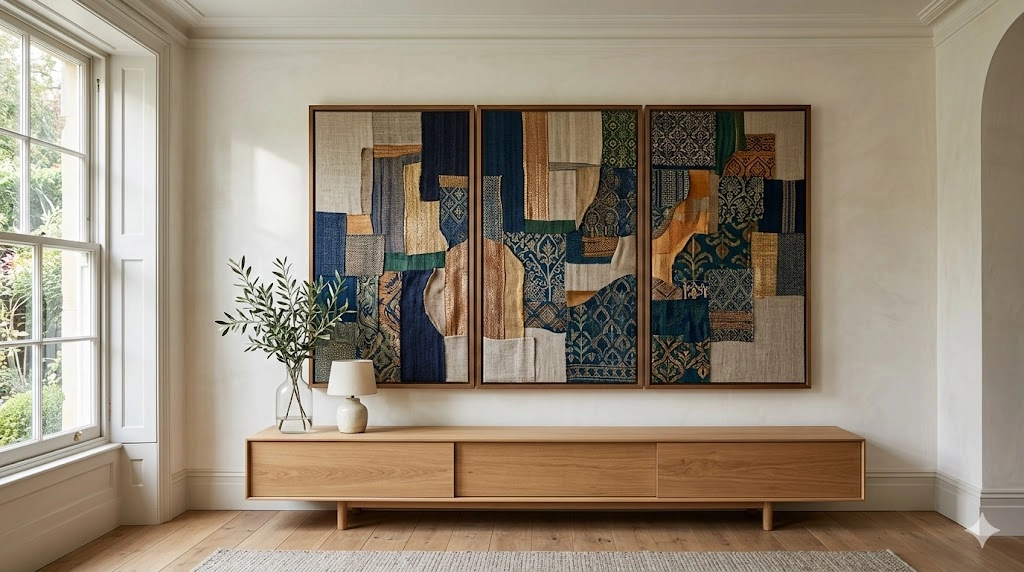
- Wooden frame integration
Bedroom
- Linen-based calming installations
- Neutral beige spectrum
- Minimal accessory usage
Dining Room
- Warm-toned bold fabric art
- Emotional warmth amplification
Office
- Acoustic panel grid installation
- Productivity-oriented spatial control
Fabric Wall Art vs Canvas Art
| Feature | Fabric Wall Art | Canvas Art |
| Texture | High | Low |
| Acoustic Value | Present | None |
| Emotional Warmth | Strong | Moderate |
| Depth Perception | Multi-layered | Flat |
| Sustainability | High | Medium |
Conclusion:
Fabric wall systems outperform canvas in sensory and environmental performance dimensions.
Advantages and Limitations
Advantages:
- Strong emotional warmth generation
- Acoustic enhancement capability
- Eco-friendly material compatibility
- High customization flexibility
- Strong alignment with European aesthetics
Limitations:
- Requires maintenance discipline
- Sensitive to humidity exposure
- Potential fading under sunlight
- Needs precise installation logic
Psychological Impact of Fabric Wall Systems
From a neuro-design perspective, fabric influences:
- Stress reduction mechanisms
- Emotional stabilization processes
- Sleep cycle improvement signals
- Environmental noise perception reduction
Fabric textures activate soft cognitive interpretation pathways, which the brain associates with safety and comfort.
Common Design Errors
- Improper scaling relative to wall size
- Overmixing multiple textile styles
- Ignoring lighting direction effects
- Poor color harmony selection
- Absence of proportional logic
Step-by-Step Fabric Selection Framework
1: Define Functional Objective
- Relaxation
- Productivity
- Luxury perception
2: Select Material System
- Linen → Minimalist
- Jacquard → Luxury
- Acoustic → Functional
3: Choose Design Identity
- Scandinavian
- French
- Italian
- German
4: Apply Spatial Ratio Rule
- 60%–75% proportional alignment system
Maintenance Framework
- Avoid prolonged UV exposure
- Perform weekly dust removal
- Use dry cleaning methods where required
- Maintain indoor humidity balance
FAQs
Yes, high-density materials like jacquard and acoustic textiles provide long-term structural stability.
Yes, it is one of the most rapidly growing interior systems in European design trends for 2026.
Yes, acoustic fabric panels significantly reduce reverberation and ambient noise levels.
Living rooms and bedrooms offer the highest performance in both emotional and visual impact.
Conclusion
Fabric wall art in 2026 is no longer just an aesthetic choice—it is a complete European interior design system that merges art, psychology, sustainability, and functional architecture into a single unified language.
Across modern European homes, it has evolved into a multi-dimensional design tool that improves how spaces look, feel, and function. Whether it is the calm precision of Scandinavian minimalism, the refined luxury of French interiors, the expressive boldness of Italian design, or the functional intelligence of German acoustic systems, fabric wall art adapts to every design identity with structured precision.
The key takeaway is simple:
Fabric wall art is not decoration anymore—it is spatial engineering through textile design.
When applied correctly with proper material selection, placement ratios, and design systems, it can:
- Transform visual atmosphere
- Improve emotional comfort
- Enhance acoustic quality
- Strengthen interior identity
- Support sustainable living choices
However, its true power appears only when it is treated as a system rather than an object. Poor placement or random selection reduces its impact, while structured design thinking elevates it into a professional-level interior solution.