Introduction
In contemporary European interior architecture, bathroom spaces are no longer treated as secondary utility zones. Instead, they are evolving into intentional wellness environments, where design, psychology, and aesthetics merge into one cohesive experience.
Across 2026, a major shift is visible in residential and luxury design markets:
Bathrooms are now perceived as emotional restoration chambers rather than purely functional hygiene spaces.
From the minimal Nordic apartments in Stockholm to high-end villas along the Mediterranean coast, homeowners are increasingly investing in bath wall decor systems that enhance mood, sensory comfort, and spatial perception.
Modern design philosophy emphasizes a powerful insight:
Bathroom walls are not passive surfaces — they actively influence emotional well-being, spatial perception, and daily behavioral rhythm.
This comprehensive guide explores everything you need to master bath wall decor in 2026, including:
- European design languages
- Material psychology
- Spatial illusion techniques
- Luxury bathroom aesthetics
- Small-space optimization strategies
- Emerging 2026 global trends
- Expert-level styling frameworks
- Common design errors and corrective solutions
If your goal is to build a high-authority SEO pillar article, this version is structured to maximize topical depth, semantic relevance, and search dominance.
What is Bath Wall Decor?
Bath wall decor refers to the intentional composition of bathroom wall surfaces using a combination of:
- Architectural finishes
- Decorative materials
- Lighting integration
- Artistic elements
- Structural enhancements
These include tiles, stone cladding, paint systems, mirrors, panels, lighting installations, and biophilic integrations.
However, in modern European design semantics, bath wall decor is understood more holistically as:
A multi-sensory spatial design approach that integrates aesthetics, functionality, and emotional psychology into bathroom wall systems.
Expanded Conceptual Definition (NLP Perspective)
Bath wall decor =
environmental design optimization + emotional resonance engineering + spatial perception enhancement
This includes:
- Mood regulation through color psychology
- Perceptual expansion via reflective surfaces
- Stress reduction through tactile materials
- Visual harmony through compositional balance
- Biophilic alignment with natural elements
In essence, bathroom walls have become interactive psychological interfaces between human behavior and built environments.
Why Bath Wall Decor is Essential in Modern European Homes
Modern homeowners often underestimate the cognitive and emotional impact of bathroom environments. However, research in environmental psychology and interior behavior studies shows that bathroom design significantly influences:
Psychological Regulation
Well-designed bathroom walls can:
- Reduce cortisol-based stress responses
- Enhance morning cognitive clarity
- Support evening relaxation cycles
- Promote mindfulness during self-care rituals
Soft-toned palettes, organic textures, and diffused lighting contribute to neurological calmness.
Spatial Optimization Effects
Bathroom walls strongly affect how space is visually interpreted:
- Light-toned surfaces → expand perceived dimensions
- Mirrors → amplify depth and openness
- Vertical patterning → increases height perception
- Gloss finishes → enhance luminance diffusion
This is especially critical in European urban housing, where compact bathrooms are common.
Lifestyle & Identity Expression
In 2026, bathroom interiors reflect:
- Personal wellness priorities
- Minimalist lifestyle preferences
- Luxury consumption patterns
- Environmental awareness
Thus, bath wall decor has become a lifestyle identity marker rather than a simple decorative choice.
Major Bath Wall Decor Styles in Europe
European design continues to dominate global bathroom aesthetics. Below are the most influential stylistic directions.
Scandinavian Minimalist Bathroom Walls
This design language remains the foundation of European minimalism.
Key Characteristics:
- Soft neutral palettes (white, sand, fog grey)
- Matte wall surfaces
- Natural oak or ash accents
- Diffused ambient lighting
- Highly decluttered composition
Design Philosophy:
“Functional purity leads to emotional clarity.”
Emotional Output:
Creates a sense of calm, order, and cognitive balance.
Mediterranean Organic Texture Walls
Inspired by Southern European coastal architecture.
Characteristics:
- Limewash finishes
- Clay-based plaster textures
- Sun-washed warm tones
- Handmade imperfection aesthetics
Emotional Output:
Produces warmth, nostalgia, and natural comfort.
This style is rapidly growing in luxury European renovations.
Luxury Spa-Inspired Bathroom Walls
Common in premium hotels and high-end residential villas.
Characteristics:
- Full marble wall systems
- Integrated LED lighting strips
- Symmetrical geometric layouts
- Gloss-matte contrast design
Emotional Output:
Delivers a therapeutic, resort-like sensory experience.
Industrial Modern Bathroom Walls
Popular in metropolitan hubs such as Berlin, Amsterdam, and London.
Characteristics:
- Exposed concrete textures
- Black steel framing
- Raw, unfinished surfaces
- Minimal decorative interference
Emotional Output:
Creates boldness, structure, and architectural depth.
Bath Wall Decor Materials Guide
Material selection is the core determinant of bathroom wall performance.
| Material | Style Application | Durability | Visual Effect |
| Ceramic Tiles | Universal use | High | Clean, structured |
| Marble Panels | Luxury interiors | Very high | Elegant, premium |
| Wood Finishes | Scandinavian design | Medium | Warm, organic |
| Stone Textures | Mediterranean style | High | Earthy, natural |
| Glass Panels | Modern luxury | High | Expansive, reflective |
| 3D Wall Panels | Contemporary design | Medium | Depth-rich visuals |
Advanced Bath Wall Decor Ideas
Floating Wall Storage Systems
Floating installations combine functionality with aesthetics:
- Folded textile displays
- Minimal ceramic objects
- Aromatic candle arrangements
- Small botanical elements
Best suited for Scandinavian and minimalist interiors.
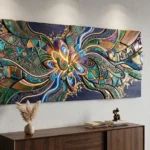
Bathroom Wall Art Integration
Art in bathrooms is becoming a curated design element.
Guidelines:
- Moisture-resistant framing
- Abstract or neutral compositions
- Controlled visual density
Avoid overstimulating imagery in confined spaces.
Mirror-Centric Wall Systems
Mirrors function as spatial amplifiers:
- Expand visual volume
- Enhance lighting distribution
- Add luxury perception
Textured Wall Surface Engineering
A dominant 2026 trend.
Popular textures include:
- Wave-pattern panels
- Linear geometric reliefs
- Soft stone embossing
These add dimensional complexity without clutter.
Biophilic Wall Integration
Nature-inspired design is rapidly expanding.
Includes:
- Moss installations
- Vertical plant systems
- Natural humidity-resistant greenery
Creates a restorative spa-like atmosphere.
Small Bathroom Wall Optimization Strategies
Small European bathrooms require precision-driven design.
Core Strategies:
- Use high-reflectance surfaces
- Maintain monochromatic palettes
- Maximize vertical composition
- Integrate transparent materials
- Avoid visual overcrowding
Result:
A perceived expansion of spatial volume and clarity.
Luxury Bath Wall Decor Framework
Luxury is defined not by excess, but by controlled refinement.
Key Elements:
- Full-surface marble cladding
- Concealed lighting architecture
- Gold or brass accents
- Symmetrical spatial alignment
- Minimal object density
Emotional Result:
A hotel-grade sensory environment within private homes.
Budget-Friendly Bath Wall Transformation Methods
High-impact design does not require high investment.
Cost-efficient strategies:
- Peel-and-stick tile systems
- DIY shelving structures
- Accent wall repainting
- Modular decorative panels
- Affordable mirror installations
Small modifications can create significant perceptual transformation.
Common Bath Wall Decor Mistakes
Avoid the following design errors:
- Overlayering decorative elements
- Ignoring humidity compatibility
- Mixing incompatible design languages
- Poor lighting distribution
- Neglecting airflow systems
Simplicity remains the most reliable design principle.
2026 European Bath Wall Decor Trends
Key macro trends shaping bathroom design:
- Warm minimalism
- Earth-tone dominance
- Textural layering systems
- Spa-inspired spatial design
- Biophilic integration
- Intelligent lighting ecosystems
Core philosophy:
Bathrooms are evolving into emotional regulation spaces.
Style Comparison Overview
| Style | Ideal Use Case | Mood | Investment Level |
| Scandinavian | Compact homes | Calm | Medium |
| Mediterranean | Warm climates | Cozy | Medium |
| Luxury Spa | Premium homes | Relaxing | High |
| Industrial | Urban apartments | Bold | Medium |
Advantages vs Disadvantages
Advantages:
- Enhances property value
- Improves emotional well-being
- Expands visual space
- Aligns with modern lifestyle trends
Disadvantages:
- Maintenance requirements for premium materials
- Higher cost for luxury installations
- Moisture management complexity
FAQs About Bath Wall Decor
Ceramic tiles, marble surfaces, and waterproof composite panels are the most reliable options.
Use mirrors, light tones, and vertical storage systems to maximize perception of space.
Yes, if moisture-resistant materials and proper ventilation are used.
Textured surfaces combined with spa-inspired minimalism.
Focus on lighting upgrades, mirror placement, and neutral design refinement.
Conclusion
Bath wall decor in 2026 represents a fundamental transformation in how humans experience interior spaces.
Bathrooms are no longer passive functional zones. They are becoming:
- Emotional restoration environments
- Sensory wellness chambers
- Personalized micro-spaces
Across Europe, the convergence of design psychology, material science, and aesthetic minimalism is reshaping bathroom architecture.