Introduction
Across Europe in 2026, interior design is undergoing a subtle yet profound transformation. Homeowners are no longer curating spaces purely for visual appeal or social validation. Instead, the focus has shifted toward creating environments that evoke tranquility, authenticity, and emotional comfort.
This is precisely where wabi sabi wall art emerges as a defining element.
Rather than polished, high-gloss surfaces and flawless compositions, modern European interiors are embracing:
- Gentle textures
- Organic materials
- Asymmetrical forms
- Muted, earthy palettes
This evolution is not accidental—it is deeply psychological.
People are increasingly fatigued by sterile, ultra-modern minimalism. They crave interiors that feel alive, imperfect, and human. Wabi sabi wall art answers this need by blending simplicity with warmth, resulting in interiors that feel serene, grounded, and enduring.
In this comprehensive guide, you will explore:
- The authentic philosophy behind wabi sabi
- Diverse categories of wabi sabi wall art
- The psychological impact of imperfection in design
- How to select the ideal artwork
- Strategic placement techniques for European homes
- Emerging interior trends for 2026
By the end, you will possess the knowledge to style wabi sabi wall art with the precision and intuition of a professional interior designer.
What Is Wabi Sabi Wall Art?
Meaning of Wabi + Sabi
Wabi sabi is not merely a decorative trend—it is a centuries-old Japanese philosophy rooted in mindfulness and acceptance.
- Wabi represents simplicity, modesty, and natural elegance
- Sabi reflects the beauty that develops through time, wear, and aging
Together, they express a powerful idea:
Beauty exists in imperfection, transience, and authenticity.
Unlike contemporary design philosophies that emphasize symmetry and flawlessness, wabi sabi celebrates:
- Irregular forms
- Raw, unfinished surfaces
- Natural deterioration
- Subtle, understated beauty
It shifts the perspective from perfection to presence.
What Defines Wabi Sabi Wall Art?
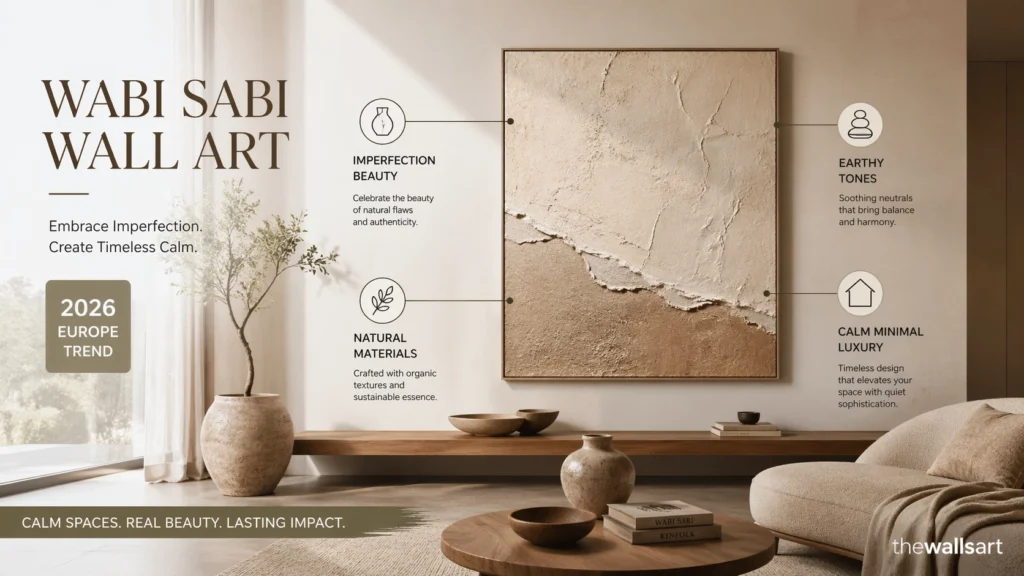
Wabi sabi wall art stands apart from conventional decor due to its intentional imperfection and emotional depth.
Key characteristics include:
- Asymmetrical compositions rather than balanced layouts
- Natural materials such as wood, clay, linen, or stone
- Muted tones like beige, taupe, sand, and soft grey
- Layered textures that create tactile richness
- Minimal visual noise with maximum emotional resonance
It is not merely about ornamentation.
It is about cultivating a sensory and emotional atmosphere.
Why Wabi Sabi Wall Art Feels So Powerful
Most content online remains superficial, focusing only on appearance. However, the true strength of wabi sabi lies in its psychological influence.
Texture Creates Emotional Depth
Flat surfaces feel static and uninspiring. In contrast, textured wall art introduces dimension and movement.
When natural light interacts with textured surfaces:
- Shadows shift throughout the day
- Depth perception increases
- Walls appear dynamic and alive
This creates a calming yet visually engaging environment.
Imperfection Reduces Visual Stress
Perfect geometry often feels artificial to the human brain. Nature, by contrast, is inherently irregular.
Imperfect forms:
- Mimic organic environments
- Encourage relaxation
- Reduce cognitive tension
The brain interprets imperfection as safe and familiar.
Minimalism + Warmth = Modern Luxury
Traditional minimalism can appear cold and impersonal. Wabi sabi introduces warmth through:
- Earth-toned palettes
- Handcrafted textures
- Soft visual transitions
The result is a refined aesthetic often described as “warm minimal luxury.”
Natural Colors Calm the Mind
Bright, saturated colors can overstimulate the senses. Earthy hues, however:
- Soothe visual perception
- Promote emotional balance
- Enhance timeless appeal
This is why wabi sabi is especially effective in bedrooms and relaxation spaces.
Types of Wabi Sabi Wall Art
Understanding different categories is essential for both design application and SEO relevance.
Textured Plaster Wall Art
Characteristics:
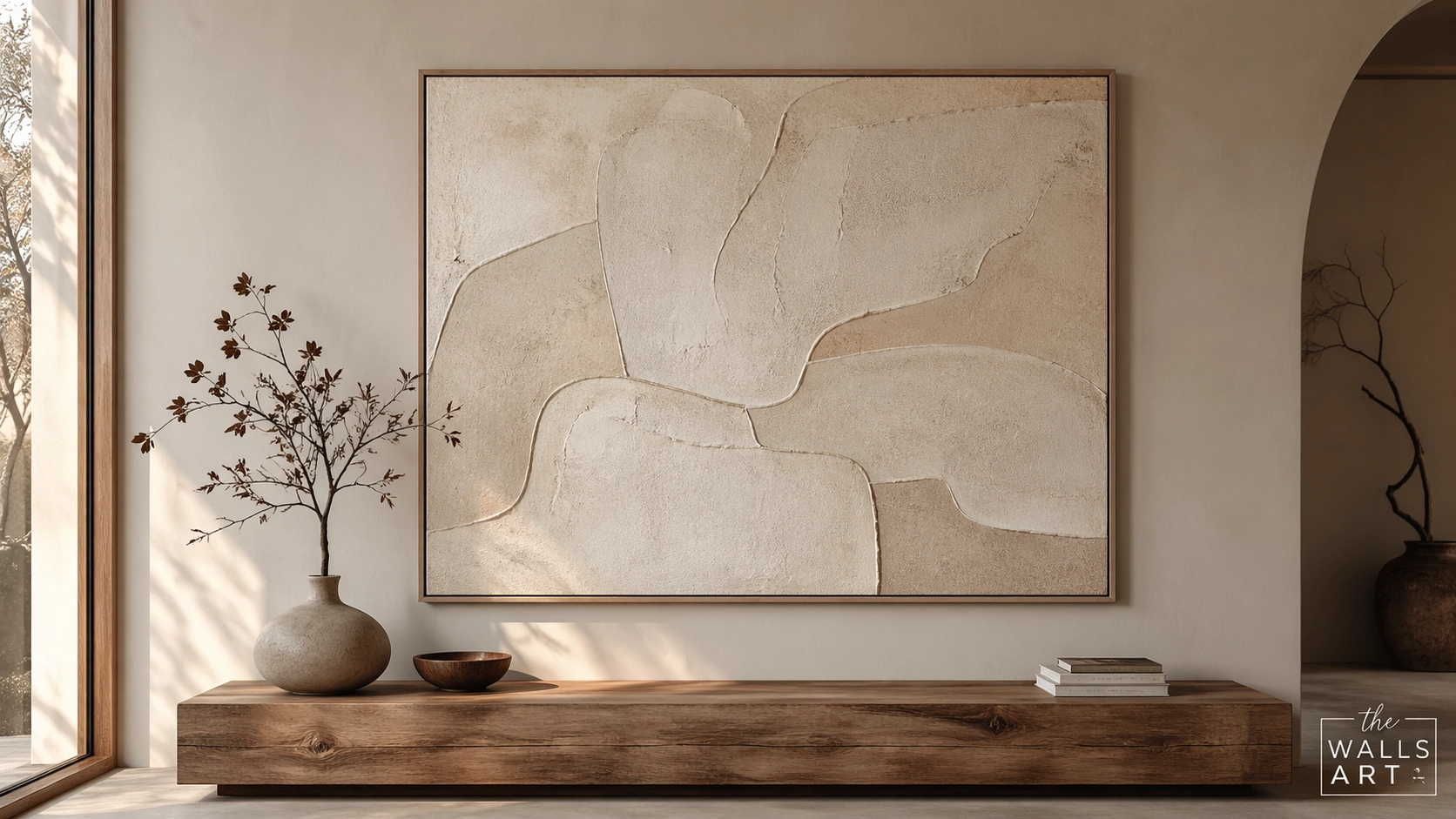
- Sculptural, layered surfaces
- Organic, flowing patterns
- Neutral, mineral-based tones
Ideal for:
- Living rooms
- Feature walls
- Contemporary European apartments
This is the dominant trend in 2026.
Neutral Abstract Art
Characteristics:
- Soft, diffused brushwork
- Imperfect composition
- Limited color palette
Best suited for:
- Bedrooms
- Quiet zones
- Scandinavian interiors
Organic Line Art
Characteristics:
- Fluid, hand-drawn lines
- Minimal detailing
- Expressive simplicity
Perfect for:
- Hallways
- Workspaces
- Japandi-inspired interiors
Natural Material Art
Materials include:
- Raw wood
- Clay and ceramics
- Linen and textile fibers
- Stone elements
Best for:
- Rustic interiors
- Eco-conscious homes
- Organic modern spaces
Comparison Table: Types of Wabi Sabi Wall Art
| Type | Texture Level | Visual Impact | Best Room | Style Match |
| Textured Plaster | High | Strong | Living Room | Modern European |
| Neutral Abstract | Medium | Soft | Bedroom | Scandinavian |
| Organic Line Art | Low | Minimal | Hallway/Office | Japandi |
| Natural Material | Medium | Authentic | Dining/Studio | Rustic/Organic |
How to Choose Wabi Sabi Wall Art
Selecting the right piece requires intentional decision-making.
Prioritize Texture Over Detail
- Flat artwork = purely decorative
- Textured artwork = spatial transformation
Depth always outweighs complexity.
Stick to Earthy Color Palettes
Recommended tones:
- Beige
- Sand
- Warm ivory
- Clay
- Muted grey
Avoid overly vibrant or artificial colors.
Choose Imperfection Intentionally
Look for:
- Uneven edges
- Raw finishes
- Handcrafted irregularities
Imperfection must feel deliberate, not accidental.
One Statement Piece > Many Small Pieces
Wabi sabi values restraint.
A single large focal artwork creates greater impact than multiple scattered elements.
Match with European Interior Styles
- Scandinavian → soft, muted abstracts
- German modern → structured textures
- Italian minimal → sculptural forms
- French interiors → aged, patinated surfaces
Placement Strategy
Placement determines whether your wall art feels intentional or disconnected.
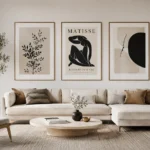
Living Room Placement
- Position above the sofa
- Width: 60–70% of furniture
- Align centrally
Ensures visual harmony and proportion.
Bedroom Placement
- Place above the bed
- Use soft, low-contrast designs
Enhances relaxation and sleep quality.
Hallways & Entryways
- Choose vertical formats
- Maintain minimal spacing
Keeps the visual flow clean and uninterrupted.
The Light Rule
Always position artwork where light hits from the side.
This enhances:
- Texture visibility
- Shadow interplay
- Warmth and dimension
Wabi Sabi in European Interiors
Wabi sabi is evolving uniquely across Europe.
Japandi Fusion
A hybrid of:
- Japanese minimalism
- Scandinavian coziness
Result: functional yet emotionally warm interiors.
Organic Modern European Style
Defined by:
- Clean architectural lines
- Natural materials
- Soft tonal palettes
Wabi sabi integrates seamlessly into this style.
Small Apartment Adaptation
In cities like Berlin, Paris, and Amsterdam:
- Space is limited
- Natural light is essential
Wabi sabi helps by:
- Minimizing clutter
- Adding depth
- Expanding perceived space
Room-by-Room Wabi Sabi Wall Art Ideas
Living Room
- Large textured artwork
- Neutral palette
- Soft ambient lighting
Bedroom
- Minimal abstract canvas
- Warm beige tones
- Calm composition
Kitchen
- Small-scale line art
- Wooden elements
Bathroom
- Stone-inspired textures
- Soft grey palette
Office
- Simple abstract forms
- Clean visual structure
Pros and Cons
Pros
- Timeless aesthetic
- Reduces mental stress
- Ideal for compact spaces
- Compatible with multiple styles
- Adds depth without clutter
Cons
- Can appear dull if poorly executed
- Requires proper lighting
- Low-quality replicas look cheap
- Not suitable for vibrant interiors
Common Mistakes to Avoid
- Choosing overly perfect designs
- Using bright, saturated colors
- Overcrowding walls
- Ignoring lighting conditions
- Mixing conflicting styles
Simplicity is key.
Wabi Sabi Wall Art Trends for 2026
- Textured plaster dominating interiors
- Oversized neutral canvases
- Handmade finishes gaining popularity
- Rise of warm minimalism
- Increased demand for eco-friendly materials
Quick Selection Guide Table
| Factor | Best Choice |
| Color | Neutral / Earthy |
| Size | Large Statement |
| Texture | Medium to High |
| Placement | Eye-Level + Natural Light |
| Quantity | 1–2 Pieces Max |
FAQs
Wabi sabi focuses on imperfection and warmth, while minimalism often focuses on perfection and clean lines.
Yes, it reduces clutter and creates a calm environment, perfect for small European spaces.
Yes, it works beautifully with Scandinavian, Japandi, and modern styles.
Neutral colors like beige, sand, and warm white.
Usually one statement piece is enough.
Conclusion
Wabi sabi wall art is more than a passing trend—it represents a shift in how people experience their living spaces.
It transforms walls into:
- Emotional landscapes
- Peaceful environments
- Timeless compositions
In modern European interiors, where space efficiency and natural light are essential, this philosophy offers something rare:
Luxury without excess
Beauty without perfection
Design that feels authentic and human
By embracing texture, simplicity, and thoughtful placement, you are not merely decorating a room—you are crafting an atmosphere that feels calm, genuine, and deeply personal.