Introduction
In the evolution of contemporary interior design, a noticeable shift is occurring across Europe and beyond. Homes are no longer designed purely for functionality, brightness, and visual cleanliness. Instead, there is a growing desire for emotional depth, atmospheric warmth, and sensory comfort.
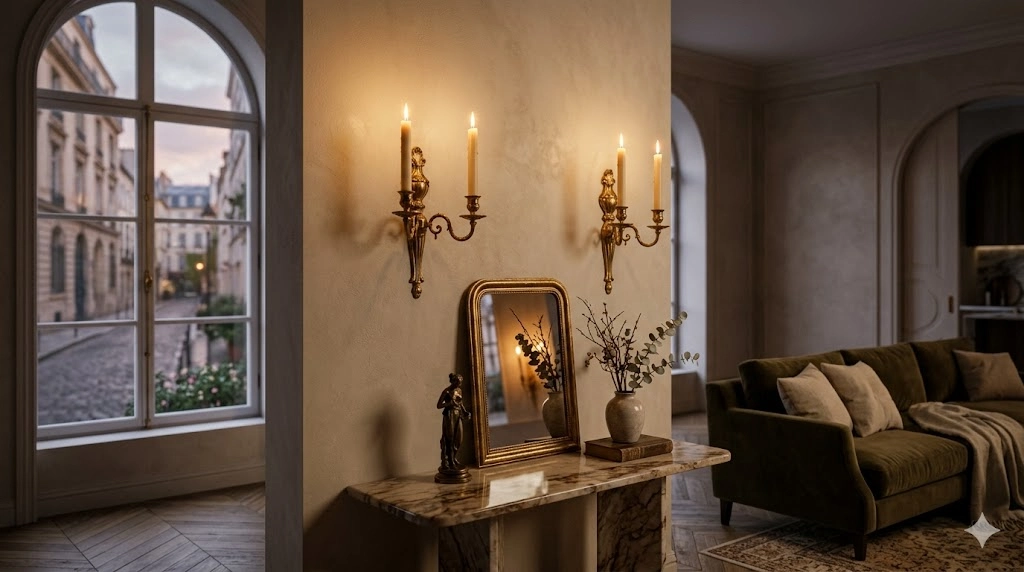
This is where Candle Sconces Wall Decor is re-emerging as a powerful design language.
For many years, interior lighting has been dominated by LEDs, recessed lighting systems, and minimalistic fixtures. While efficient, these lighting methods often produce environments that feel emotionally neutral or even slightly sterile. In contrast, candle sconces introduce a different experience entirely—one rooted in tradition, softness, and human connection.
Across France, Italy, Spain, and the Scandinavian region, designers are now reintroducing candle sconces into modern interiors to achieve:
- A warm ambient glow that softens architectural lines
- A sense of historical European identity
- Romantic and emotionally comforting environments
- Luxury hotel-inspired residential aesthetics
Unlike conventional lighting, candle sconces are not just functional objects. They are emotional design elements that influence mood, perception, and atmosphere at a psychological level.
This comprehensive guide explores every aspect of Candle Sconces Wall Decor, including its meaning, psychology, European design evolution, room-by-room applications, placement strategy, stylistic variations, and 2026 trends.
What Is Candle Sconces Wall Decor?
Candle sconces wall decor refers to wall-mounted decorative fixtures designed to hold candles, typically used to create ambient illumination and enhance interior aesthetics.
These sconces are attached directly to walls and function as both decorative art and atmospheric lighting tools.
Common Material Types:
- Wrought iron (traditional and rustic appeal)
- Brass or gold-toned metal (luxury aesthetic)
- Wood-based handcrafted designs (organic warmth)
- Modern minimalist steel or matte black frames
Functional Role:
Candle sconces are not intended to replace primary lighting. Instead, they serve as secondary ambient lighting elements that shape mood and spatial perception.
Core Definition:
A candle sconce is best understood as a fusion between wall-mounted art and atmospheric lighting architecture.
Why Candle Sconces Wall Decor Is Trending in Europe
The resurgence of candle sconces in European interiors is not accidental. It is driven by deeper cultural and psychological design movements.
Emotional Minimalism Movement
Modern European interiors have embraced minimalism for years. However, excessive minimalism often leads to spaces that feel emotionally empty.
Candle sconces resolve this imbalance by introducing:
- Soft light diffusion
- Organic shadows
- Warm visual contrast
This creates a refined aesthetic often described as “soft minimalism”—clean yet emotionally rich.
Revival of European Architectural Heritage
Candle sconces have deep historical roots in European design. They were once essential in:
- Medieval castles
- French aristocratic homes
- Italian villas
- Spanish historic buildings
Modern designers are reinterpreting this heritage into contemporary living spaces, blending tradition with modernity.
Wellness-Oriented Interior Design
Lighting psychology research highlights that warm, flickering light environments can:
- Lower cortisol (stress hormone) levels
- Improve relaxation response
- Support circadian rhythm stability
- Enhance emotional calmness
This aligns with the growing wellness interior movement in Europe.
Influence of Digital Aesthetic Culture
Social platforms like Pinterest and Instagram have amplified demand for:
- Cozy candle-lit interiors
- Romantic bedroom setups
- Luxury hallway lighting compositions
Visual storytelling has turned candle sconces into a global aesthetic trend.
Psychological Impact of Candle Sconces Wall Decor
Lighting directly influences human psychology, often in subtle but powerful ways.
Warm Light and Emotional Safety
Warm lighting activates associations with comfort, safety, and relaxation. It signals the brain to reduce alertness and enter a calm state.
Flickering Light and Mental Relaxation
The natural flicker of candlelight has a rhythmic visual pattern that reduces cognitive overload, allowing the mind to decompress.
Shadows and Spatial Depth
Unlike flat electric lighting, candle sconces create dynamic shadows that enhance architectural complexity and perceived luxury.
Vertical Illumination Effect
Wall-mounted light sources naturally draw the eye upward, creating an illusion of taller and more spacious interiors.
Room-by-Room Styling Guide for Candle Sconces Wall Decor
Different rooms require different lighting intentions. Candle sconces must be adapted accordingly.
Living Room: Creating Luxury Atmosphere
The living room is the primary social and visual space of a home.
Ideal Uses:
- Highlighting artwork
- Framing mirrors
- Enhancing feature walls
- Creating evening ambiance
Design Strategy:
Symmetry is essential. Installing sconces in pairs creates visual balance and a gallery-like luxury effect.
Hallway & Entryway: First Impression Design
Hallways are transitional spaces, but they significantly influence first impressions.
Effects:
- Hotel-inspired entry aesthetics
- Warm welcome ambiance
- Visual rhythm along corridors
Placement Principle:
Even spacing between sconces creates flow and continuity.
Bedroom: Emotional Comfort & Romance
Bedrooms benefit greatly from soft, intimate lighting environments.
Advantages:
- Reduced visual stress
- Romantic ambiance
- Improved relaxation before sleep
Recommended Placement:
- Beside the bed
- On headboard walls
- Symmetrical side positioning
This reduces dependence on harsh bedside lamps.
Bathroom: Spa-Like Luxury Environment
Modern European bathrooms increasingly adopt candle sconces for spa aesthetics.
Benefits:
- Warm contrast against tiles and marble
- Hotel-like relaxation feel
- Enhanced wellness atmosphere
Safety Consideration:
Moisture-resistant placement and stable holders are essential.
European Candle Sconce Design Styles
Different regions of Europe contribute unique aesthetic identities.
French Elegance Style
- Gold and bronze finishes
- Ornamental curves
- Romantic symmetry
Represents aristocratic Parisian interiors.
Scandinavian Minimalism
- Matte black structures
- Geometric simplicity
- Neutral backgrounds
Focuses on clarity and calmness.
Italian Rustic Design
- Hand-forged iron
- Natural textures
- Earth-toned walls
Emphasizes craftsmanship and warmth.
Mediterranean Style
- Warm terracotta tones
- Sun-inspired aesthetics
- Organic rustic elements
Reflects coastal villa environments.
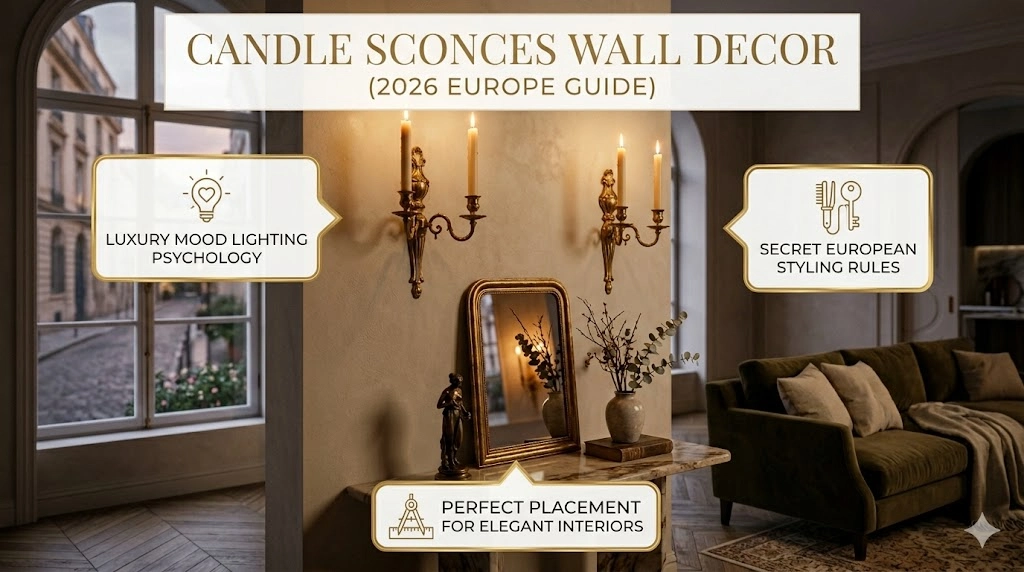
Expert Placement Framework
| Room | Height | Spacing | Placement Strategy |
| Living Room | 150–160 cm | 1.5–2 m | Symmetrical art framing |
| Bedroom | 140–150 cm | Balanced pairing | Bedside alignment |
| Hallway | 160 cm | 2–3 m | Repetitive rhythm |
| Bathroom | 150 cm | Paired | Mirror framing |
Candle Sconces vs Electric Lighting
Candle sconces and electric lighting serve different design purposes.
- Candle sconces prioritize emotional ambiance
- Electric lighting prioritizes functionality
sconces excel in:
- Atmosphere creation
- Aesthetic depth
- Emotional warmth
Electric lighting excels in:
- Task visibility
- Brightness control
- Practical use
Advantages and Limitations
Advantages:
- Creates luxury atmosphere
- Requires no wiring
- Affordable design upgrade
- Works in multiple styles
- Timeless aesthetic appeal
Limitations:
- Requires maintenance
- Not a primary light source
- Fire safety precautions needed
- Limited brightness output
Common Design Mistakes
Overuse of Sconces
Too many fixtures reduce elegance and create visual clutter.
Incorrect Height Placement
Improper installation disrupts visual harmony.
Style Mismatch
Mixing conflicting design languages weakens aesthetic cohesion.
Ignoring Room Function
Each room requires a different lighting intention.
2026 European Interior Trends
Minimal Black Metal Frames
Clean and modern Scandinavian-inspired designs.
Antique Revival Movement
Reintroduction of historical European lighting forms.
Mirror-Integrated Designs
Combining reflection and candlelight for visual expansion.
Organic Sculptural Forms
Nature-inspired curved structures.
Hybrid Art Lighting
Integration of sconces with wall art compositions.
Buying Guide
Material Selection:
- Iron: durable and traditional
- Brass: luxury aesthetic
- Wood: natural warmth
Candle Options:
- Pillar candles: stability and longevity
- LED candles: safety alternative
- Scented candles: sensory enhancement
Design Matching:
Always align sconces with your overall interior theme.
Safety Guidelines
- Maintain distance from fabrics
- Never leave candles unattended
- Use stable mounting systems
- Avoid overcrowding installations
- Ensure proper ventilation
FAQs
Yes, they are increasingly popular due to emotional lighting trends and European design revival movements.
Vertical wall placement with symmetrical spacing enhances spatial perception.
No. They are designed for ambiance rather than functional illumination.
Minimal black metal and Scandinavian-inspired designs are most suitable.
Yes, when used responsibly with proper holders and safety spacing.
Conclusion
Candle sconces represent more than just a decorative trend. They signify a broader shift in how people design and experience living spaces.
In an age dominated by screens, artificial brightness, and digital environments, candle sconces restore something essential:
- Emotional warmth
- Visual softness
- Historical connection
- Atmospheric depth
- Human-centered design
They transform walls from static surfaces into living emotional architecture.
For those seeking a European-inspired home that feels luxurious, intimate, and timeless in 2026, candle sconces remain one of the most powerful and expressive interior design choices available.