Introduction
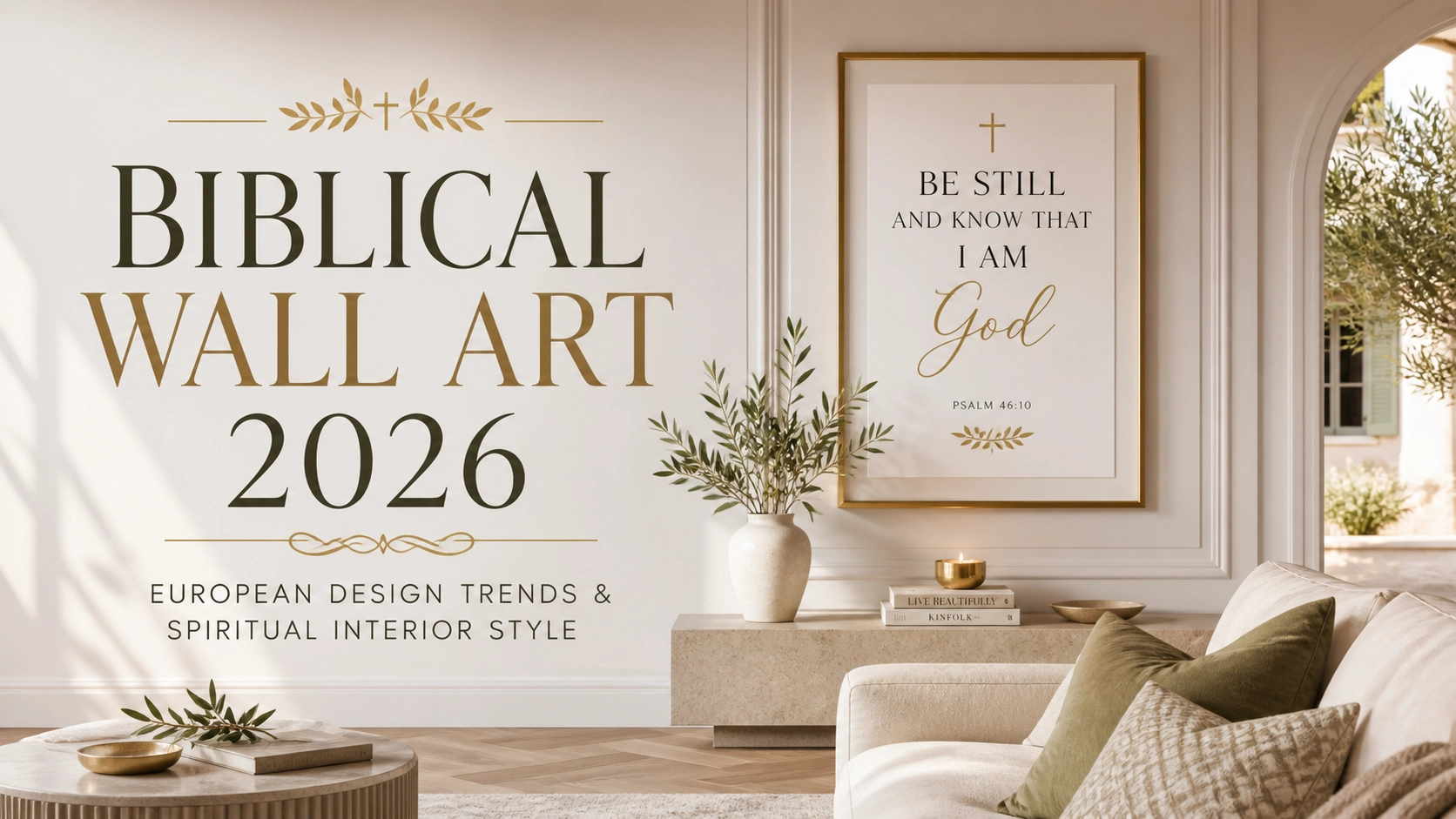
Biblical Wall Art has evolved into a multidimensional design phenomenon that goes far beyond conventional religious decoration. In 2026, it functions as a hybrid between visual communication, emotional architecture, interior psychology, and cultural identity expression.
From an NLP (Natural Language Processing) perspective, operates as a semantic anchor in spatial environments. It encodes meaning, emotional signals, and belief-based associations into visual language that humans interpret subconsciously within interior spaces.
Across Europe—especially in Scandinavian, French, German, and Mediterranean interior ecosystems—this form of wall art is increasingly integrated into human-centered design systems. These systems prioritize emotional coherence, spatial harmony, and cognitive comfort.
Modern homeowners are no longer satisfied with purely aesthetic environments. Instead, they seek meaning-rich, emotionally resonant living spaces that support mental clarity, relaxation, and identity reinforcement.
Biblical wall art fulfills this need by merging:
- Linguistic expression (scripture, text, phrases)
- Symbolic representation (cross, dove, light motifs)
- Aesthetic minimalism (clean layouts, neutral palettes)
- Emotional semantics (peace, hope, gratitude, faith)
This comprehensive guide will break down biblical wall art using design theory, NLP semantics, interior psychology, and European styling frameworks.
You will learn:
- Core meaning structures behind biblical wall art
- NLP-based emotional interpretation systems
- European design adaptations (Scandinavian, French, Mediterranean)
- Styling frameworks used by professionals
- Room-by-room implementation systems
- 2026 trend forecasting and material evolution
- Psychological and cognitive impacts of scripture-based visuals
What Is Biblical Wall Art?
Biblical wall art can be defined as a visual-semantic artifact system that encodes religious, inspirational, and spiritual language into interior decorative forms.
From an NLP classification perspective, it belongs to the category of:
“Emotionally symbolic typographic visual communication in spatial design environments.”
It typically includes:
Scripture passages (semantic religious text units)
Symbolic religious icons (cross, light beams, dove imagery)
Inspirational linguistic constructs (faith-based affirmations)
Artistic reinterpretations of biblical narratives
Common Format Structures
Biblical wall art appears in multiple material and structural formats:
- Canvas-based semantic prints
- Framed typographic compositions
- Laser-engraved wooden panels
- Digital downloadable design templates
- Multi-piece narrative gallery walls
NLP Perspective on Structure
Each artwork functions like a text embedding system, where:
- Words → emotional vectors
- Symbols → cultural associations
- Fonts → tone modulation
- Colors → psychological priming
This transforms wall art into a non-verbal communication interface between environment and human cognition.
Why Biblical Wall Art Matters in Modern Homes
Biblical wall art is not merely decorative—it is a cognitive-affective environmental modifier.
It influences human perception through three primary NLP-aligned mechanisms:
1. Emotional Anchoring System
In fast-paced modern life, individuals experience cognitive overload. Biblical wall art introduces emotional stabilization signals into the home environment.
These signals create:
- Mental grounding
- Stress reduction cues
- Emotional regulation triggers
- Calmness reinforcement patterns
2. Semantic Minimalism Integration
European interior design increasingly follows semantic minimalism, which emphasizes meaning density over visual complexity.
Biblical wall art aligns perfectly because it:
- Compresses emotional meaning into short textual forms
- Eliminates unnecessary visual noise
- Enhances cognitive clarity
- Supports environmental mindfulness
3. Cognitive Comfort Loop
Environmental psychology suggests repeated exposure to meaningful text creates:
- Familiarity loops
- Positive reinforcement cycles
- Emotional memory encoding
- Reduced anxiety response triggers
Thus, functions as a visual cognitive support system embedded in living spaces.
European Influence on Biblical Wall Art Design
European interior design strongly shapes how is interpreted and applied.
Scandinavian Minimalist Framework
This system prioritizes:
- High semantic clarity
- Low visual density
- Neutral chromatic palettes
- Sans-serif typographic structures
NLP interpretation:
High-information efficiency + low emotional noise output
Best suited for:
- Urban apartments
- Compact living spaces
- Modern minimalist homes
French Elegant Design Framework
This system integrates:
- Luxury semantic cues
- Serif typographic elegance
- Gold-accented visual hierarchy
- Soft decorative embellishment layers
NLP interpretation:
High emotional richness + aesthetic prestige encoding
Best suited for:
- Luxury apartments
- Boutique-style interiors
- Classical-modern hybrid homes
Mediterranean Warmth Framework
This design philosophy focuses on:
- Earth-tone semantic grounding
- Organic texture integration
- Handwritten script typography
- Natural light enhancement systems
NLP interpretation:
Warm emotional resonance + humanistic spatial encoding
Best suited for:
- Family homes
- Rustic interiors
- Nature-connected environments
Popular Biblical Wall Art Styles
1. Minimalist Typography Style
This style uses high semantic compression design, where meaning is delivered through minimal text and maximal clarity.
Characteristics:
- Black/white contrast systems
- Sans-serif linguistic structures
- Negative space optimization
2. Luxury Gold Scripture Art
This is a high-affective semantic design system.
Characteristics:
- Gold foil typographic highlights
- Dark background emotional contrast
- Serif-based prestige encoding
3. Nature-Inspired Faith Art
This style uses biophilic semantic mapping, combining nature and scripture.
Characteristics:
- Olive branch symbolism
- Organic gradient backgrounds
- Soft green emotional signals
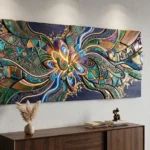
4. Abstract Christian Art
This is a non-literal symbolic representation system.
Characteristics:
- Metaphorical visual encoding
- Color-driven emotional cues
- Conceptual faith abstraction layers
5. Vintage Religious Art
This system uses historical semantic reconstruction, referencing traditional European religious aesthetics.
Characteristics:
- Antique texture overlays
- Classical illustration techniques
- Heritage-style emotional depth
Room-by-Room Biblical Wall Art Styling Guide
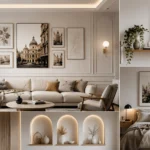
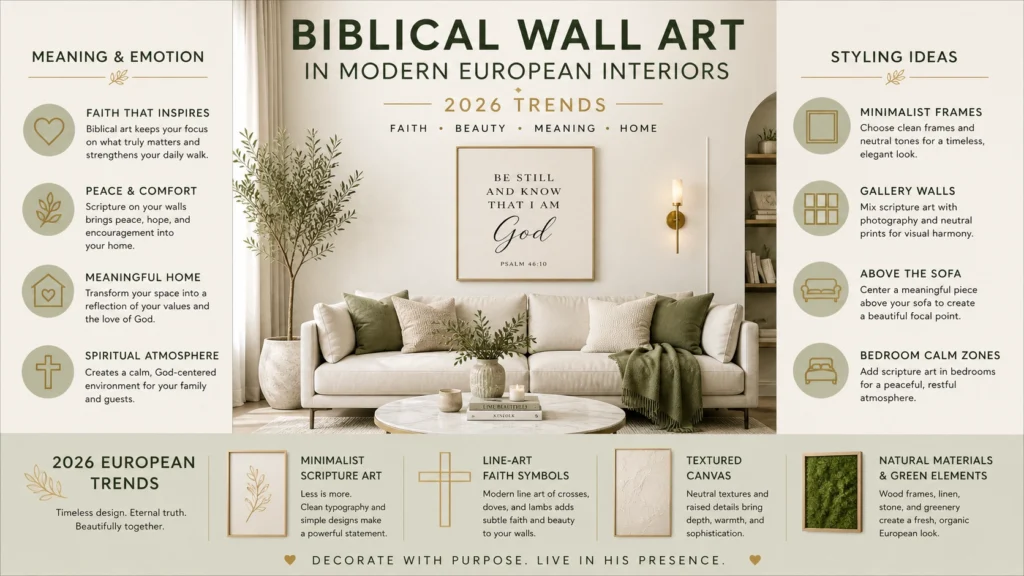
Living Room
The living room functions as the primary emotional interface zone of the home.
Optimal placement strategies:
- Central wall anchoring
- Sofa alignment symmetry
- Gallery wall narrative structure
Best semantic styles:
- Large scripture focal points
- Neutral emotional palettes
- High-contrast typography
Bedroom
The bedroom acts as a restoration and recovery environment system.
Optimal placements:
- Headboard alignment
- Side wall subtle integration
Best semantic themes:
- Peace
- Rest
- Emotional release
- Gratitude encoding
Dining Room
This space represents social bonding and gratitude communication systems.
Best designs:
- “Thankfulness” semantic scripts
- Warm ambient tones
- Soft lighting integration
Prayer Corner
This is a high-intent cognitive focus zone.
Design principles:
- Minimal visual noise
- Small framed scripture sets
- Low-light atmospheric systems
How to Style Biblical Wall Art Like an Interior Designer
1: Visual Hierarchy Optimization
Design follows structured layering:
- Primary focal artwork (semantic anchor)
- Secondary supporting pieces (context reinforcement)
- Tertiary background elements (ambient balance)
2: Color Semantic Mapping
European palettes include:
- Beige + Olive + White → calm stability
- Black + Gold + Ivory → luxury authority
- Warm gray + sand → emotional neutrality
3: Typography Emotion Encoding
Fonts function as emotional carriers:
- Serif fonts → tradition + elegance
- Sans-serif fonts → clarity + modernity
- Script fonts → emotional intimacy
4: Spatial Layout Algorithms
- Grid layouts → structured modernity
- Vertical stacking → spatial optimization
- Gallery layouts → narrative storytelling
Biblical Wall Art Styles Comparison Table
| Style | Visual Character | Interior Context | Emotional Output |
| Minimalist Typography | Clean semantic text | Scandinavian | Calm clarity |
| Luxury Gold Script | High-contrast gold | Luxury interiors | Prestige warmth |
| Nature-Inspired Art | Organic visuals | Rustic homes | Grounded peace |
| Abstract Christian Art | Symbolic visuals | Modern homes | Creative reflection |
| Vintage Religious Art | Classical texture | Heritage interiors | Deep nostalgia |
Psychological Meaning
Biblical wall art influences human cognition through layered emotional processing:
1. Identity Encoding Layer
It reinforces personal belief systems through visual repetition.
2. Spatial Emotion Modulation
It alters perceived room atmosphere through semantic association.
3. Cognitive Reflection Loop
It encourages mindfulness by repeated exposure to meaningful text structures.
4. Emotional Stabilization Feedback
It creates subconscious reassurance patterns in living environments.
Biblical Wall Art Trends
1. Ultra-Minimal Semantic Designs
- One-word scripture expressions
- High whitespace usage
- Mono-tone compositions
2. Digital Print Ecosystems
- Instant downloadable art
- Customizable scripture layouts
- AI-generated design personalization
3. Scandinavian Faith Integration
- Clean emotional design systems
- Reduced visual complexity
- High semantic clarity
4. Sustainable Material Systems
- Recycled wood frames
- Eco-friendly inks
- Natural textile canvases
Pros & Cons
Advantages
- Enhances emotional spatial meaning
- Works with modern minimalist interiors
- Highly adaptable across cultures
- Long-term design relevance
- Supports psychological well-being
Disadvantages
- Can appear overly traditional if poorly designed
- Requires balanced typography systems
- Not suitable for ultra-industrial aesthetics
FAQs
Biblical wall art is used to integrate scripture-based visual communication into interior environments, enhancing emotional meaning, aesthetic harmony, and spiritual presence.
Yes. It aligns strongly with modern European interior principles such as minimalism, emotional design, and semantic clarity.
Ideal placements include:
Living rooms
Bedrooms
Dining areas
Prayer corners
The leading 2026 trends include:
Minimalist typography systems
Luxury gold scripture compositions
Nature-inspired visual semantics
Yes. Many modern interpretations focus on inspirational semantics rather than strict religious representation.
Conclusion
Biblical wall art in 2026 represents a convergence of faith, design intelligence, emotional psychology, and European aesthetic systems.
It is no longer just decorative art—it is a semantic environment enhancer that influences how people feel, think, and experience their homes.
Whether applied in Scandinavian minimalism, French luxury interiors, or Mediterranean warmth systems, biblical wall art serves as a powerful tool for creating emotionally intelligent living spaces.
Ultimately, modern interior design is shifting from visual beauty alone toward meaning-driven spatial experiences—and stands at the center of this transformation.